From a single grain of wheat

Shigesato Itoi ☓ Akira Minagawa

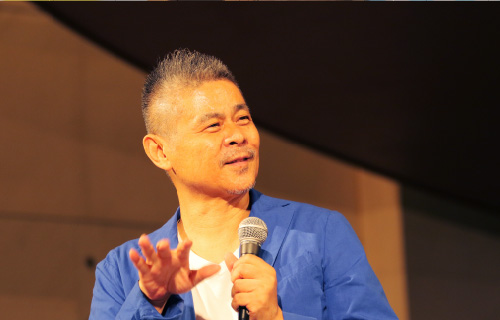
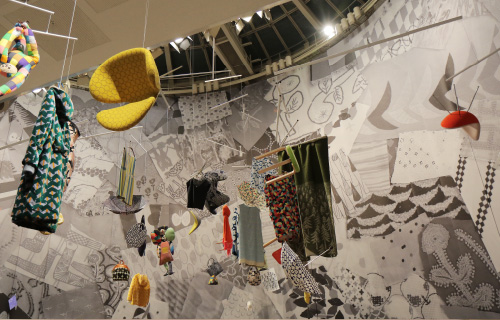
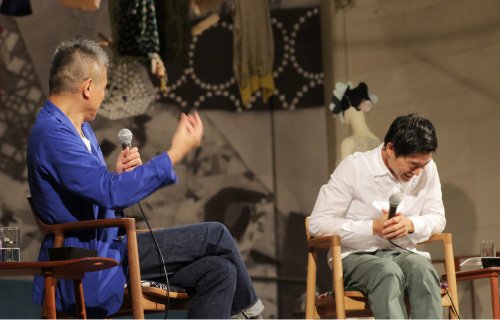
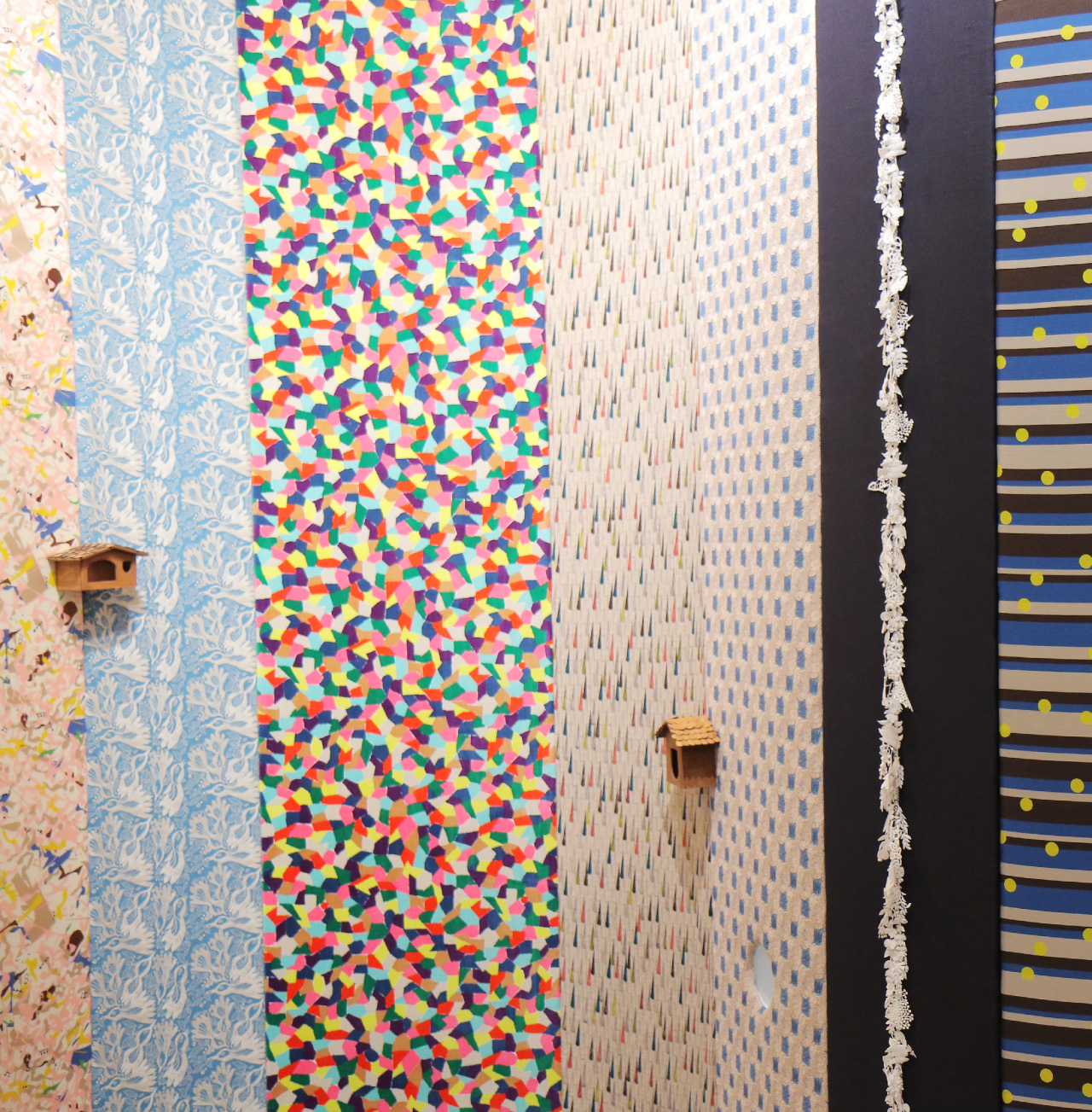
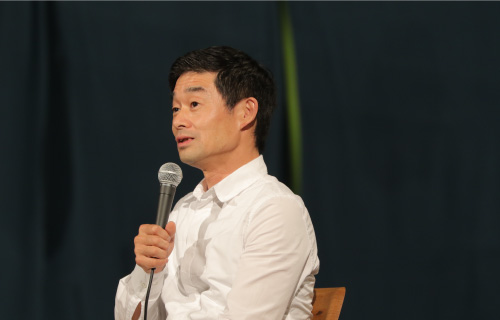
minä perhonen is a meticulously-designed clothing brand beloved by many people for its use of original textiles. This special panel by Shigesato Itoi and designer Akira Minagawa was held during minä perhonen's special gallery event to celebrate the brand's 20th anniversary. They discuss the origins of the Hobonichi Techo, the important points of creating clothing, and other topics that popped up during their casual conversation.

About minä perhonen

Fashion brand created by designer Akira Minagawa.

First founded in 1995 under the name minä. Opened the first shop in Shirokanedai, Tokyo in 2000, and renamed the brand name to “minä perhonen” in 2003. Opened a total of 9 shops across Japan, with a new location in Daikanyama in April 2016, a new shop in the Spiral building in Aoyama, Tokyo in July 2016, and a location coming to Kanazawa.

minä perhonen homepage

Part5

From a single grain of wheat

Itoi
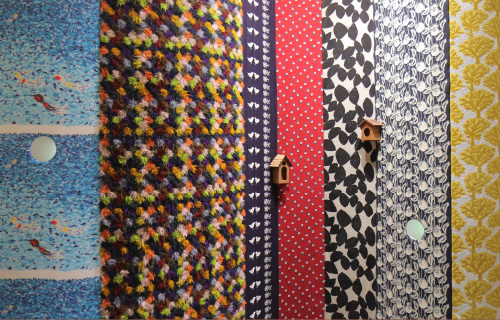
When I arrived at this exhibit hall in your building today, it really reminded me of the fact that minä perhonen really did originate from a single grain of wheat. You’re essentially seeing a single grain of wheat grow into this big field after twenty years. Did you imagine it would turn into this when you planted that first grain of wheat?
Minagawa
I really didn’t.
Itoi
What had you imagined?
Minagawa
I hadn’t seen these fields as a scenic view, but a pattern. Metaphorically speaking, I would harvest the wheat every season and plant new seeds, and my life took on that cycle of repetition that I wanted to keep with me until the end.

Itoi
Yeah.
Minagawa
But over time, the fields started growing bigger, until I was able to start making bread and pasta out of all the wheat. In time, I had opened a shop to sell the bread and started getting customers. Then I moved on to experimenting with different types of bread, and one idea would keep leading to the next. It was just a cycle of that.
Itoi
That’s what I imagined it to be. Was there a point where things really accellerated, though?
Minagawa
In the beginning, I only worked with one mechanical weaving company and one dyeing company. But as my company established solid footholds, it turned into having one shop dye the fabric and a different one embroider it, or knowing what kinds of projects were possible if we paired together a certain weaver with a certain dyer. Possibilities began to open up around the 5th year, right around when I opened up my first shop.

Itoi
Physical shops lend a really big presence to a company. If you don’t have a shop location, no one will come to see you. Come to think of it, you wouldn’t have the view you do now if you’d wholesaled your textiles and clothes to other companies.
Minagawa
It’s not like I could see the final destination from where I stood. It was only after opening a shop that I could see what made customers happy, and that was a big deal.
Itoi
Do you remember doing much advertising?
Minagawa
In general, no, I don’t really think I did.
Itoi
You didn’t put out ads or anything?
Minagawa
I’ve run an ad in a magazine before, but we never really did any marketing on our own. I think we’re better off using all our finances to fund our creations. If the customer is satisfied, they might come back. It’s the same for a bakery or a tofu shop. If the customer tries it and thinks it’s delicious, they’ll be back. They’ll tell others how good it tasted, and that’s the best marketing there is.
Itoi
That’s a very shop-oriented idea. Not the idea of a creator, who’d say “My tofu’s the best,” but that concerned with the person who’s selling and the person who’s buying.

Minagawa
If we’ve got the money, I want to use it for materials. That, or the labor it takes to process them. To me, it’s the simple concept that the satisfaction of those using or wearing the products is so much more important than someone looking at an ad and thinking, “Nice brand.”
Itoi
Yeah.
Minagawa
When I first started minä perhonen, I knew I wanted to spend as little as possible on rent, live close to the factory, and spend as much as possible on materials. That way I could make my own small clothing brand the best that it could be. I’ve been repeating that decision ever since.
Itoi
You really do think just like a bakery or a tofu shop.
Minagawa
Yeah.
Itoi
minä perhonen doesn’t really fit into a particular genre or “area,” so it’s able to avoid becoming a passing fad or a trend. Without any advertising you’ve built out a very interesting place for yourself. Was that intentional?

Minagawa
Not at all. I wonder myself how things turned out this way.
Itoi
The age we live in now is very marketing-driven, and as a result many people begin from a very distant perspective so they can keep clear of failure. You take the opposite perspective: Just one person walking along.
Minagawa
I started minä perhonen right as my father was retiring from a 40-year career. I felt a lot of respect for the way he continued in the same job for that long, day after day. I want to do my own job until the end in the same way, so that I can look forward to reflecting back on it someday.
Itoi
So that “40 year” number stayed with you?
Minagawa
My father would go to work every morning and come home every evening. When he was at home he never talked about work. He did that for 40 years, until he reached retirement age. I really admired that. He retired without becoming famous, without making some major accomplishment—he just worked.

As careers go, I find that to be beautiful.

Itoi
He must have done a great deal of work in that long silence.
Minagawa
So I want to reach 40 years at my own job, and I think I will. But I’m fine handing off the leadership to the next generation. I’m just looking forward to being able to reflect on those 40 years afterward.
Itoi
That’s a wonderful perspective. You’ve felt that way since you were young?
Minagawa
I have, from the time I first decided to make clothing.
Itoi
Did you think you’d love making clothes, or did you think you’d be good at it? Or was it both?
Minagawa
I’ve loved it these past few years, and within that period of “love” I’ve been able to work rather freely.

Itoi
These past few years? What about before then?
Minagawa
Before that I had made a conscious decision not to think about whether I was suited for the work but to just accept that I liked it.
Itoi
It’s clear we can’t work out something just with our love for it. When you get older, it’s easy to see that in young people, isn’t it? I wonder when that “just liking” someone or something turns into “being able to make someone happy.”
Minagawa
I wonder whether getting to the point you can make people around you happy is the result of that accumulated experience.
Itoi
Maybe it accumulates a drop at a time.
Minagawa
It feels that way. At a certain point you stop saying “I love this” and start saying “Oh, whatever, I’m good to keep this going.” Over the last few years I feel like that change happened in me.

Itoi
After you’ve done something for a while, and before you even realize it, it’s added to the list of things you’re capable of doing. If someone called you up and said, “Sorry for the late notice, but I need three good textile designs in the next three days,” you’d probably think, “Are you nuts?”

But you’d take the job and you’d be sure you could do it.

Minagawa
That’s true.
Itoi
But you couldn’t do that when you were 20. You’d ask, “Really? Three days?” or “Why?” But eventually some seriously difficult tasks make it onto the list of things you’re capable of doing.
Minagawa
Just earlier I had a customer come to the front desk ask me to draw on a kokeshi doll for them. I took it from her and wondered whether I could even do it—while I was doing it.


[Audience laughs]

Minagawa
I don’t know if she liked it, but I was surprised at how it turned out. If I’d had a little more time I may have been able to flesh out her kimono.
Itoi
Right down to its pattern.
Minagawa
If you were to tell me, “Draw three good patterns in three days,” I’d want to show them to you tomorrow.
Itoi
I know what you mean—that feeling of wanting to wrap it up and put a ribbon on it. [Laughs] It’s great that we’re able to say that now.
Minagawa
Isn’t that the truth.
[End]

2016-12-06-Tue

BACK | Part 4