From a single grain of wheat

Shigesato Itoi ☓ Akira Minagawa

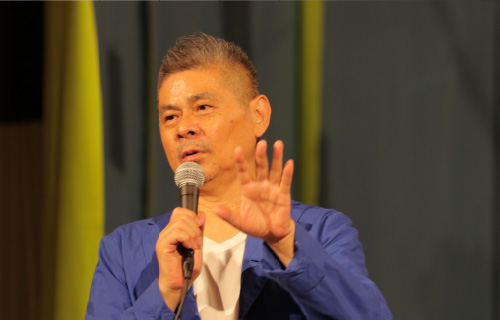
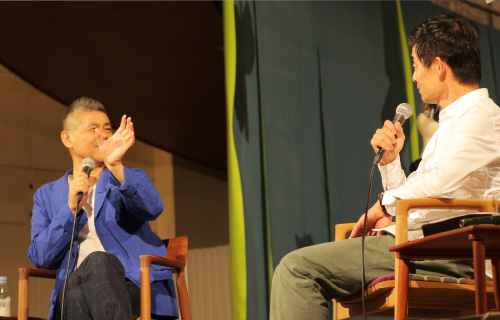
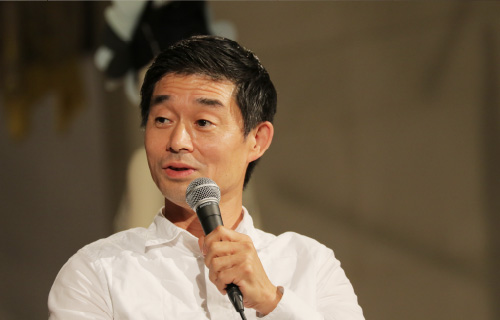
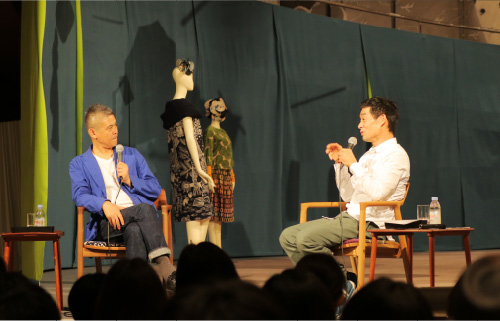
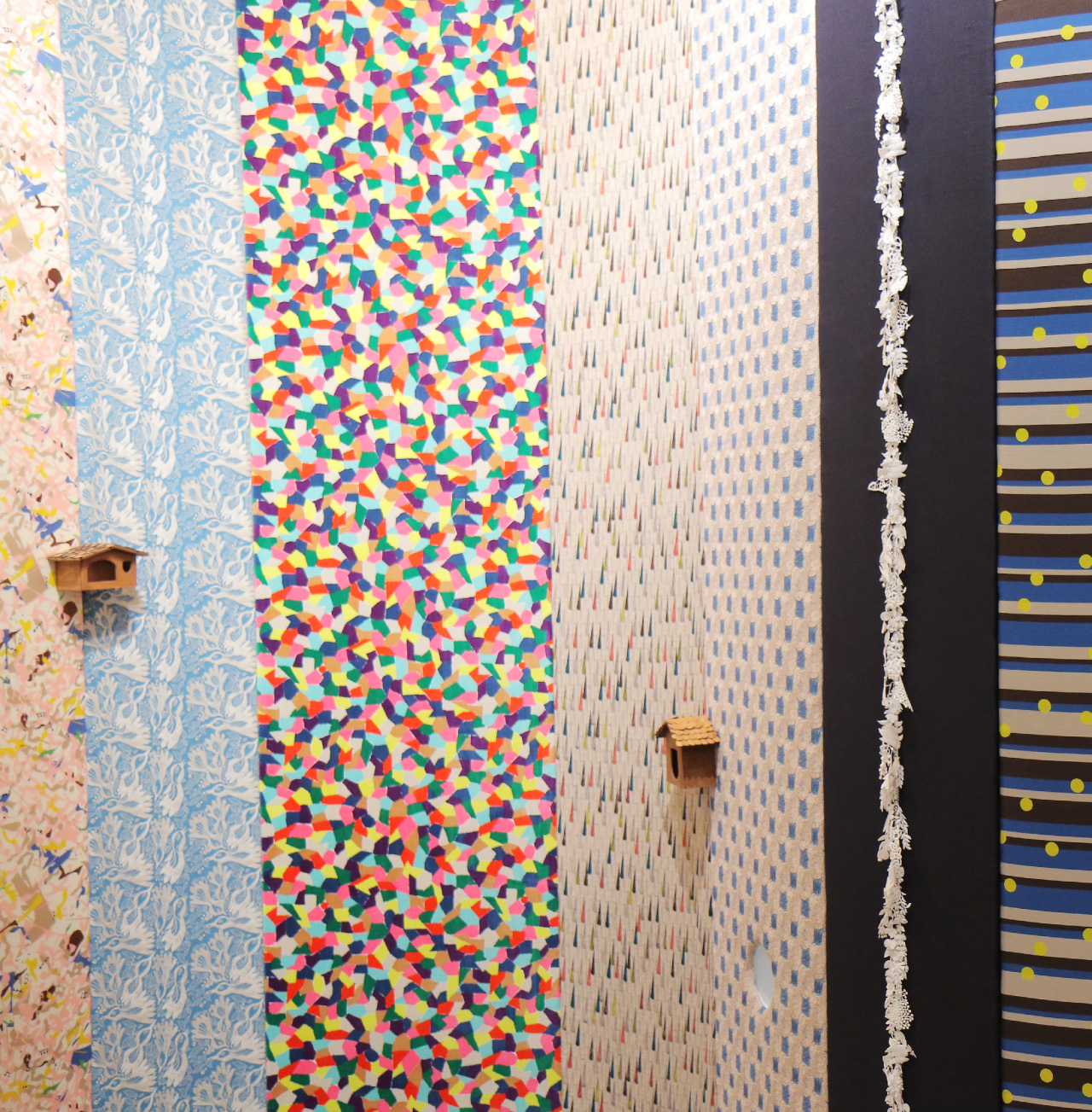
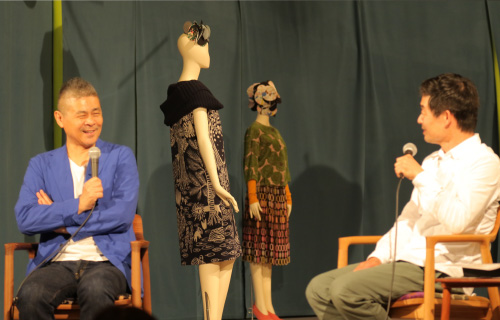
minä perhonen is a meticulously-designed clothing brand beloved by many people for its use of original textiles. This special panel by Shigesato Itoi and designer Akira Minagawa was held during minä perhonen's special gallery event to celebrate the brand's 20th anniversary. They discuss the origins of the Hobonichi Techo, the important points of creating clothing, and other topics that popped up during their casual conversation.

About minä perhonen

Fashion brand created by designer Akira Minagawa.

First founded in 1995 under the name minä. Opened the first shop in Shirokanedai, Tokyo in 2000, and renamed the brand name to “minä perhonen” in 2003. Opened a total of 9 shops across Japan, with a new location in Daikanyama in April 2016, a new shop in the Spiral building in Aoyama, Tokyo in July 2016, and a location coming to Kanazawa.
minä perhonen homepage

Part2

Nothing more than a symbol

Minagawa
If I were to compare the Hobonichi Techo to anything else, I’d say it’s like a Porsche.
Itoi
Wow . . .
Minagawa
Every year it undergoes a lot of subtle revisions people usually wouldn’t notice—things like the design of the graph paper, or the way the tag is attached to the cover. It’s the same year-to-year attention to detail that shapes a Porsche.
Itoi
I see.

Minagawa
What’s interesting is how the overall look doesn’t change a lot, but constant refinements are being made inside. That was probably your intent.
Itoi
We probably have the same idea, in that, whether it’s clothes or planners, it may look like we’re selling one product among many, but that’s not the case. minä perhonen isn’t just selling clothing—you’re selling the moment your customer walks downtown wearing the clothes.
Minagawa
Yeah.
Itoi
Someone on the street who turns and says, “That person’s wearing minä perhonen,” is part of the product you’re selling. You’re giving your customers an environment populated by their fellow minä perhonen fans. Our customers look forward to the ways we improve the Hobonichi Techo every year—it’s a kind of bonus that comes with the techo.
Minagawa
Oh, a bonus?
Itoi
We need to do the best we can, and ongoing improvements are a part of that. If we mess something up, we go back and try again. More than anything, it’s how these improvements grant more possiblities to techo users that brings out the essence of the Hobonichi Techo. There are many planners out there, but there are people kind enough to say, “It has to be a Hobonichi Techo.” And that makes us very happy.
Minagawa
It’s heartwarming to hear something like that.

Itoi
We also hear about strangers greeting one another when they each notice the other’s using a Hobonichi Techo. Normally it’s embarrassing to notice a coincidence like that, but with the techo, people get excited about it. That feeling of camaraderie would be multiplied if both people had a minä perhonen Hobonichi Techo.
Minagawa
That’s true.
Itoi
So I feel as though we are selling Hobonichi Techo users a “LIFE” associated with the planner, and sending our best wishes for their next year, rather than just selling planners.

Minagawa
I feel like your creative process is similar to ours. You started out with the basic A6 Hobonichi Techo, and discovered a need for the Cousin and the Weeks by using the techo in your daily lives. Using a certain means of expressing yourself led to the next idea, and it branched out further from there.
Itoi
In thinking as small as possible, the essence of the Hobonichi Techo might be nothing more than a symbol.
Minagawa
A symbol?
Itoi
A symbol, or a name. For example, your name doesn’t exist as a physical object. But if there were no name for Minagawa, there would be no you.
Minagawa
That’s true.
Itoi
So just because you have a Hobonichi Techo, or just because you’re wearing minä perhonen clothes, you don’t have to be anything more than your natural self. Even if you forget which outfit you’re wearing that day, or that you’re carrying the techo, that happiness stays with you. We dream of our products becoming something like that.
Minagawa
Yeah.
Itoi
It’s the same when watching fireworks or a movie. Fireworks explode in the sky and disappear, and that’s all. The sound of the fireworks and the cheering of the crowd is part of what you’re selling.

Minagawa
I see.
Itoi
Perhaps with the Hobonichi Techo, or with minä perhonen’s clothing, the product is the way the customer feels toward the product. It means a lot to me when a user thinks, “I can’t throw this away—it’s my treasure.”
Minagawa
You’ve been making the Hobonichi Techo for 14 or 15 years now, and I’m sure you’ll continue to make it. But if there had been no Hobonichi Techo in those years, what do you think you would’ve worked on?
Itoi
To put it one way, if I didn’t have my right arm, I would be much better at using my left arm and my legs. But if I were broken-hearted about losing my right arm, my other limbs would be no help. So I would like to say that if I didn’t have the Hobonichi Techo, I would be working on something even greater and having an even better time. But the truth is, I don’t know if I’d have been as strong-hearted without it.
Minagawa
It’s amazing that you decided to make the Hobonichi Techo 15 years ago.

Itoi
It was more amazing when we decided to continue developing the techo than it was when we first decided to make it. When you were making ends meet with other jobs, the idea of making clothing yourself was merely a single thought. After that it was a question of how to develop the clothes. At this point, you’re also cultivating the branches that sprang from the clothing you made, and that single thought developed into a very long story.
Minagawa
I guess I coincidentally came across clothing in the same way.
Itoi
It does feel like chance, doesn’t it?
Minagawa
Yes. When we first embarked on this path, we didn’t know what was ahead of us. But as we walked the path we imagined where it might lead and remembered the places we had traveled. That became the most fun and meaningful part of the journey.

Itoi
Right.
Minagawa
I also don’t know what I would be doing if I weren’t working on clothes… although I do want to run an inn someday. But if someone suddenly told me I had to stop making clothes and do something else, and I did that something else for 20 or 30 years, I might feel like that other thing was meant to be.
Itoi
I’m also surprisingly passive in that way. Often I’ll dive head-first into a project that was suggested to me by someone else. It was only after I started Hobonichi that I was able to start projects on my own, and be the one to initiate something.

2016-12-06-Tue

BACK | Part 1