Twenty-First-Century Work Theory:
Shoe Shiner Edition

Interview with Shoe Shiner Keisuke Yamabe

In Studs Terkel’s hefty 1972 book Working, the author interviews 133 everyday people, including a professional gardener, a receptionist, a barber, a lawyer, and a salesman. These dictations offer a magnificent look at people’s feelings about their working lives. While we could never recreate Terkel’s timeless masterpiece, we at Hobonichi wanted to make a “21st century” version to show all the interesting jobs in today’s generation. 21st Century: Working! is occasional feature on the Hobonichi website run by team member Okuno.

Keisuke Yamabe

Born in Sasebo City, Nagasaki Prefecture in 1997.

Learned a great deal by frequenting a coffee shop while on hiatus from high school. Eventually dropped out of school and started his own “Miscellaneous Shoe Shine Shop.”

Part4

An extravagant job.

What do your parents think of what you do for a living?
Yamabe
They just watch over me.

Do they come and see you at work?
Yamabe
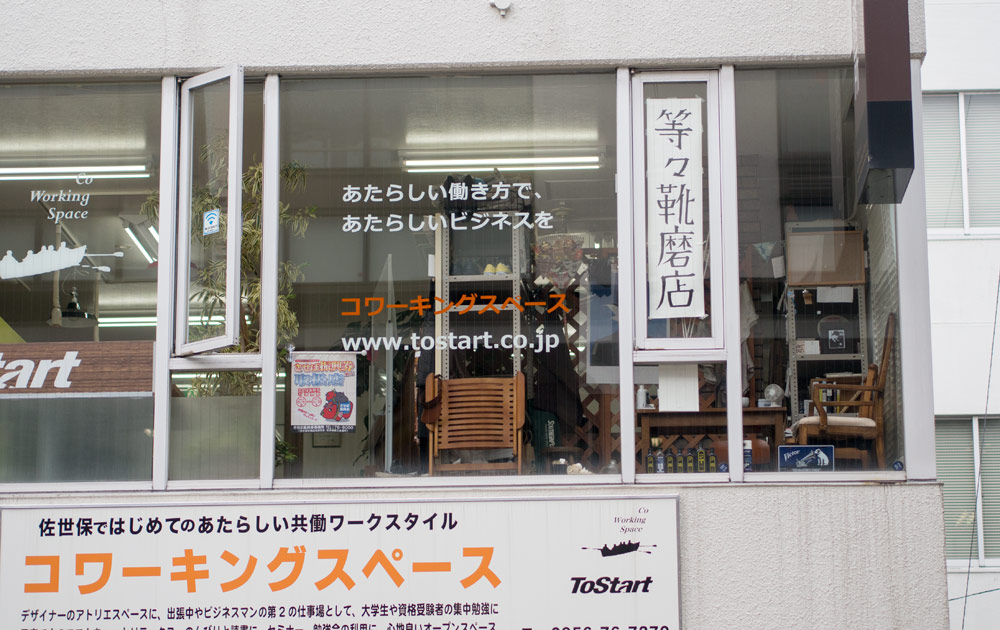
They’ve been outside my shop, but they’ve never come up to see me.

*The shoe-shining shop is on the second floor.
I see. Maybe they see it as your own personal space.
Yamabe
My father sometimes stops by on the way home from work to give me a ride home, but he never comes up to the shop.
Do you think he’s doing that on purpose?
Yamabe
Probably. When I first said I wanted to open a shop, I think they wanted to object. But neither of them actually said anything.
How did you first bring it up to them?
Yamabe
I said, “I’m thinking of running a shop.” They seemed pretty puzzled by it. They asked what kind of shop I’d be running, and I told them I knew someone who would teach me to shine shoes and find me a place to do it. They just said, “Hm.”
What kind of “Hm.” was it?
Yamabe
It wasn’t a “No,” but I’m sure they thought I couldn’t really handle it. But then shortly before my first day, in the kitchen, I said good night to my mom. And she said, “You always said you wanted to open a shop.”

Yeah.
Yamabe
I’ll never forget that. It made me understand that they were worried about me.
Which makes sense—their 16-year-old son was in junior high school a moment ago, and now he’s about to open his own shop.
Yamabe
My parents smile all the time, so I’ve wondered what they look like with serious expressions on their faces. Then I thought, “Oh—they must get serious when I’m not around.”
I’d be the same way if I thought of my child going around the city streets at night in the entertainment district, calling out for dirty shoes.
Yamabe
Something good happened to me recently.
Oh, really?
Yamabe
Last year, my classmates from junior high were starting their own job hunts, and they let me shine their shoes.

So you shined your friends shoes?
Yamabe
I did. I’ve always felt, personally, like I was falling behind my classmates. I took such a long time off from them.
I see . . .
Yamabe
I strayed from the path I’d been traveling down with them. They’d always ask me to join them when they got together, and I was happy they invited me. But I felt like I lacked such extremely innocent, decent characteristics of theirs.
Did you see them very often?
Yamabe
Almost never.
What was it about shining their shoes that made you so happy?
Yamabe
I finally felt like I could stand side-by-side with them. They were probably always conscious of the fact that I’d gone on a completely different path from the rest of them, and I felt that, too. But shining their shoes closed the gap between us, and I felt connected again.
After hearing your stories I wonder whether connecting with the people around you is what it means to have a job.
Yamabe
Yes, it made me realize that. When I dropped out I got the feeling I was causing trouble for other people and making people worry, even if no one else ever actually felt that way.

Yeah.
Yamabe
But everyone brought their loafers to me and asked if I could shine them before they headed to Tokyo for a big interview. It was a little embarrassing, but I did it. Afterward they would say, “Wow, these look great—I don’t believe it, they’re so sparkly!” [Laughs]
What a perfect response. [Laughs]
Yamabe
Having my work praised by my old classmates made me very happy.
I’m sure they were impressed to see you already making a living after going down your own path.
Yamabe
And hearing it from them was particularly meaningful. But I’m just as impressed with all of them. I quit, but they stuck it out for three more years and graduated.
So each of you turns to the other and says, “You’re amazing!” [Laughs]
Yamabe
And we all reply, “No, I’m not.” I like that about our relationships. It made me wish we could have been this way sooner.
But maybe it was because of all you’ve been through. You avoided shutting yourself in at home. You began to shine shoes. You’ve done your best, even when your shop was in the red, and you’ve gotten to the place you’re at today.
Yamabe
I’m not yet where I want to be, but I think I’m starting to get to where I’m able to do a good job of cleaning everyone’s shoes.

When I look at old photographs, or black-and-white movies, the black shoes people wear seem almost white. I’m sure they were covered in dust; the roads weren’t paved, after all. It makes me think there’s something mysterious about shoes.
Yamabe
What do you mean by that?
I can’t explain it very well, but there’s something really intimate about shoes. Westerners will leave their shoes on and plop right onto bed. There’s also that saying, “Fashion starts with the feet.” But at the same time, shoes are very dirty.
Yamabe
Right.
So it’s strange to be on such intimate terms with something that gets so dirty. Maybe that’s why wearing new shoes is so exciting.
Yamabe
That’s interesting. I hope people feel the same way when they put on freshly shined shoes.
They do. It’s not quite the same as a new pair, but it’s a wonderful feeling.
Yamabe
Really? I’m glad to hear that. Customers bring their leather shoes in to be shined regardless of how much money they spent to buy them.
Ah, so you even get cheap shoes, so long as they’re leather.
Yamabe
Even if people don’t bring 20,000 yen sneakers, they will bring a 2,000 yen pair of leather dress shoes. That’s what’s so mysterious about shoes.

Perhaps people feel the most like shoes are a “tool” when they wear them at work.
Yamabe
Yeah, like they’re something that requires regular maintenance.
What do you find interesting about shoes?
Yamabe
I feel like I’m involved in the most extravagant part of the process.
Extravagant?
Yamabe
I watch filthy, even moldy shoes become clean before my very eyes. It’s hard to see from outside, but I burn the roots of the mold with sunlight, and then I wash it with water and apply nourishing cream. Then the shoes start to shine a bit, already.
Even though you haven’t shined them yet?
Yamabe
Right. And the shine at that moment is one that only I get to see. Lately I’ve come to see that as an extravagance.
We were talking to an artist for another interview, and he said exactly the same thing. When he paints with watercolors, he’s the only one who gets to watch the paint sparkle as it dries.
Yamabe
Maybe it’s the same feeling. When I’m shining shoes, I feel like the shoes are in conversation with me.

“Like this?”

“Right.”

“Oh, good.”

“Like this?”

“No, not quite.”

It’s that back and forth whenever I’m shining shoes.
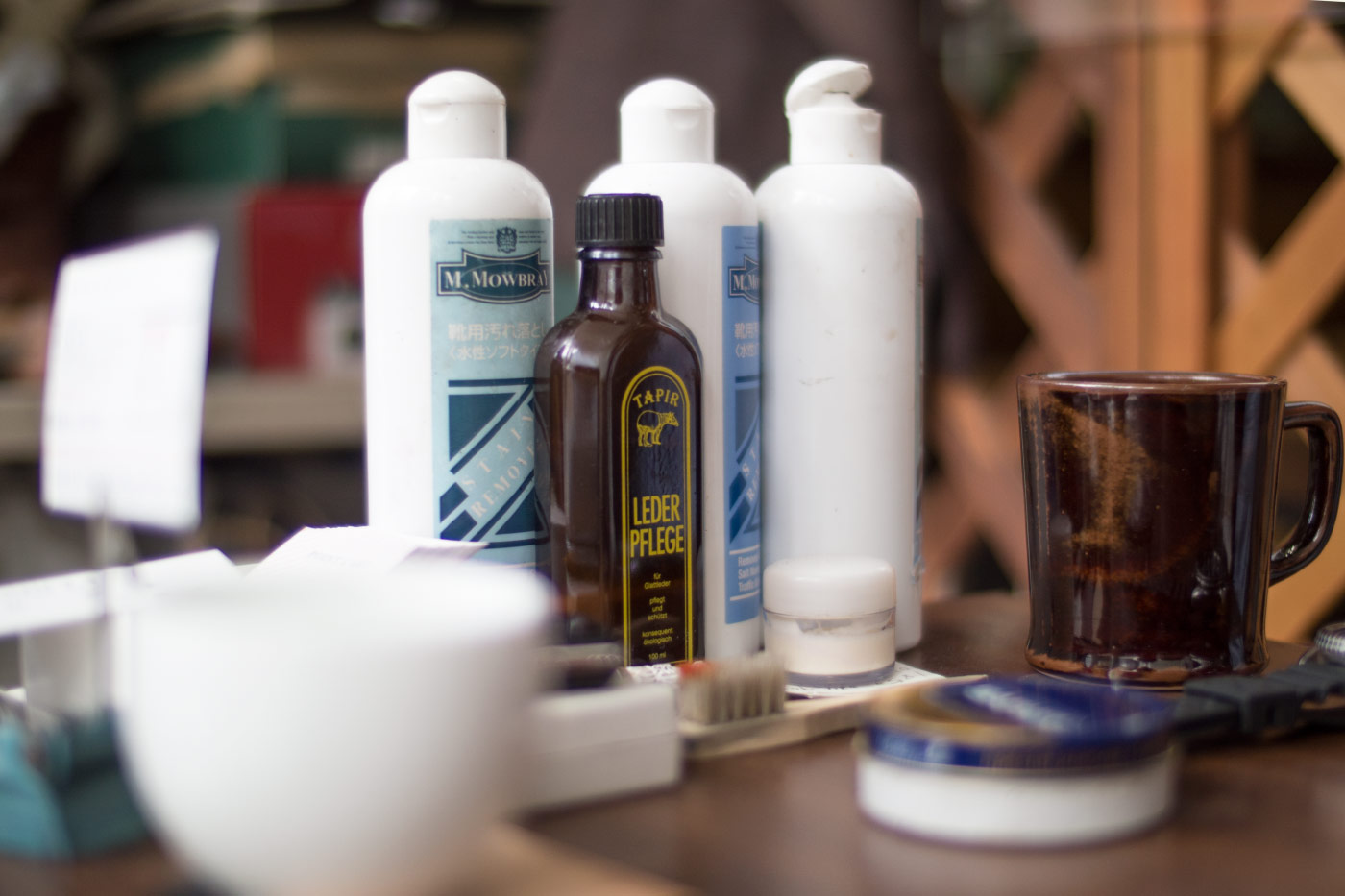
A conversation with dress shoes.
Yamabe
The clean pair of shoes I’m left with doesn’t stay with me; it goes home to its owners. But the entire process that led up to those shoes feels like a luxury I get to experience.

[End]

2016-12-06-Tue

BACK | Part 3