Twenty-First-Century Work Theory:
Shoe Shiner Edition

Interview with Shoe Shiner Keisuke Yamabe

In Studs Terkel’s hefty 1972 book Working, the author interviews 133 everyday people, including a professional gardener, a receptionist, a barber, a lawyer, and a salesman. These dictations offer a magnificent look at people’s feelings about their working lives. While we could never recreate Terkel’s timeless masterpiece, we at Hobonichi wanted to make a “21st century” version to show all the interesting jobs in today’s generation. 21st Century: Working! is occasional feature on the Hobonichi website run by team member Okuno.

Keisuke Yamabe

Born in Sasebo City, Nagasaki Prefecture in 1997.

Learned a great deal by frequenting a coffee shop while on hiatus from high school. Eventually dropped out of school and started his own “Miscellaneous Shoe Shine Shop.”

Part3

Paying for ruined shoes, and a 12 yen profit.

Oh, you had to pay them back for their ruined shoes?
Yamabe
Yes.
May I take a look?
Yamabe
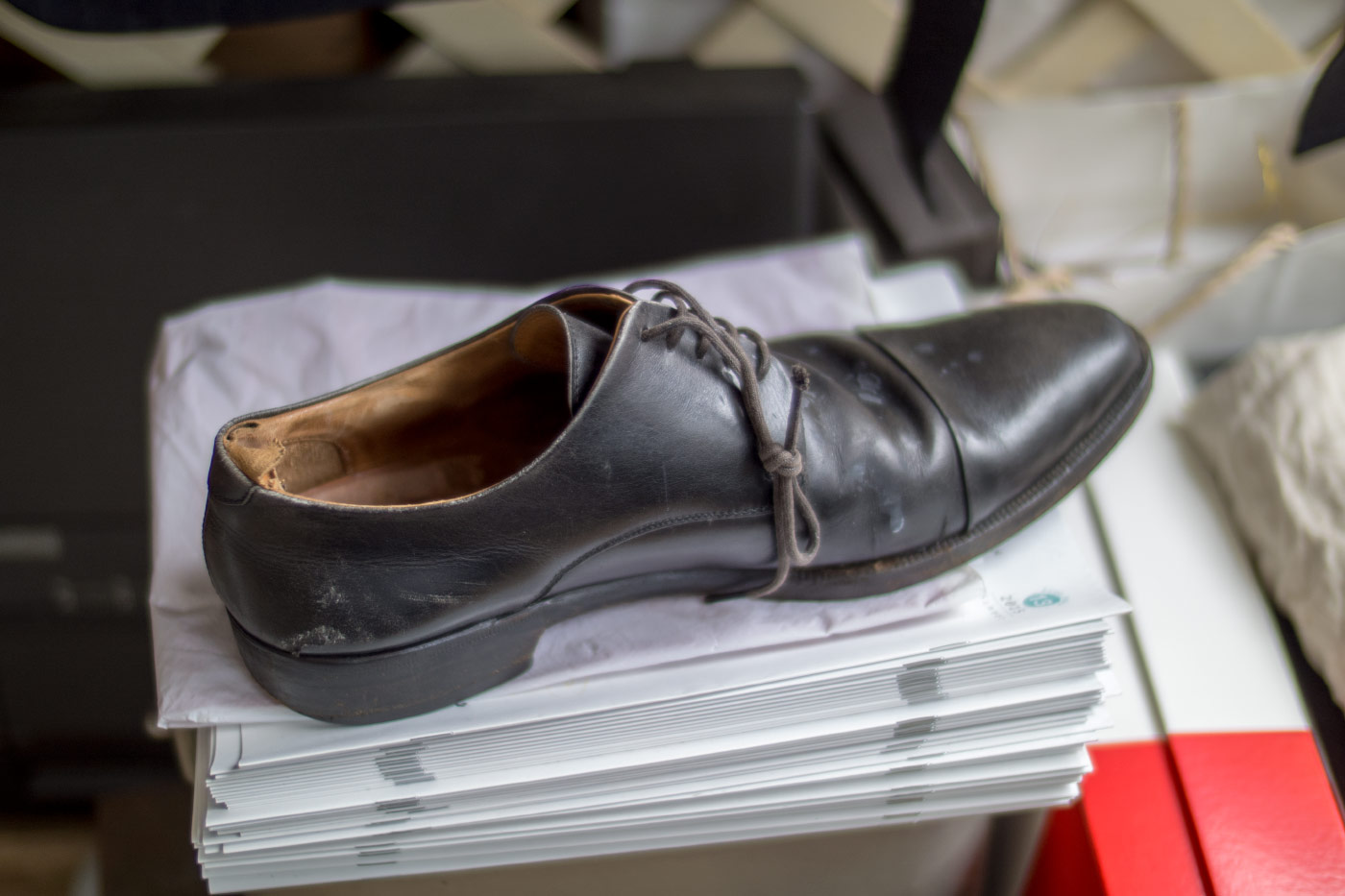
I totally ruined them.
Where?
Yamabe
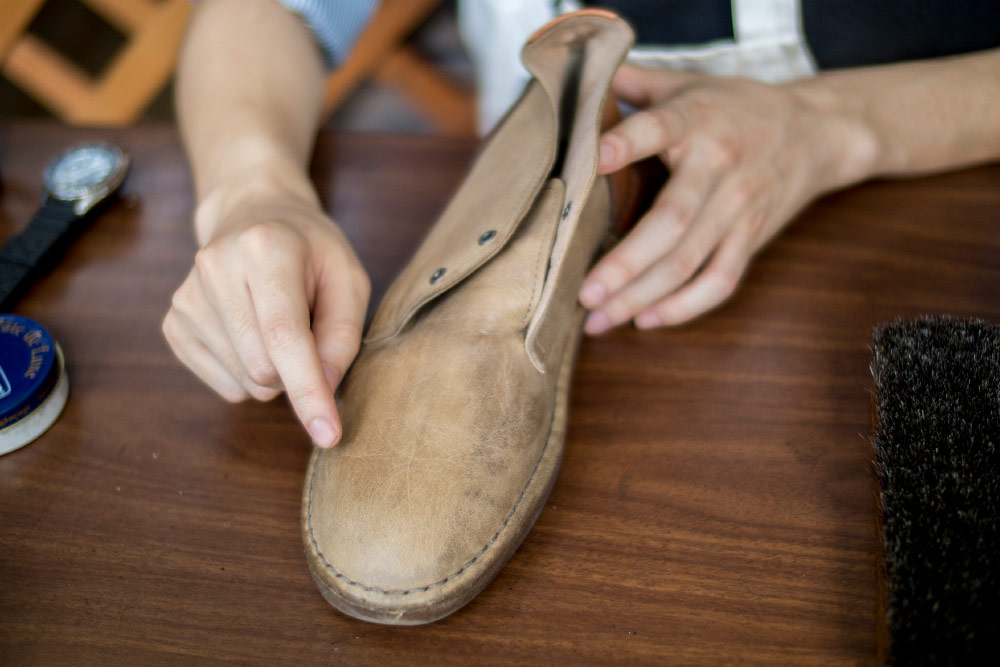
Right here—do you see the discolored spot on the toes?

Oh, the color has faded there.
Yamabe
It’s rough to the touch, also. When they were produced, the shoes were darkened at the toes to give them a worn, antique look. The customer asked me to remove the antique finish.
Remove the finish?
Yamabe
Yes. The customer thought they were dirty, but I thought to myself, “This just looks like an antique finish.” I took the job in spite of my doubts, and tried all kinds of ways to get the “dirt” off the toe.
Even though it was just the finish?
Yamabe
I tried scrubbing it really hard two or three times, but that didn’t do a thing. I thought about asking the store that sold the shoes, but I never got around to it. I just kept on washing it. By the time I noticed the color had totally shifted, it was too late. I panicked and tried to restore them, but by then the leather was as dry as paper.
That’s bad.
Yamabe
At the time I’d been working on the street three days in a row. I was devastated—I was finally getting customers and this was what I’d done. He wanted me to buy him a new pair, so I did. But his new shoes cost 30,000 yen. I instantly lost everything I’d made over those three days.

All of it?
Yamabe
I had a lot of customers, and things were going really well, but it all disappeared.
With a single mistake.
Yamabe
I was so upset. Later I went to the store where he said he’d gotten the shoes, and that’s when they told me the “dirt” was just the finish.
So there was no right way of doing the job at all.
Yamabe
They said the dye was applied at really high temperatures. It was impossible to remove. I was filled with regret about not going there to ask in the first place.
But you were busy.
Yamabe
No—I knew I couldn’t just blame it on being too busy, or too embarrassed, or too proud. After all, it cost me three good days’ pay. I had turned leather into paper, and the customer was absolutely livid.

I’m sure.
Yamabe
The man who taught me to shine shoes came to see me while I was working the street. When he saw the ruined shoes, he just said, “Hey, kid, this is not good work.” This all happened at the end of my first year, and it totally shattered the confidence I’d built up.
You mean you’d gotten conceited?
Yamabe
I think so. I’d opened my own shop at 16, I’d started to pick up steady customers . . . the local paper had even interviewed me about dropping out and starting my own business.
I see.
Yamabe
It made me realize that I’d misunderstood why the paper had interviewed me. It wasn’t because I was doing anything amazing; I was just a novelty.
Ah.
Yamabe
I decided I would go back to being a beginner. I scrapped my own “style” of shoe-shining that I’d started to develop and went back to the basics I’d been taught.
So the shoes stay here as a warning to yourself?
Yamabe
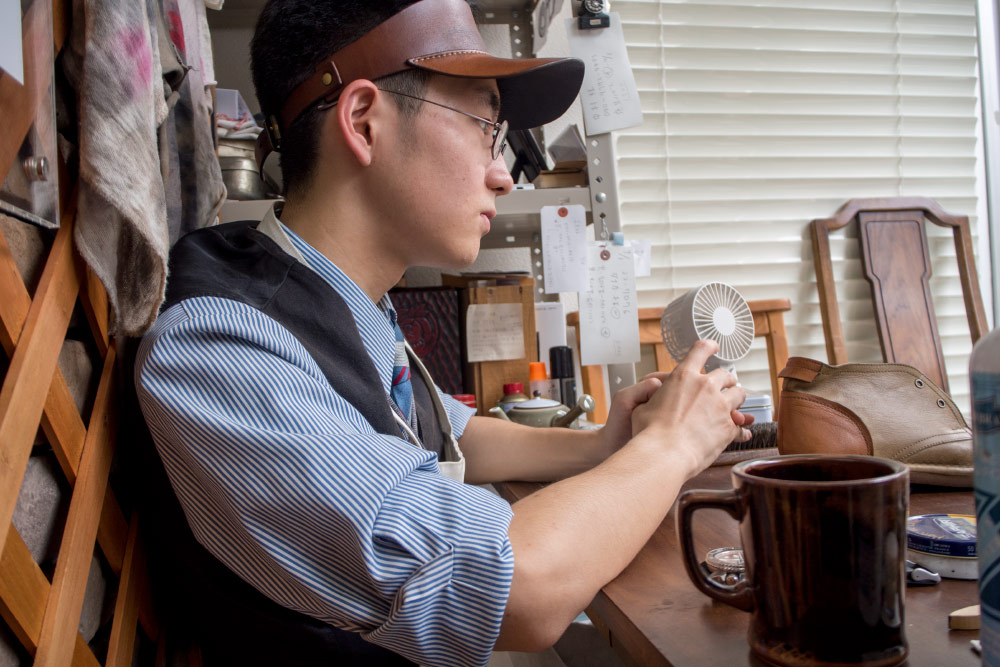
Yes. I’ve placed the ruined pair in the highest place in this shop, so they can look down on me.

Up high in the same place you’d see a household shrine.
Yamabe
I’m the one who failed; but my failure occupies a higher position. It’s like my failure is always reminding me, “You know what you did.” “You know all about me.”
It kind of looks like they could be watching over your work.
Yamabe
That could be!
I’m sure you didn’t have customers from the moment you opened your shop. Did the newspaper coverage help?
Yamabe
It was a huge help. I was really thankful for it, even though the headline said, “16-year-old Overcomes Hearing Loss To Open Shop.”
It did?
Yamabe
I thought, “Oh, they got me!” [Laughs] It’s the same story they always put on TV, “So-and-so overcomes such-and-such illness.”
Even if they have the facts right, they’ve given them a very particular nuance.
Yamabe
That was one of the good ones, though. Some of the other stories were even more sensational. It kind of put a bad taste in my mouth. But I felt better about it when I realized my customers weren’t just coming to console me.
They just wanted their shoes shined.
Yamabe
Right.

The customers were just getting their shoes shined like they always did, and after the articles I’m sure that normality felt wonderful.
Yamabe
It did. It was a relief that they weren’t saying “Oh, keep doing your best!” It was more, “I know you’re doing your best, but that’s not really why I’m here.”
By simply saying, “Could you shine my shoes?”
Yamabe
Exactly. They’d say, “These boots are really important to me, but they’re in bad shape. I heard your shop had opened up, so I came to see if there was anything you could do about it.” I’d tell them I’d do what I could. I was so thankful for those perfectly normal, unremarkable business transactions.
There’s one thing I’ve been wondering—I’ll just come out and ask it. How is your business doing now?
Yamabe
I’m getting by. It’s in the black, but just barely.
Wow.
Yamabe
For a long time after I opened the shop it was in the red, so I was also working part-time at a kebab stand. It made me acutely aware of the fact I wasn’t able to support myself with this job.
I see.
Yamabe
It made me wonder why, exactly, I keep shining shoes. But the first time I eked out a profit—I’m not exaggerating when I say it brought tears to my eyes. None of my mistakes had made me cry, but I couldn’t help myself that first time I ended up in the black.

When was that?
Yamabe
Very recently. Late last year.
How far in the black were you?
Yamabe
12 yen! [Laughs]
That would make me cry, too . . .
Yamabe
Writing that 12 into the total column on my ledger was a huge moment. I had to scramble to find my black pen! [Laughs] Up until then I’d only ever needed the red one.
So you were happy?
Yamabe
Yes, of course! I was beside myself. All I could think of was the faces of my customers. I’ve heard people talk about times when their customers’ faces came to mind, and I’d never really believed it.
Yeah.
Yamabe
But when I first saw that black 12, I could distinctly see my regulars’ faces, and the faces of other customers. That was what came to mind.

2016-12-06-Tue

BACK | Part 2