Twenty-First-Century Work Theory:
Shoe Shiner Edition

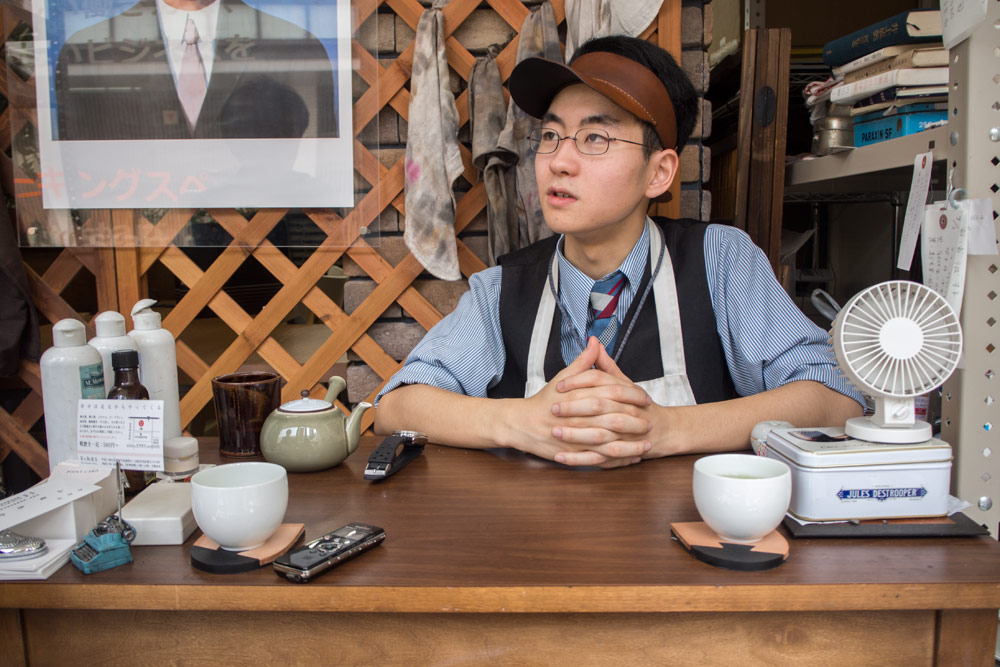
Interview with Shoe Shiner Keisuke Yamabe

In Studs Terkel’s hefty 1972 book Working, the author interviews 133 everyday people, including a professional gardener, a receptionist, a barber, a lawyer, and a salesman. These dictations offer a magnificent look at people’s feelings about their working lives. While we could never recreate Terkel’s timeless masterpiece, we at Hobonichi wanted to make a “21st century” version to show all the interesting jobs in today’s generation. 21st Century: Working! is occasional feature on the Hobonichi website run by team member Okuno.

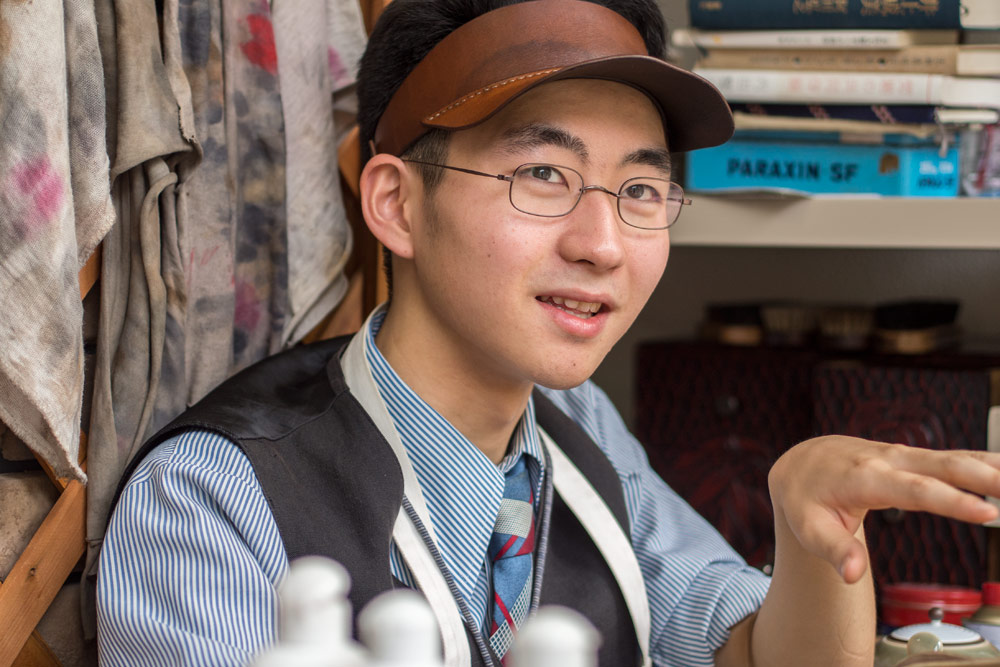
Keisuke Yamabe

Born in Sasebo City, Nagasaki Prefecture in 1997.

Learned a great deal by frequenting a coffee shop while on hiatus from high school. Eventually dropped out of school and started his own “Miscellaneous Shoe Shine Shop.”

Part2

Coffee Shop School

Why did you become a shoeshiner? If you started at 16, that means you began immediately after junior high school.
Yamabe
I got really sick halfway through my freshman year of high school. I collapsed in the broadcasting club and was taken to the emergency clinic.

What was the cause? . . . If you don’t mind us asking.
Yamabe
They never really figured it out. They ran all kinds of tests, but at the end the doctor told me they didn’t know what had caused it. But there were additional complications, and suddenly I lost hearing in my left ear.
Oh, really?
Yamabe
All of that was what led me to take a break from school for a while. Eventually it looked like my options were to either repeat the grade or leave school for good.
Yeah.
Yamabe
Honestly, I didn’t like the idea of staying back a year and being in the same class as the kids who’d always been a grade below me. So I dropped out, and now I take high school equivalency courses.
I see.
Yamabe
I only have classes three days a week now, and school isn’t in session every week. So I have a lot of free time.
Are any of the students older than you?
Yamabe
For sure. One of my close friends in the class is 62.

Why is he taking classes?
Yamabe
He runs a real estate agency, but he wanted to go back to high school and give his education another try. His homework is always totally perfect, because he’s got all the knowledge and tools from working in real estate and civil engineering.
He’s a pro, after all. [Laughs]
Yamabe
When we had our cultural festival, we had to build a stage. There’s a student who works in construction; he gathered about 30 people to join his team and it was done in about 30 minutes. Another time, our teacher got into an accident and took his car to a body shop where one of his students worked. It was like, “Leave it to me, Teach.”
I like that! [Laughs] Everyone taking care of each other, and you get to be a part of it.
Yamabe
I would go to the coffee shop every week to chat with the barista and the other customers. They’d always ask, “. . . Are you supposed to be there right now?” Then I would tell them I was taking equivalency classes and they’d say, “Oh, I see. Good luck!”
Chatting over coffee.
Yamabe
Right. And just recently I had the thought, “Wait a minute—how was I able to afford going there every week?” Coffee’s not free, after all.
That’s very true.

Yamabe
So I finally realized that the other customers had been paying for my coffee. I was so caught up in going there every week, because I enjoyed talking with the adults, that it didn’t occur to me that somebody was paying for the coffee I was drinking.
And you only realized that after the fact?
Yamabe
I felt so embarrassed about it.
Was it getting a job that helped you recognize it? Even if it’s only 400 or 500 yen, it’s amazing that someone was standing you to that every time.
Yamabe
If I’d spent all that time holed up at home I’m sure I’d be worthless. Going to the coffee shop, drinking coffee, having them check up on me and let me into their group—that saved me.
So you attended coffee shop school.
Yamabe
That’s genuinely what it was.
Did you meet people with all kinds of jobs there?
Yamabe
I did. Insurance brokers, architects, designers… and the barista, of course.
So you went to school with a real estate agent and a construction worker, and you went to coffee shop school with an insurance broker and an architect and a designer. A normal high schooler doesn’t get to experience that kind of environment.
Yamabe
Someone at the coffee shop told me this once: “Sorry, but nobody here is going to tell you what to do or what not to do—we’re not your father.”
Ah.

Yamabe
“You’re an interesting kid. So just do your best—that’s all I’ll say.” They didn’t like other people setting up as the arbiter of right and wrong about what somebody else is doing.
Do you think you were trying to gain their approval at the time?
Yamabe
There was definitely a part of me that wanted to be accepted by my teacher and my classmates.
And maybe a sense of restlessness?
Yamabe
When I spent time with all those adults at the coffee shop, their stories were always so interesting. I didn’t know what they did all day, but they were wonderful people, and I wanted to know what to do to be like them.
Yeah.
Yamabe
One day I realized that all of them had jobs, and that if I wanted to be like them I needed one, too. But I wasn’t sure what I could do.
Oh! That’s how you saw it?
Yamabe
It was. One of the people at the coffee shop was a man who used to shine shoes.
Ah, so that’s where shoe-shining comes in.
Yamabe
He’s a designer now.
Were you the one who brought it up?
Yamabe
Yes. I knew I wanted a job so that I could be like the people at the coffee shop, but I didn’t know what I could do. But then I saw a shoe-shiner outside Nagasaki Station and realized that was still a job people did. It seemed like the kind of thing I could do, too.

So you became his apprentice? What an extremely practical education.
Yamabe
I was just thinking about giving it a try. I didn’t have any money, and I knew I could do it outside. But the designer pointed out that if I only worked outside, I’d still be unemployed on rainy days.
What good advice! Right to the point.
Yamabe
He said it was better that I have a place of my own, no matter how small. When I asked him to teach me to shine shoes, he said he’d find me a place. And so he did, the very next day.
The next day?
Yamabe
Yes. [Laughs] Because of his work, he’s done the interior design for a lot of buildings, including the place I’m at now.
Even before you learned how to shine shoes.
Yamabe
I honestly thought it would be a year before I could get started. But the shop came first, so I only had two lessons. He told me, “You know the basics. Now it’s time to get the experience.”
You dove in head-first.
Yamabe
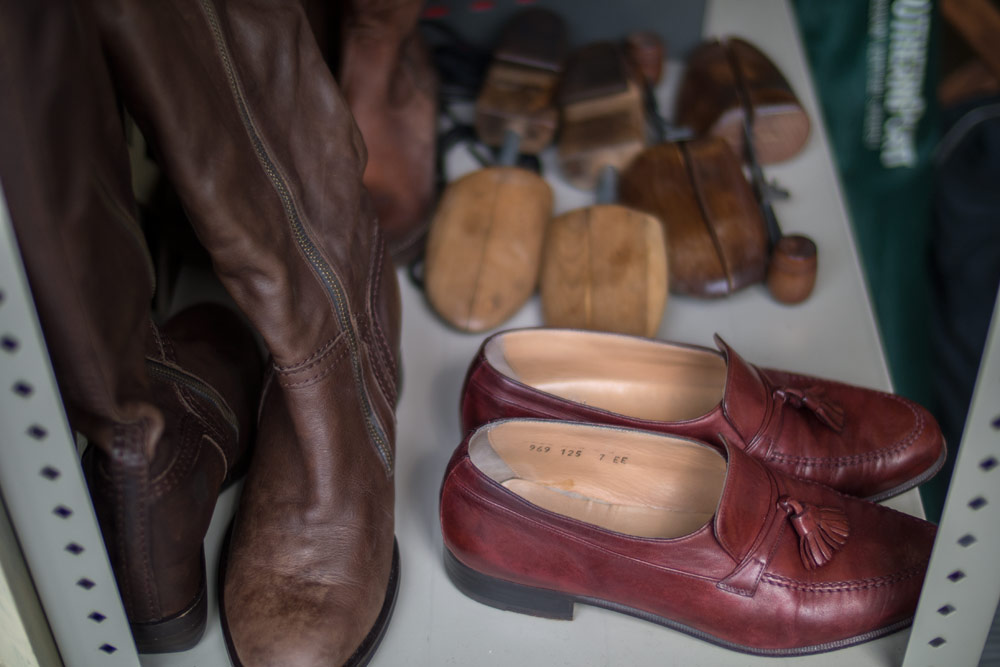
I really did. [Laughs] I messed up all the time at first . . . Do you see the pair of shoes on the shelf? Those are the ones I had to compensate a customer for the first time.

2016-12-06-Tue

BACK | Part 1