Why I Write Stories

Talking with Hirokazu Koreeda
about Our Little Sister and other works.

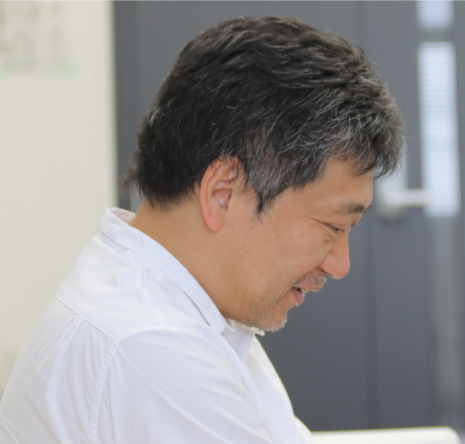
Hirokazu Koreeda

Born 1962 in Tokyo. In 1995 he won the Golden Osella award for his directorial debut, Maborosi. In 1998, his film After Life was released in 30 countries around the world, including 200 theaters in the United States. His 2004 film Nobody Knows made its star, child actor Yuya Yagira, the youngest-ever winner of the Best Actor award at the Cannes Film Festival. Koreeda also worked on Hana (2006), the Blue-Ribbon-award-winning Still Walking (2008), and Air Doll (2009), which was featured in the Un Certain Regard selection of the Cannes Film Festival. In 2011, won the San Sebastian International Film Festival Best Screenplay Award for his film I Wish.His highly acclaimed film Like Father Like Son, starring Masaharu Fukuyama, won the Jury Prize at the 2013 Cannes Film Festival and…

…launching the production company BUN-BUKU,INC. 
Part4

It’s Fun Being A Director


In your previous movie, I Wish, the two brothers live far apart. There’s a scene where the older brother has his younger brother try a snack called karukan, made by their grandfather, played by Isao Hashizume.
Koreeda
Yeah.
When the boy gets home and tells his grandfather, his grandfather asks, “What did he say?” to which the boy says, “He isn’t old enough for that.” Hashizume adlibbed snorting at the line, and you’d said that once that happened, you realized what kind of person the grandfather was.
Koreeda
Yes.


There’s something else I read in another interview you did. In Like Father, Like Son, when the actor, Lily Franky, hits Masaharu Fukuyama on the head, Lily chose to hit him rather lightly, which was a very subtle way of portraying the personality of his character as an electronics shopkeeper in the countryside.
Koreeda
That’s true.
Were there any ad libs in Our Little Sister that deepened the story in that way?
Koreeda
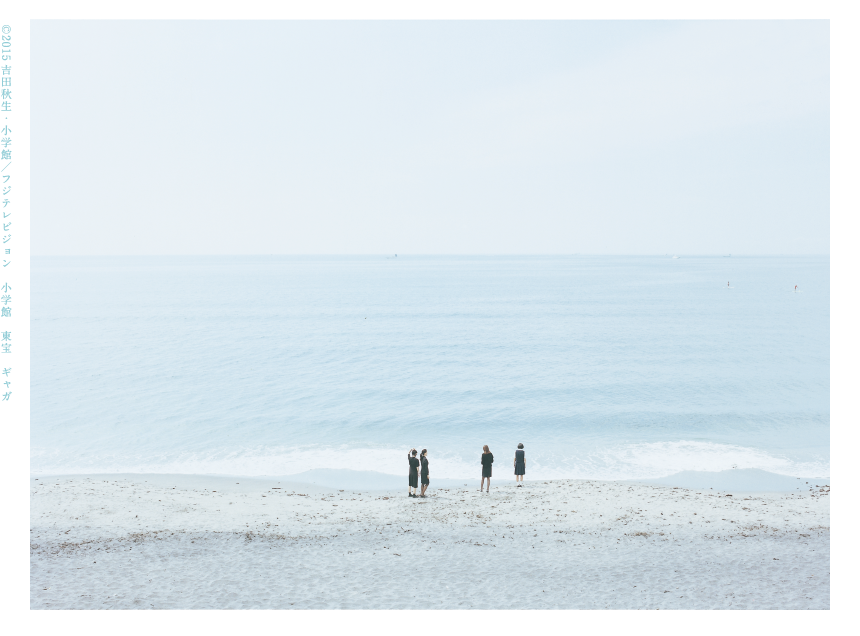
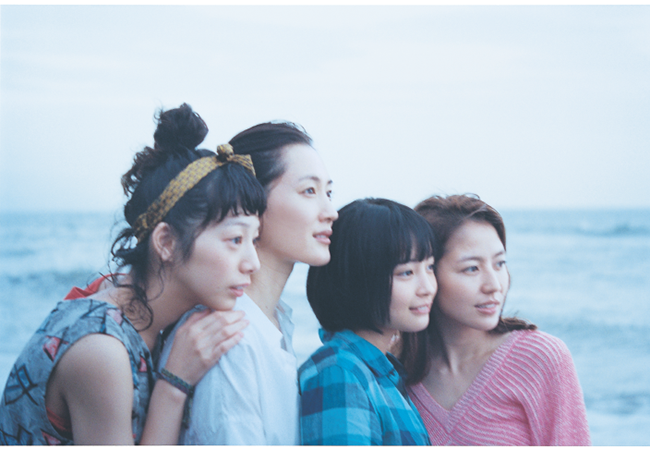
There were several scenes I changed after watching the actors work. For example, the scene where the oldest sister, Sachi, reunites with Jun Fubuki’s character in the waiting room at the hospital where she works.

I remember that.
Koreeda
When I watched Haruka Ayase, who played Sachi, interact with Jun Fubuki, they were much less distant than I had anticipated. It was more intimate.
That was the actors?
Koreeda
It turned out that the two characters were actually close. After watching them interact, I added a scene where the four sisters go to eat in Fubuki’s character’s cafeteria.


It’s interesting to see the way a film set and its shooting process are a living thing.
Koreeda
The scene wasn’t originally a part of the film, but because they interacted so intimately with each other, I thought the sisters would definitely go visit, and bring their half-sister along.
I see.
Koreeda
And since it went in that direction, I knew to end it with that final scene.
Without giving too much away, was the last funeral scene different in your early drafts of the movie?
Koreeda
The first draft was the same as the original manga, which had the four sisters return to Yamagata on the first anniversary of their father’s death.

Really?

Koreeda
It transformed into the final version once we started shooting. It was because of that cafeteria scene that I was able to accept the change.


That’s interesting.
Koreeda
Those two were close, actually.
Ayase and Fubuki?
Koreeda
Yes. Their closeness naturally shone through, and also, since Ayase’s character was caring for Fubuki’s character’s mother at her death.
Yes, I remember that.
Koreeda
So after spending that time together, the characters had that conversation in the waiting room, and the actresses expressed all that. Their insight was much deeper than what I had written. It turned out that the two characters were actually close.
Is that how movies usually come together?
Koreeda
Not usually! (Laughs) But it happens relatively often for me.
There’s something really fascinating about a story changing course as a result of what happens on the set.
Koreeda
It really is fascinating. That’s what makes being a director so fun.
What else makes being a director fun?
Koreeda
There’re lots of really interesting moments. The time I spend envisioning characters while writing lines, and the times actors discover greater character development than I could have imagined. It’s all so interesting.


I see.
Koreeda
There’s a great deal of physical labor behind editing something you’ve shot without anything particular in mind, but it’s fun when you realize, during editing, exactly what it is you’ve been trying to do all along.
And how about when it’s all done?
Koreeda
That’s not as interesting. [Laughs]
Oh, really?
Koreeda
At that point I just want to move on to the next project.
Do you ever sit down and watch your own work?
Koreeda
Almost never.
Ah, I guess not.
Koreeda
At least I don’t. It’s like seeing myself in some old pictures and thinking “What the heck was I thinking, wearing a sweater like that?” [Laughs]
Nah, that’s not true. [Laughs]
Koreeda
I’d blame it on the decade, or my youth, or my taste in women back then. [Laughs]
Ah, I see. [Laughs]
I’ve got one last question for you.
Koreeda
Sure.
I know you’ve been working together with Mikiya Takimoto for a while. The reason I felt like I never wanted Our Little Sister to end was because of its distinct atmosphere present in all his work.
Koreeda
Yes, it definitely has that feel.


How do you feel about that? And about him and his work?
Koreeda
I have a great deal of respect for it.
Respect?
Koreeda
I’m not really sure how to explain it, but it’s the way he works with cameras, lenses, film . . . Take art director Kaoru Kasai, for example, who I often hire for my movie posters.
Yeah.
Koreeda
Kasai is a person who can grasp what to expect with the font, the ink, and the paper just from which company he’s getting it printed through.


Wow.
Koreeda
In other words, he’s incredibly gifted with the ability to physically discern which tools to use to express himself.
I see.
Koreeda
Takimoto works the same way. He’s young, but he knows precisely what to expect of the color schemes if he works with a certain lens and certain film.
Now that you mention it, there’s definitely a feel of precision to his work that gives it a really beautiful, crystalline, transparent feel.
Koreeda
And then there’s his hunger for photography. When he really wants to film something he won’t let anything stop him, even if he has to build a homemade dolly from scratch. [Laughs]


When we interviewed him before, he was in the middle of building his own automated camera that would react to noise in order to film the launch of a space shuttle from a close distance.
Koreeda
Wow, that’s great. [Laughs] That’s what I love about him.

[End]

2016-12-06-Tue

BACK | Part 3