
日本語のわからない海外の人が、
翻訳ツールを使って
ほぼ日を毎日読んでいるとしたら?
世界のどこかにひとりくらいは、
そんな人もいるのかなぁと思っていたら、
なんといました! ほんとうにいたんです!
彼女の名前は、マデリン。
オーストラリアに住む16歳の女の子からでした。
自動翻訳の精度に満足できず、
「公式の英訳記事をもっと出してもらえませんか?」
というメールをほぼ日に送ってきたのです。
日本語のわからない彼女が、
どうしてそんなにほぼ日を読むようになったのか、
ちょっと気になりませんか?
メールでのやりとりを通して、
彼女が読んでいる「HOBONICHI」のこと、
もっとくわしく教えてもらうことにしました。
それでは、マデリン、よろしくね。
Madeleine(マデリン)
オーストラリア在住。
現在は17歳になり、
高校の最終学年を迎えました。
地元のスピーチ大会では、
3度の優勝経験を持つそうです。
好きな科目は「数学」。
好きなゲームは「MOTHER」。
翻訳ツールをつかいながら、
いまも毎日ほぼ日を読んでいるそうです。
※プロフィールは随時更新予定です。
- 昨日の
 のメールを読んで、
マデリンはどんなことを思ったのでしょうか。 - 彼女からメールが届いたのは、
2025年12月31日のことでした。
オーストラリアは季節が真逆ですので、
いまは夏本番といったところでしょうか。 - 今回のメールには、
最近参加したスピーチコンテストの
原稿も添付されていました。
そちらも公開していますので、
メールのあとにでも読んでみてください。 - それでは最後まで、どうぞおたのしみください。
Dear Tsubasa,
Thank you so much for your beautiful letter!
I’m really grateful that you could share your story with me. I was a little nervous to ask that of you, but after reading your response, I’m so glad I did.
Usually when I’m talking to adults about this sort of thing, they’ll skim over emotions and difficulties. By contrast, the way you write about your experiences honestly and authentically has helped me to understand you as not just a finished person who exists now, but as a living ‘organism’ that continues to change and grow.
Actually, it reminded me of the Hobonichi 27th anniversary column. It’s an article I’ve been thinking about a lot lately. In particular, I thought of this quote:
I really like how it’s not neat at all… they run, they fall, they laugh, they cry, they’re full of energy. They’re not afraid of tomorrow or the day after,
Having an ‘squiggly, sticky and slimy’ path isn’t always easy, and can present much confusion and stress. But it’s what makes us who we are. I’m not at the point yet where I’m ‘not afraid of tomorrow or the day after.’ To be honest, I’m quite an anxious person who worries excessively about doing the right things the right way to become the right person. However, reading your story has helped me to better understand what Mr Itoi’s words might mean in the context of my own life. At times, you may have found yourself nervous for what the future might bring, but from what I can see, those fears were always proven wrong. I really like how your path wasn’t a straight one, with the ending visible from a long way away. I want to live my own life with the same energy and determination that you have.
I was both surprised and delighted to hear you were a Maths major!
To be honest, although I love Maths, it’s not something I’m a true ‘natural’ at, either. Sure, I’ve always been good at it, but it’s a subject that I’ve had to really grapple with. To this day, I still can’t do simple mental arithmetic (I need my FX-8200 haha). In my classes, I’d regularly feel behind, even when I wasn’t actually. Learning new topics was at times overwhelming: I would spend hours, weeks just trying to understand a concept, let alone answer questions on it. Like you, although I did well, I had an acute awareness that I was no prodigy. Nevertheless, I still enjoyed it, and the struggles made the triumphs only more satisfying. Now that it’s no longer one of my subjects, I’ll sometimes get out a textbook and do some questions just for fun—induction proofs are my version of sudoku lol.
And yet…it’s not what I really want to do. I’ve always known that, but until now, I haven’t been able to quite explain why. Reading your letter, and the article you linked, I realised I feel the same way you did. Maths is beautiful, but to dedicate my life to it would be… exhausting.
You asked me: what is a subject or hobby that you can do almost effortlessly, and that others naturally appreciate in you?
First of all, I must say that you yourself are definitely an English natural—you write better than almost any native speaker I know! You always seem to know just how to phrase something, which I personally struggle with a lot.
As for myself, I had to think about it for a while. People say I’m good at lots of things, but I don’t really consider myself a ‘natural’.
Except for one thing: speaking to an audience.
In my last email to you, I wrote about how I write my speeches to be able to connect with an audience. However, speech writing is something I used to really struggle at. It’s only through years of practice and feedback that I’ve been able to formulate my own methods of writing. But speaking—I’ve been good at that since childhood. Somehow, I’ve always had an instinct for how a word or phrase should be spoken in order to captivate an audience or make them think in a certain way. Likewise, vivid and purposeful gestures, pauses, and facial expressions are something I do without a second thought. Although I get nervous, once I’m actually standing in front of a crowd, I embody this convincing, self-assured character effortlessly. I live for this character: a sort of dramatised, satirised version of my usual self.
Recently, I attended another public speaking competition, where I gave a speech I wrote inspired by the 27th anniversary column. I’ve included it below so you can read it.
I loved writing it, and as usual, getting up on stage to present it was even more fun.
In the end, I didn’t win.
It’s okay, and I wasn’t particularly sad. I’ve already written a whole other speech about the fact that ‘losing’ is not all that bad. Win or lose, we just try our best in the next game. That’s all we can do.
Lately though, there’s been a few events in my life that have felt like a sort of ‘loss’, and it’s been at times… disheartening. Not in a way that makes me angry, but in a quiet way, that makes me doubt myself. I think it’s interesting how the logical and emotive parts of human brains are at times so disconnected. Of course, I know that it’s okay to experience ‘failure’, and ‘winning’ isn’t everything. But I’m forgetful—I can’t help but fall back into my old ideas of happiness strictly tied to achievement.
For Christmas, my parents gifted me ‘The Courage to be Disliked’. Usually I’m quite apprehensive about self-help books, but since the author Fumitake Koga makes a regular appearance on Hobonichi, I’ve been excited to read it. Although I’m only a few chapters in, the Adlerian philosophy explored is unlike anything I’ve heard in conventional wisdom. It made me question my perception of what ‘failure’ and ‘success’ even is. Already, I’ve begun to understand my thoughts and emotions through a new lens, informed by ‘teleology’. It’s really interesting, and I’ll continue to learn more as I read further.
People are heavily influenced by their environment, goals, and the people around them, but I think the media we consume also has the power to change us. I know for myself, reading Hobonichi every day has not just shaped my writing, but also how I understand myself and the world around me.
Tsubasa, what media has left a lasting impression on you? Are there any Japanese books, movies, or songs that you could recommend to me?
As always, it was a joy to write to you. I’ll be glad to hear from you in the new year.
Love from Madeleine
親愛なるツバサさんへ
美しい手紙をありがとうございました。
ツバサさんの物語をシェアしていただけて、
心から感謝しています。
じつは質問することに少し緊張していたのですが、
いただいたお返事を読んで、
心から訊いてよかったと思いました。
普段、大人の人とこういう話をすると、
たいてい感情や困難な部分は
さらっと流されてしまうんです。
一方、ツバサさんはご自身の経験を、
正直にありのままに書いてくださいました。
おかげで、ツバサさんのことを、
いまここに存在する「完成された人」としてではなく、
変化し成長しつづけている、
生きた「有機体」のように感じることができました。
お手紙を読んでいて、
ほぼ日の創刊27周年のときの
糸井さんのコラムを思い出しました。
最近、私がよく考えているテーマで、
とくに途中の、この一節が頭に浮かびました。
ーーーーーーーーーーーー
いまの「ほぼ日」は、不気味ですよ、生きものっぽくて。
ぜんぜんスッキリしてないのが、とてもいいです。
ある時期のぼくだったら、
もっと見通しのいい景色を求めたかもしれないのですが、
深い森やら、海の中やら、迷路みたいなわからなさを、
群れとして持っているって、すっごくいいです。
走り出すし、転ぶし、笑うし、泣くし、元気です。
明日や明後日を怖がってないところが、
昔の人でもあるぼくにはできなかったことです。
ーーーーーーーーーーーー
「ヌルヌル、ベタベタ、グニャグニャ」した道を
進むのはいつも簡単なことではないし、
たくさんの混乱やストレスを伴います。
でも、それが私たちを形作っているんですよね。
私はまだ、
「明日や明後日を恐れていない」という
境地には達していません。
正直なところ、私はかなり不安症な人間で、
「正しい人間」になるために、
「正しいこと」を「正しいやり方」でやらなきゃって、
過剰に心配してしまうのです。
けれど、ツバサさんの物語を読んだことで、
糸井さんのことばが
私の人生にとってどういう意味を持つのか、
少しだけ理解できた気がします。
きっとツバサさんにも、
未来がどうなるか不安になったことが
あったかもしれませんが、
私から見れば、そうした恐れはいつも
「いい意味で」裏切られてきたように見えます。
ツバサさんの歩んできた道が、
はるか遠くから結末が見通せるような
まっすぐな道ではなかったところが、
私はすごく好きです。
私もツバサさんのように、
エネルギーと決意を持ってじぶんの人生を歩みたいです。
ツバサさんが数学専攻だったなんて、
おどろきましたし、うれしかったです!
正直にいうと、私は数学が大好きですが、
ほんとうの意味での
「天才肌(ナチュラル)」ではないんです。
たしかに成績はずっとよかったけれど、
私にとって数学は、
本気で格闘をしなきゃいけない教科でした。
いまでも簡単な暗算ができません
(FX-8200が必要です 笑)。
授業では、実際には遅れていないのに、
いつも遅れをとっているような気分でした。
新しい単元を学ぶときは圧倒されそうになります。
問題に答えるどころか、
概念を「理解」するだけで
何時間も、何週間も費やしたりして‥‥。
ツバサさんと同じで、
私も成績は良かったけれど、
じぶんがけっして神童ではないことを
痛いほど自覚していました。
それでも楽しかったし、苦労した分、
解けたときのよろこびは格別でした。
いまはもう履修科目ではありませんが、
ときどき教科書を引っ張り出してきては、
遊びで問題を解くことがあります。
帰納法の証明問題は、
私にとっての数独みたいなものです(笑)。
それでも‥‥それは、
私が「ほんとうにやりたいこと」じゃないんです。
ずっとわかっていたことですが、
いままでその理由をうまく説明できませんでした。
でもツバサさんの手紙と、
リンクしてくれた岩田さんの記事を読んで、
私も同じように感じているんだと気づきました。
数学は美しいけれど、
それに人生を捧げるのは‥‥消耗してしまうことだ、と。
ツバサさんは聞いてくれましたね。
「ほとんど苦労なくできて、
他の人が自然と評価してくれるような
教科や趣味はありますか?」と。
まず、ひとつ言わせてください。
ツバサさんこそまちがいなく、
英語の「ナチュラル(天才肌)」ですよ!
私が知っているどのネイティブスピーカーよりも
上手な文章を書かれます。
ツバサさんはいつも、
どう表現すればいいかを完璧に心得ていて、
私はそこでよく苦労しているので、
ほんとうにすごいと思います。
私自身のことについては、
しばらく考え込みました。
みんなは私がいろんなことが得意だと言ってくれますが、
自分ではあまり「ナチュラル」だとは思っていません。
‥‥たったひとつを除いては、ですが。
それは、「聴衆の前で話すこと」です。
前のメールで、聴衆とつながれるように
スピーチ原稿を書いていると言いましたが、
じつはスピーチの「原稿を書くこと」自体は、
かつてすごく苦労していたことなんです。
何年も練習して、フィードバックをもらって、
ようやく自分なりの書き方ができるようになりました。
でも、「話すこと」に関しては‥‥
子どもの頃から得意でした。
聴衆を惹きつけたり、
特定の方向に考えさせたりするために、
ある言葉やフレーズを「どう」話すべきか。
どういうわけか、私にはその本能が備わっていました。
生き生きとした意図的なジェスチャーや、
間(ま)の取り方、表情なども、
とくに深く考えずに自然にできます。
緊張はしますが、いざ人々の前に立つと、
「説得力があって自信に満ちたキャラクター」に、
無理なくなりきることができます。
普段の自分をドラマチックにして、
ちょっと風刺したようなバージョンのじぶん。
私はそういうキャラクターを生きています。
最近、また別のスピーチコンテストに参加しました。
糸井さんの27周年のコラムから、
じぶんなりに膨らませて書いたスピーチです。
(メールに添付したので、よかったら読んでみてください)
書くのはとても楽しかったし、いつものように、
ステージに立って発表するのはもっと楽しかったです。
結果は、勝てませんでした。
大丈夫、とくに悲しかったわけではありません。
「負けることはそんなに悪いことじゃない」
というスピーチを一本丸ごと書いたくらいですから。
勝っても負けても、次のゲームでベストを尽くすだけ。
私たちにできるのはそれだけです。
ただ最近、私の人生で一種の
「喪失」のように感じる出来事がいくつかあって、
それがときどき‥‥心をくじけさせます。
怒りを感じるわけじゃなく、
静かに、じぶん自身を疑ってしまいます。
人間の脳の「論理的な部分」と「感情的な部分」が、
こんなにも切り離されているなんて興味深いです。
もちろん「失敗」を経験してもいいんだ、とか、
「勝つこと」がすべてじゃないとはわかっています。
でも、私は忘れっぽいのか、
幸福とは達成と厳密に結びついているものだという、
古い考え方にどうしても戻ってしまうんです。
両親がクリスマスに、
『嫌われる勇気(The Courage to be Disliked)』を
プレゼントしてくれました。
普段、自己啓発本には
ちょっと警戒してしまうタイプなんですが、
著者の古賀史健さんは
「ほぼ日」にもよく登場されているので、
読むのが楽しみでした。
まだ数章しか読んでいませんが、
そこで語られるアドラー心理学は、
これまで常識に思っていたこととは
ぜんぜんちがいました。
そもそも「失敗」や「成功」とは何なのか、
という私の認識を問い直させてくれます。
すでに私は「目的論」という新しいレンズを通して、
じぶんの思考や感情をとらえはじめています。
本当におもしろくて、読み進めるのが楽しみです。
人は環境や目標、まわりに大きく影響されますが、
私たちが取り込む「メディア」もまた、
私たちを変える力を持っていると思います。
私自身、ほぼ日を毎日読むことは、
私の書くものだけでなく、じぶん自身や周りの世界を
どう理解するかということまで形作ってくれました。
ツバサさんにとって、
心に残っているメディアは何ですか?
おすすめの日本の本や映画、曲などはありますか?
いつものように、
ツバサさんに手紙を書くのは喜びでした。
新しい年に、
またお返事が聞けるのを楽しみにしています。
Love from マデリン
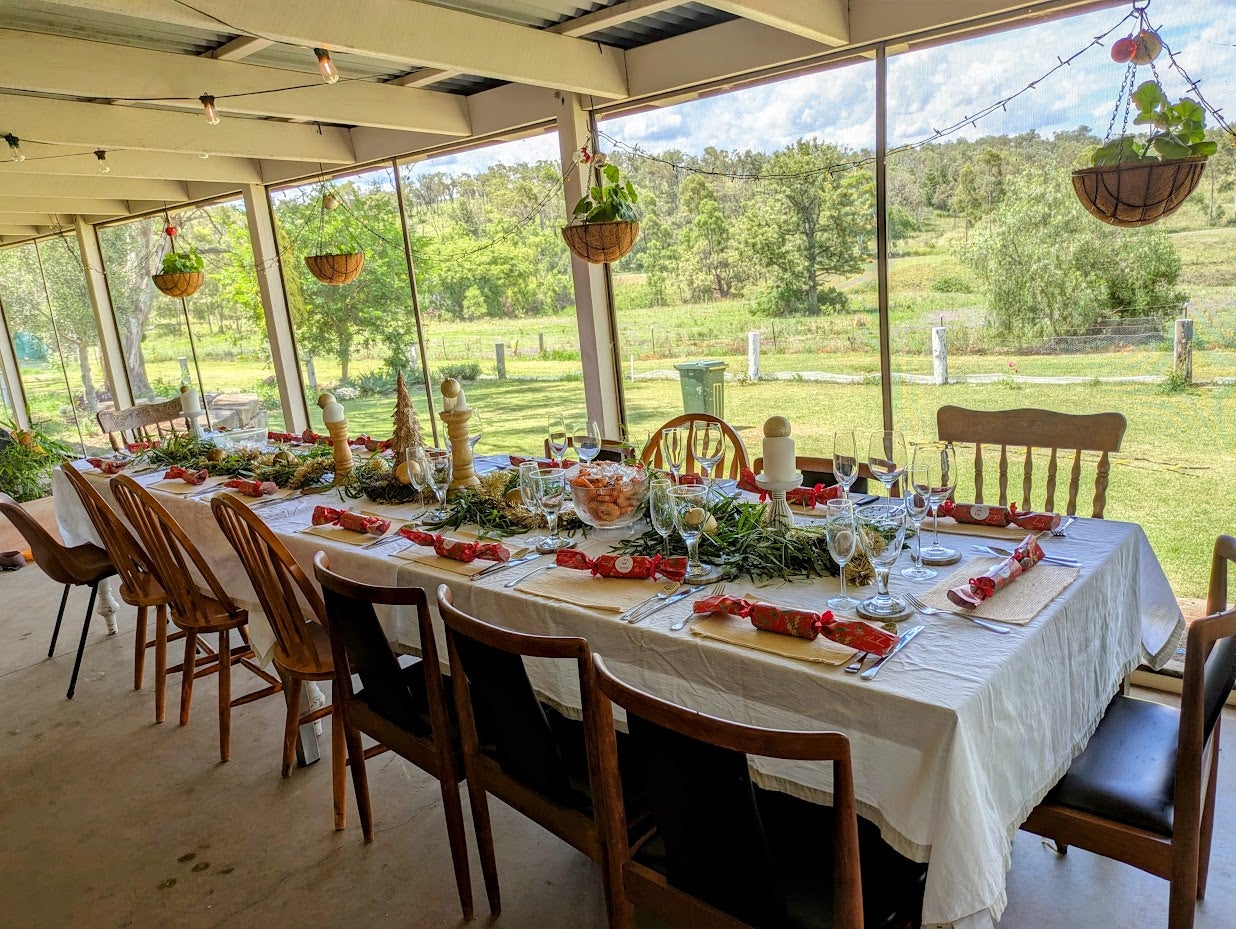 ▲The table set for Christmas lunch at my uncle's property. I tried to get a photo of the food laid out, but everyone was too quick to dig in!(おじさんの家でのクリスマスランチ。テーブルの準備が整ったところです。 料理が並んだ写真も撮ろうとしたのですが、みんな食べるのが早すぎて、間に合いませんでした!)
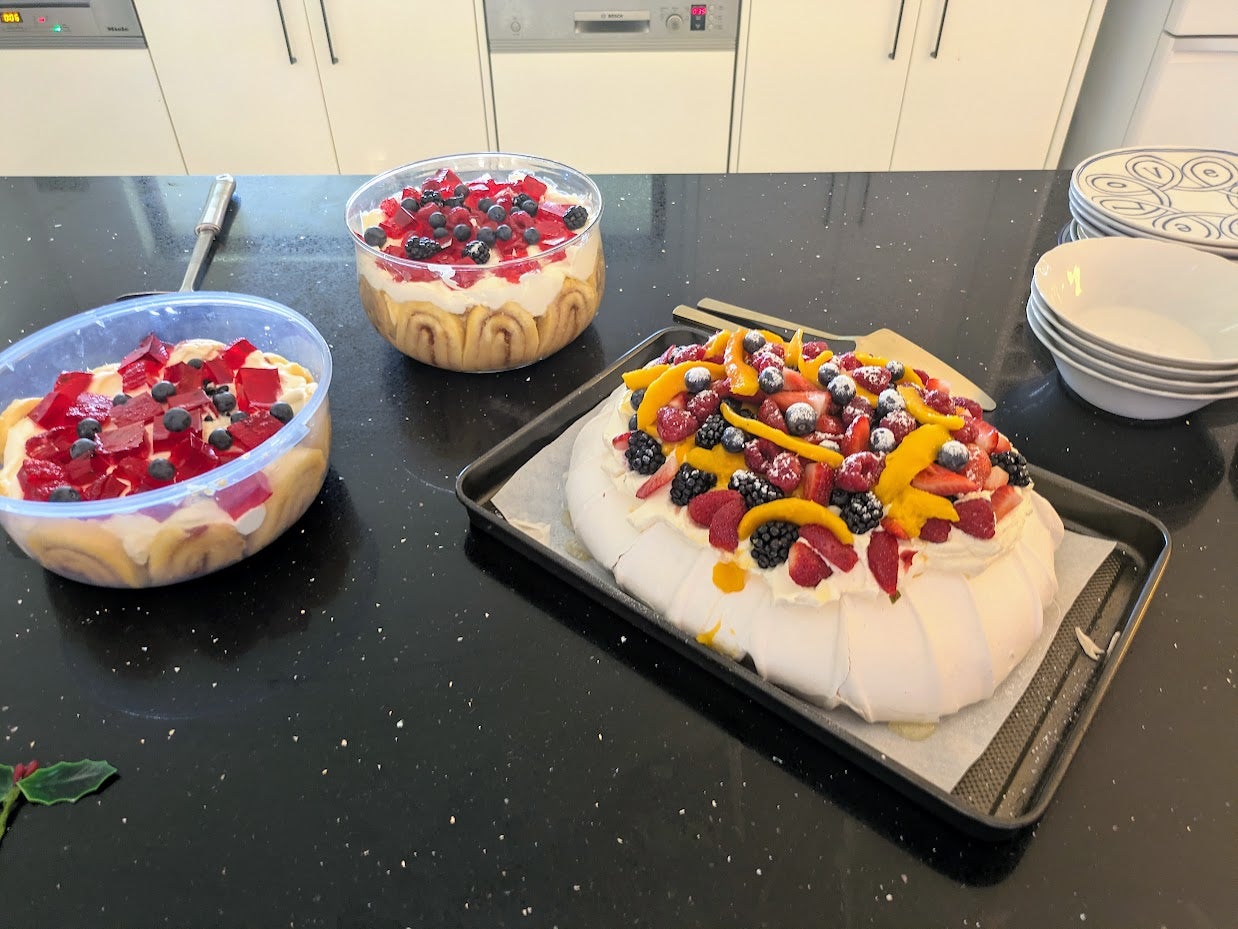 ▲Lunch dessert: Trifle and pavlova. Both are classic Australian Christmas dishes.(ランチのデザート:トライフルとパブロバ。 どちらもオーストラリアのクリスマスの定番です)
- ちょっと調べてみたところ、
「トライフル」というのは、
スポンジやクリームが層状になった
パフェのようなデザートだそうです。
一方の「パブロバ」は、
焼いたメレンゲがベースのケーキで、
ホイップした生クリームを詰めて、
さまざまなフルーツを飾り付けたものだとか。 - いいなぁ、食べてみたい!
- さて、マデリンのお手紙の最後に、
またまた西本への質問がありましたね。
ふたりの文通のようなやりとりは、
のんびりしたペースで、まだまだつづきそうです。

2026-01-23-FRI