Part 1The Cardboard Artist
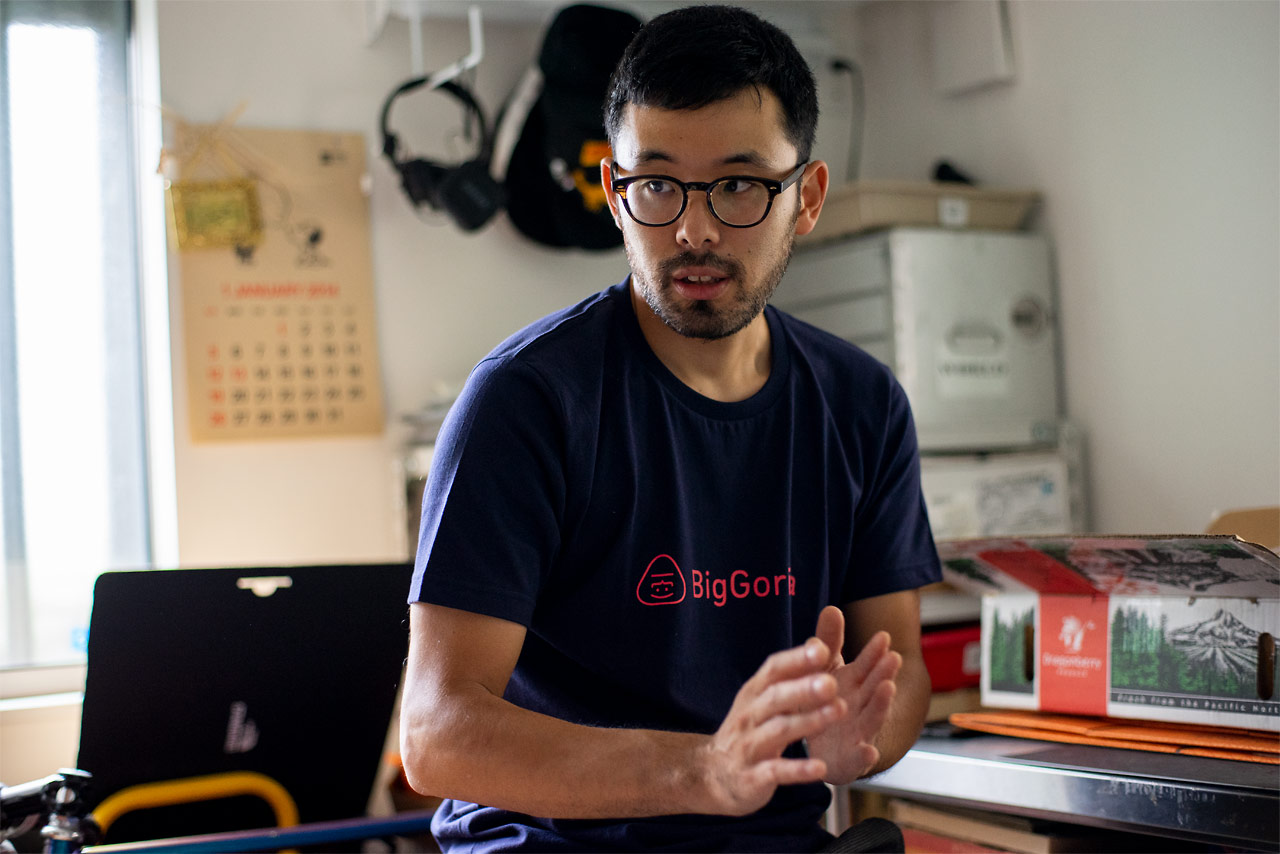
Cardboard artist Fuyuki Shimazu has a project called “Carton” that sees him travel the world in search of cardboard boxes to upcycle into wallets, business card cases, and other practical items.
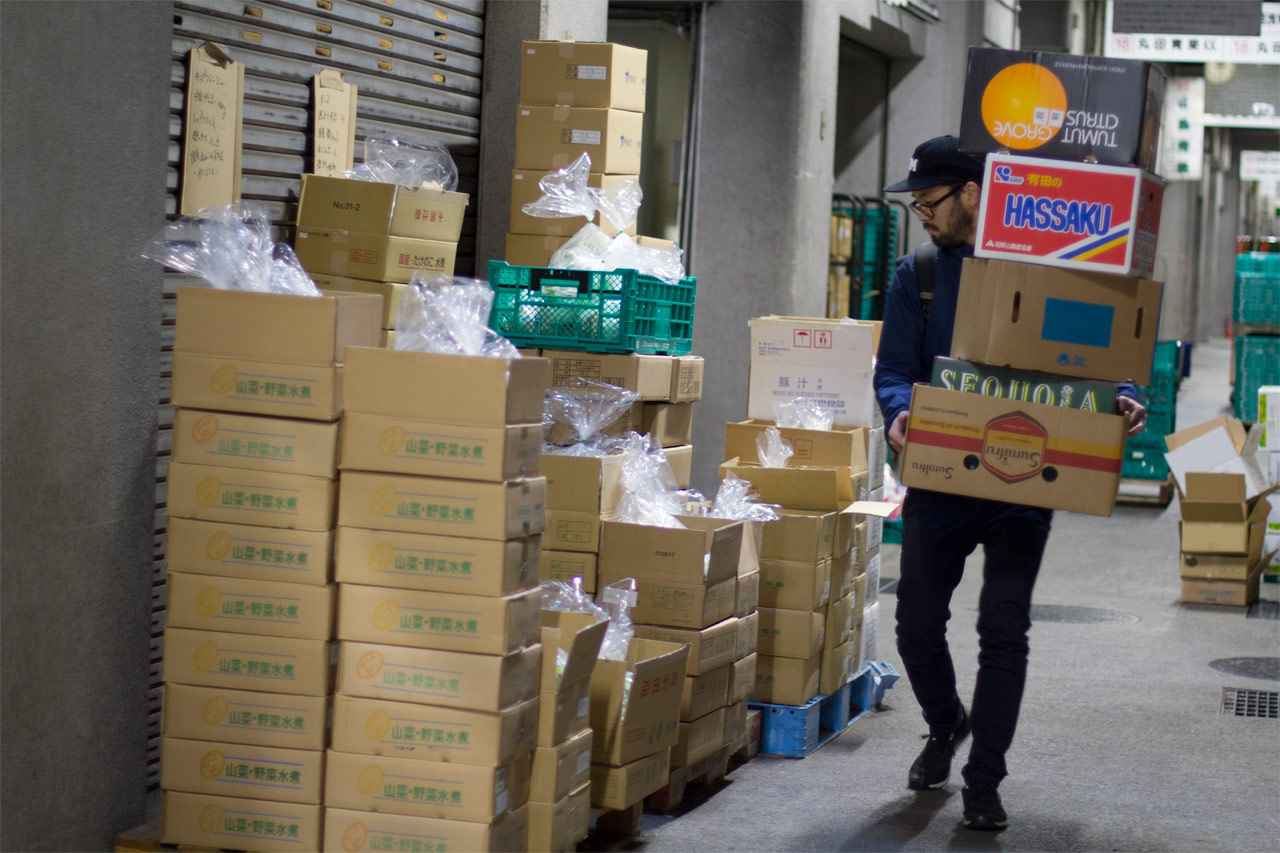
Shimazu travels through cities and markets across Japan and around the world to collect discarded cardboard boxes.
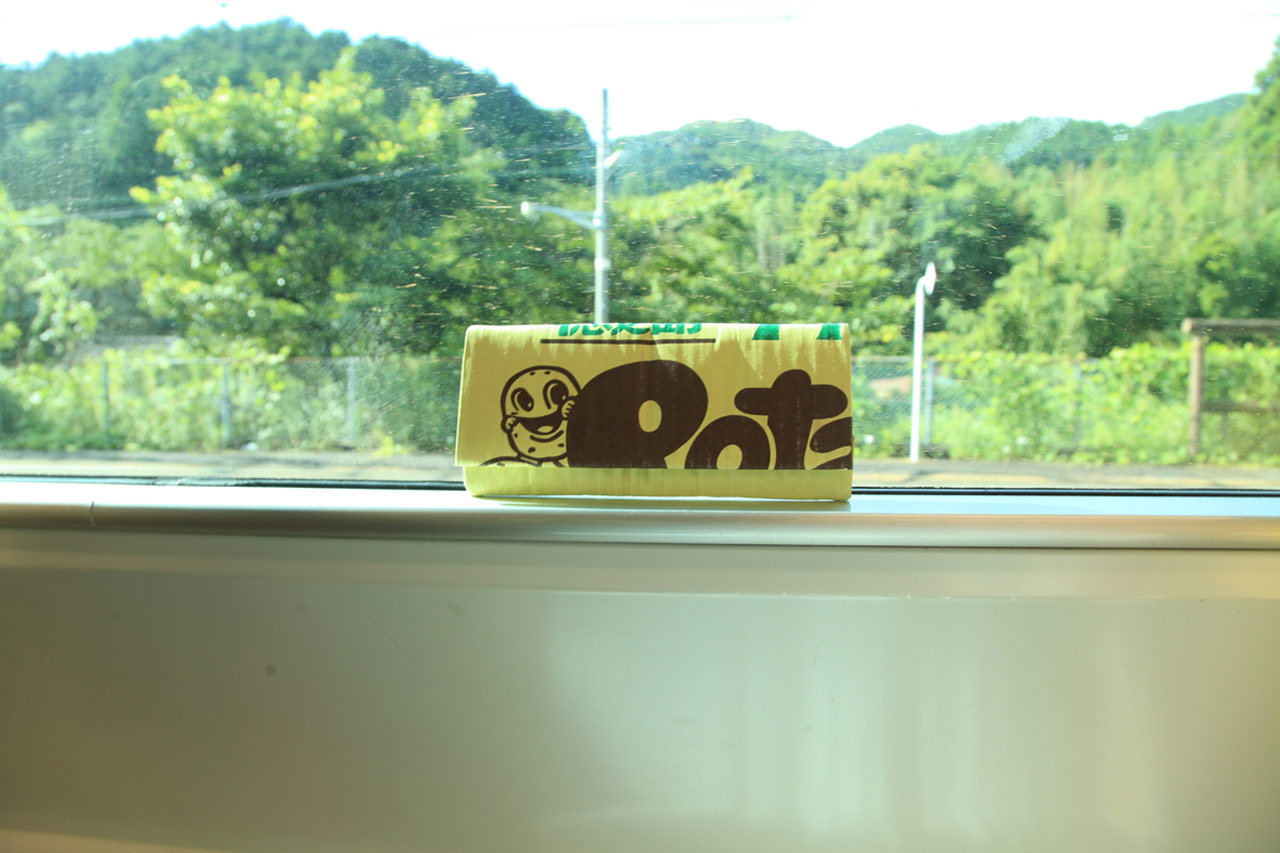
He uses the cardboard to create items like this long wallet, originally a box that stored potatoes.
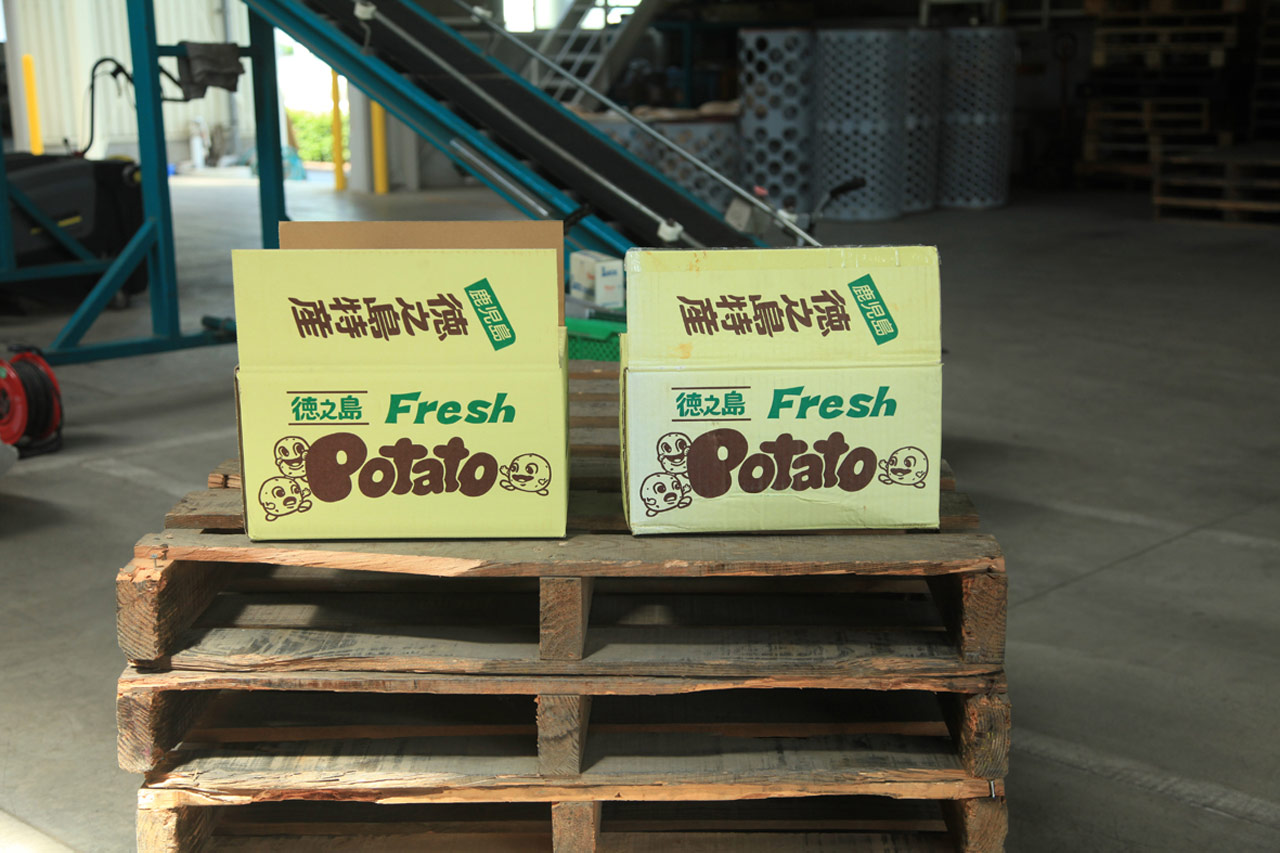
Shimazu transforms these cardboard boxes from trash into precious belongings.
Hobonichi Techo users have come to look forward to the arrival of the custom-designed shipping box that delivers their Hobonichi Techo purchase. We visited Shimazu at his studio to have him create something special out of this shipping box.
- ––
- Weʼd like to have you create something out of our Hobonichi Techo shipping box, but before that, could you tell us how you came to create wallets out of cardboard boxes?
- Shimazu
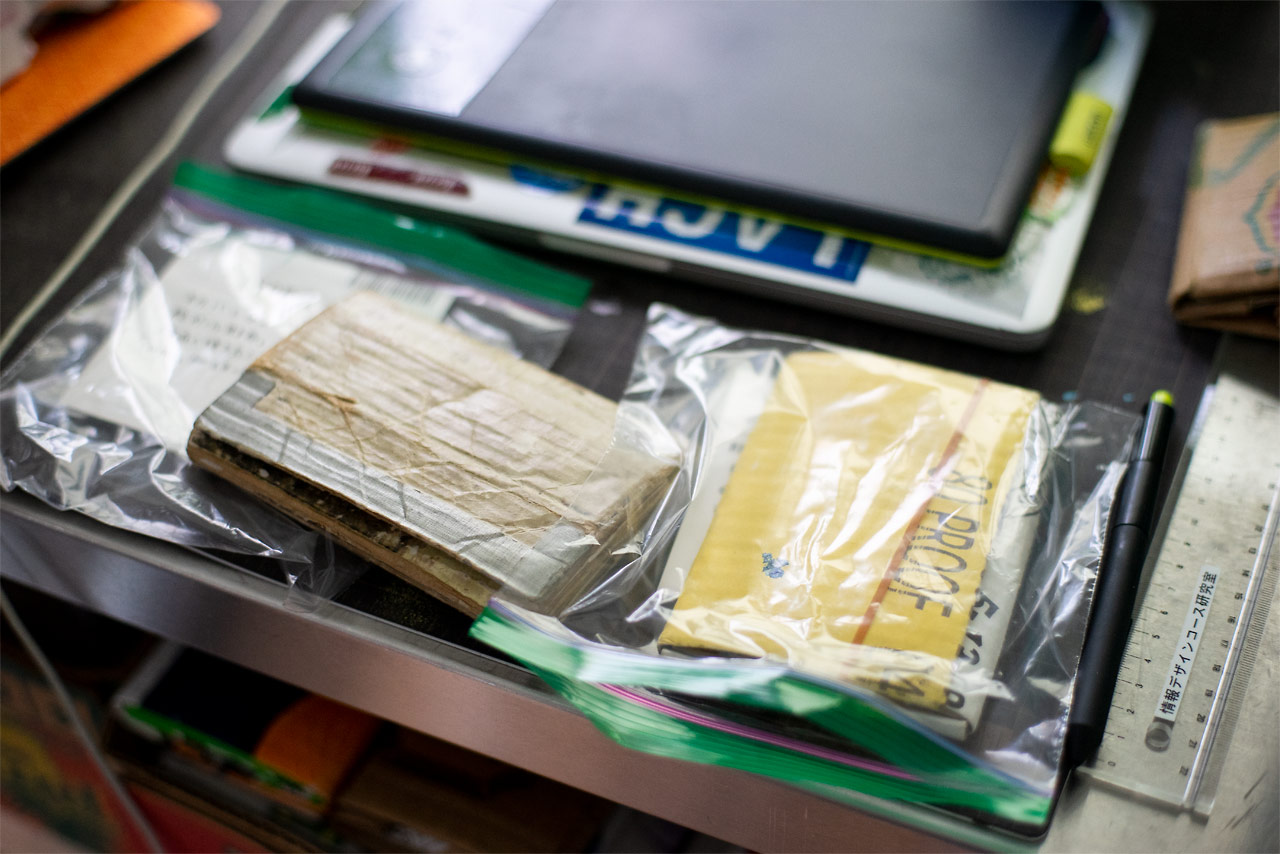
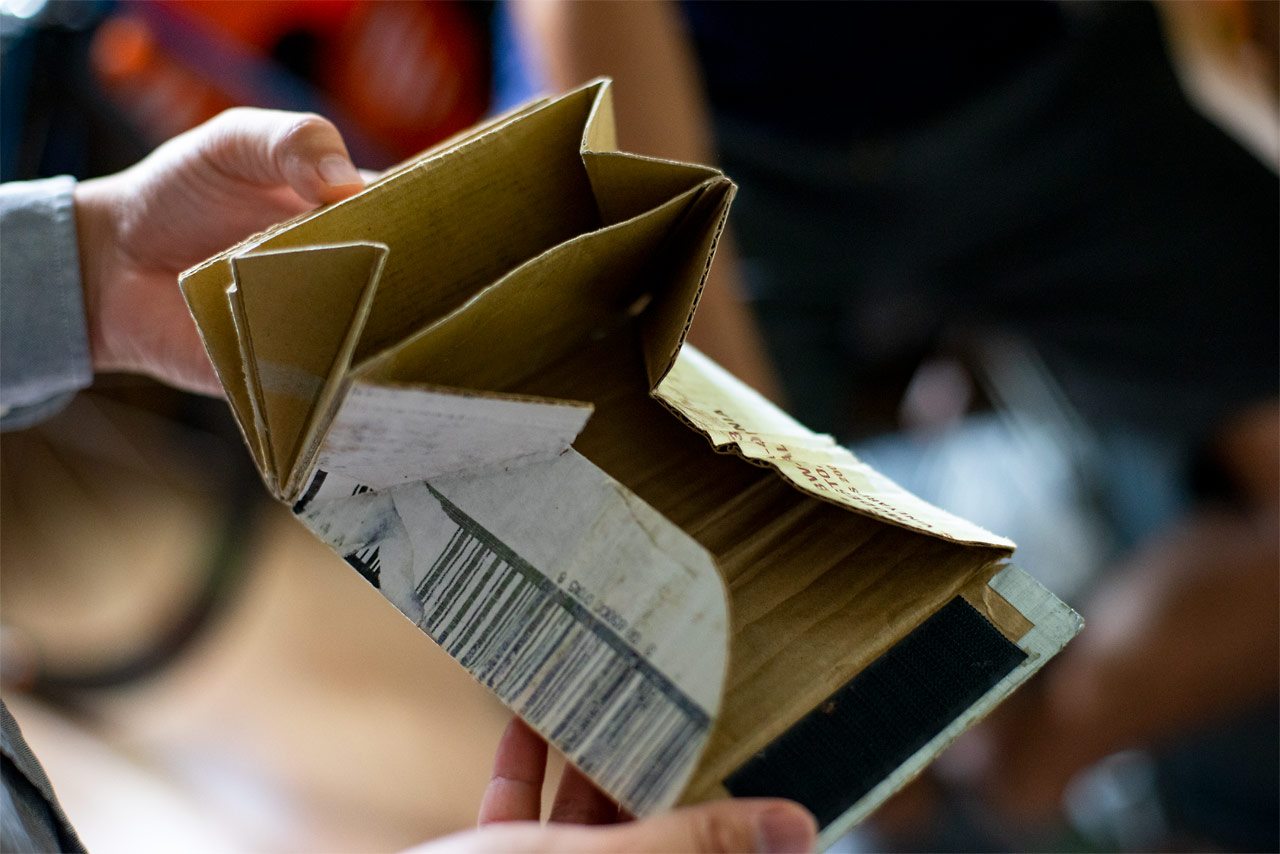
- I was in college when I made my first wallet. I was studying in the Information Design Department at Tama Art University, so it had a heavy focus on digital work, but I also had a deep interest in creating things by hand. When I was a sophomore, I updated my blog once a day with things I had created. It was around then that my wallet had come apart. When I was trying to figure out what to do for a new one, I found a really well-designed cardboard box in my house. I figured itʼd be good enough if it could hold up for the month until I got the next paycheck for my part-time job, and I made a wallet out of it. Iʼve got that very first wallet I made right here.
- ––
- Wow, I can see how much itʼs been used. The inside looks like the same setup as a standard wallet, but compared to your latest designs, it looks like the construction is a bit more rough. It seems so fragile Iʼm afraid to handle it.
- Shimazu
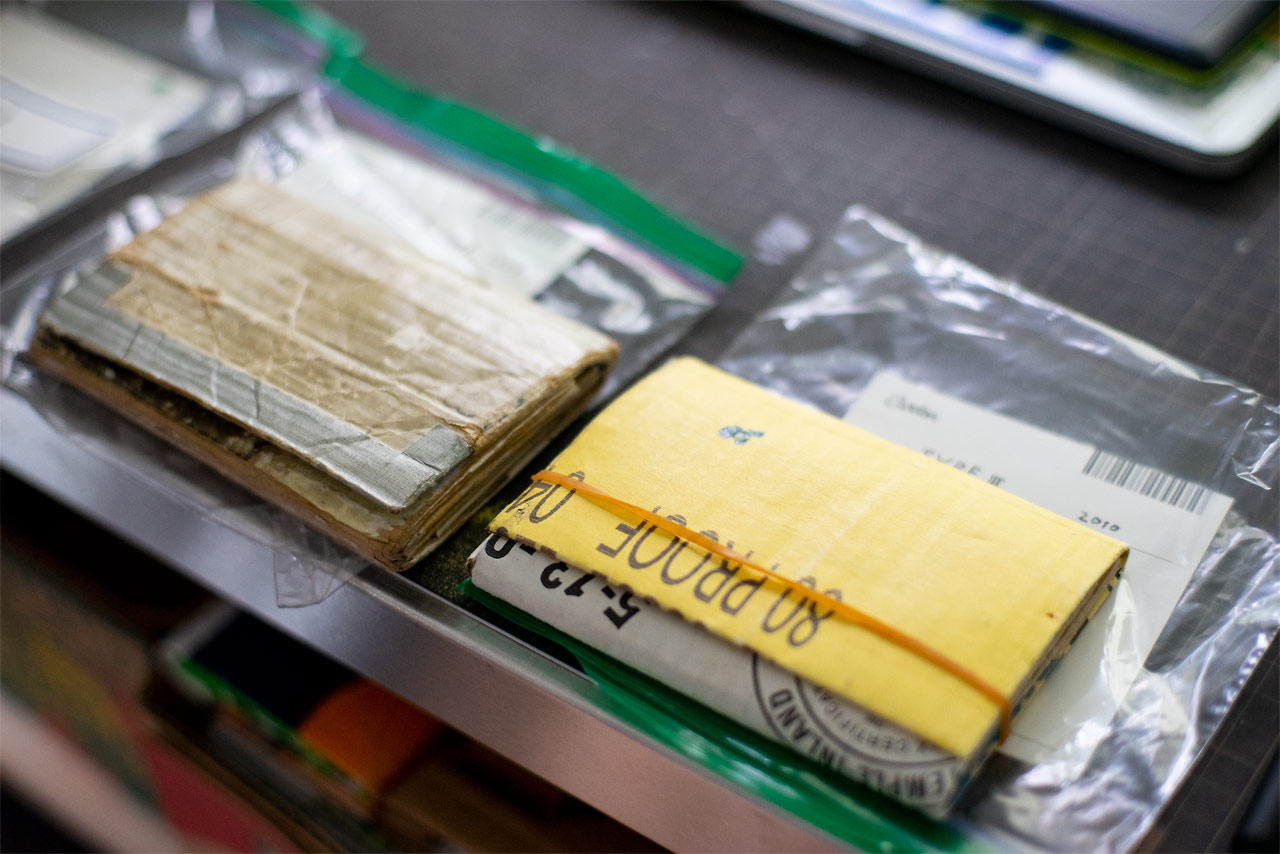
- Even so, I was able to use this as a wallet for almost a year. I even wrapped this rubber belt around it halfway through so I could keep using it.
- ––
- A rubber belt? It looks more like your average rubber band, though. (Laughs)
Shimazu:
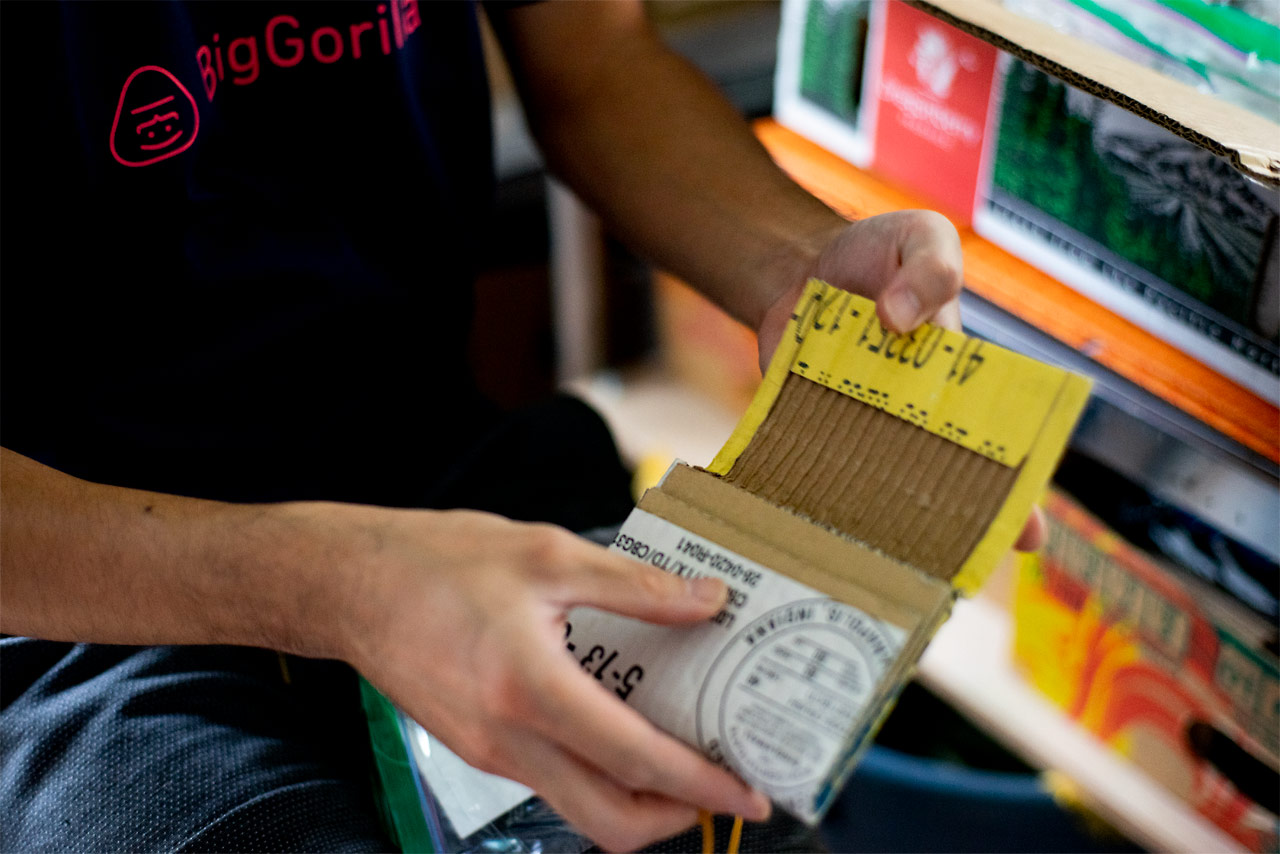
When I closed it with that and put it in my pocket, I realized how weak the construction was when it would come apart and catch on things. I would remake it every two months or so, but I couldnʼt quite get it to come together. I struggled quite a bit with it.
- ––
- How did your friends react?
- Shimazu
- They had mixed feelings, naturally. (Laughs) Some of them said the wallet made me look like I was really poor, and others were amazed that I was able to use a cardboard box as a wallet. I had only made it to use myself, but then I had the idea to sell them at the Tama University art fair, and started making them in large quantities. I realized then how many different designs cardboard boxes came in, and how cool a wallet could look when made with a nice-looking box. I discovered how much fun it was to search for cardboard boxes, and have continued finding more for my collection to this day.
- ––
- Youʼve expanded your search for cardboard boxes all over the world, but when you were a student, were you only searching for boxes in Japan?
- Shimazu
- Yeah, I was just looking in Japan at the time. In the winter of my sophomore year, I went overseas for the first time and traveled to New York. I wasnʼt going to look for cardboard boxes, I just wanted to see the Statue of Liberty. But when I was there, I was surprised to see how beautiful the designs were on the boxes that littered the streets. I saw how similar the boxes were to Japanese boxes, but also how different the designs could be between each country. So I became interested in traveling to other countries to find cardboard boxes.
- ––
- Were you reluctant about picking up boxes?
- Shimazu
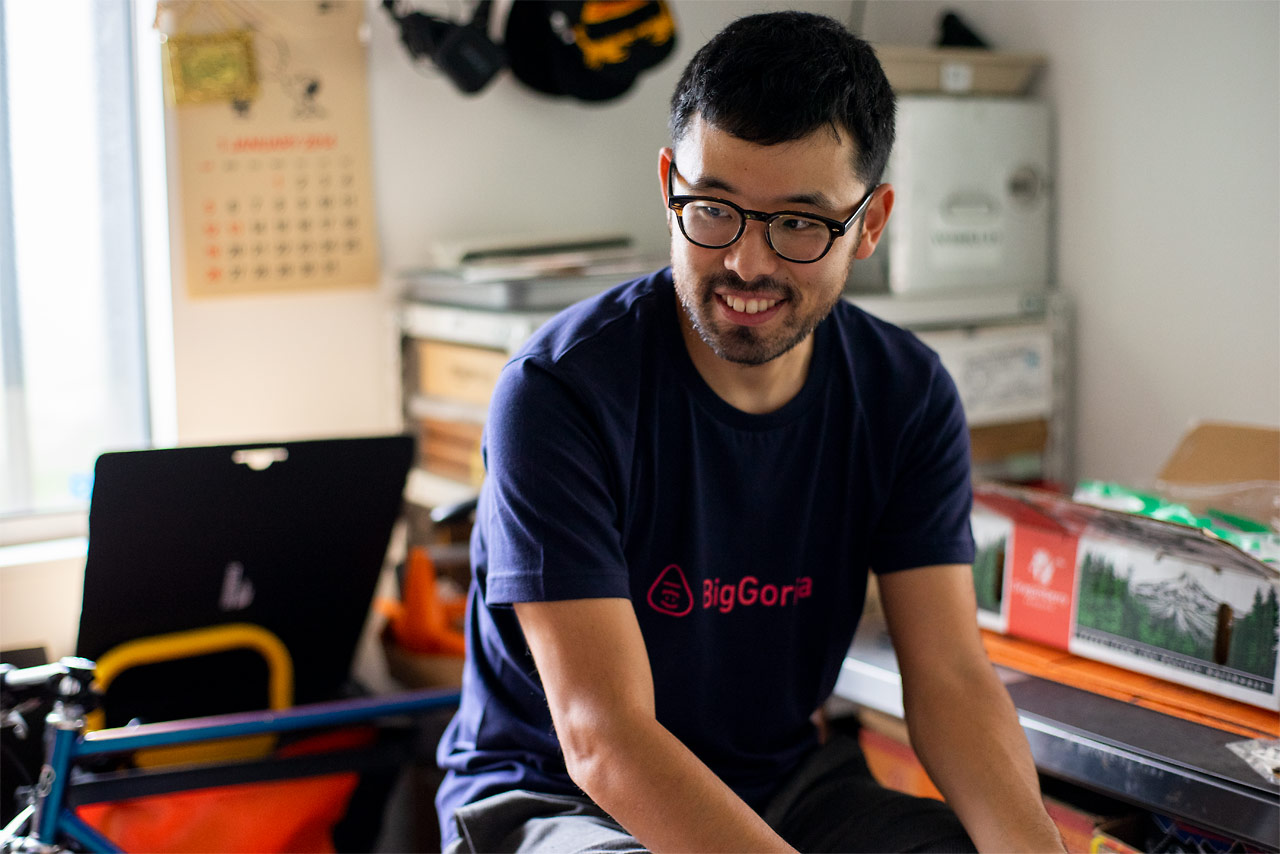
- At first it was just a matter of being embarrassed about it, but the regret of not picking up a box was so much greater than the regret of picking it up. There are lots of times I regret not picking up a box Iʼve seen, both overseas and in Japan. But nowadays I donʼt feel embarrassed at all. People donʼt usually pay attention to what strangers are doing.
- ––
- After you quit your job at the advertising agency and went freelance, your cardboard art activity has become quite well-known around the world.
- Shimazu
- I traveled overseas even when I was still working at the company. But once I quit, I started to reflect on why I wanted to travel to certain countries to pick up boxes, and became able to communicate my thoughts on the matter. I came to feel that there was no purpose in traveling to a country if I didnʼt know more about it, so my traveling took on a deeper meaning.
- ––
- What makes boxes different from one country to another?
- Shimazu
- Theyʼre different in several ways. Not only are the designs different, but I have to use different means in each country to get them. If I just ask for a box in Japan, theyʼll give it to me. But in India and Southeast Asia, there are people who make a living out of turning in cardboard boxes for money. Some countries just donʼt have any boxes for me to take.
- ––
- It sounds like the circumstances are pretty different for boxes with each country and culture. How do you decide which countries to travel to?
- Shimazu
- I consider the countryʼs language when deciding where to go. Many of the boxes will be printed in a local language, so if I find their written language to be really charming, Iʼll go there. I went to Myanmar recently and couldnʼt decipher any of the words at all on their boxes, and I really liked that.
- ––
- I havenʼt really paid much attention to boxes in my daily life. Could you tell us what kind of characteristics there are in boxes from Japan?
- Shimazu
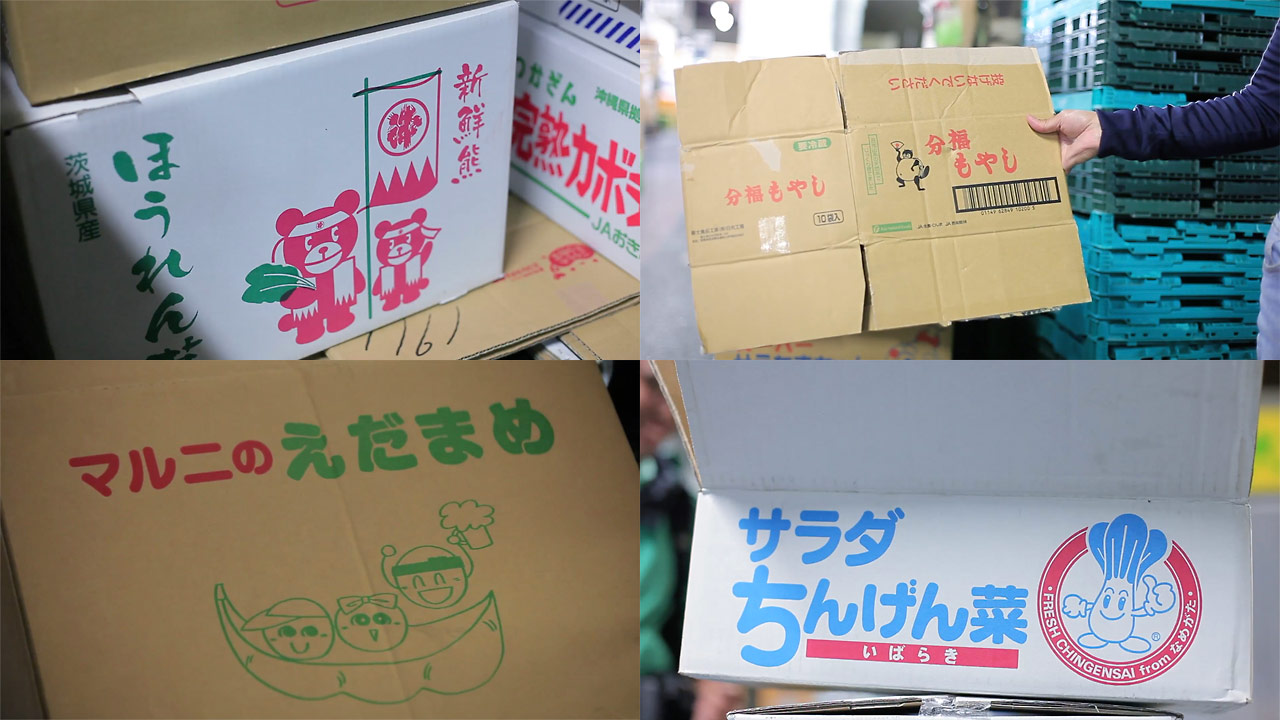
- Japanese boxes have really advanced printing techniques, and the printing plates are never off-center. The art data is managed at the plant, and if any of the boxes have even the slightest misprint, theyʼre disposed of. Other countries arenʼt as strict, so theyʼll still use boxes if some of the prints are a little off. Some of the printing is so far off it makes me laugh. And while Japanese print quality is really high, the designs tend to contain really subdued colors. Some are beige boxes with nothing but the word “daikon” printed on it, and many contain only one color. Boxes from overseas can be really eye-catching and colorful.
- ––
- Why do you think thereʼs such a difference in aesthetic?
- Shimazu
- I donʼt think the Japanese are accustomed to using that many colors. As we can see in the years since the era of ink paintings, we donʼt use that many colors in our designs. But other countries use an incredible amount of color in their oil paintings, and theyʼve got a feel for how to use colors. You can tell by the boxes overseas that the point is for them to stand out.
- ––
- Now that you mention it, a lot of our boxes are just beige-colored.
- Shimazu
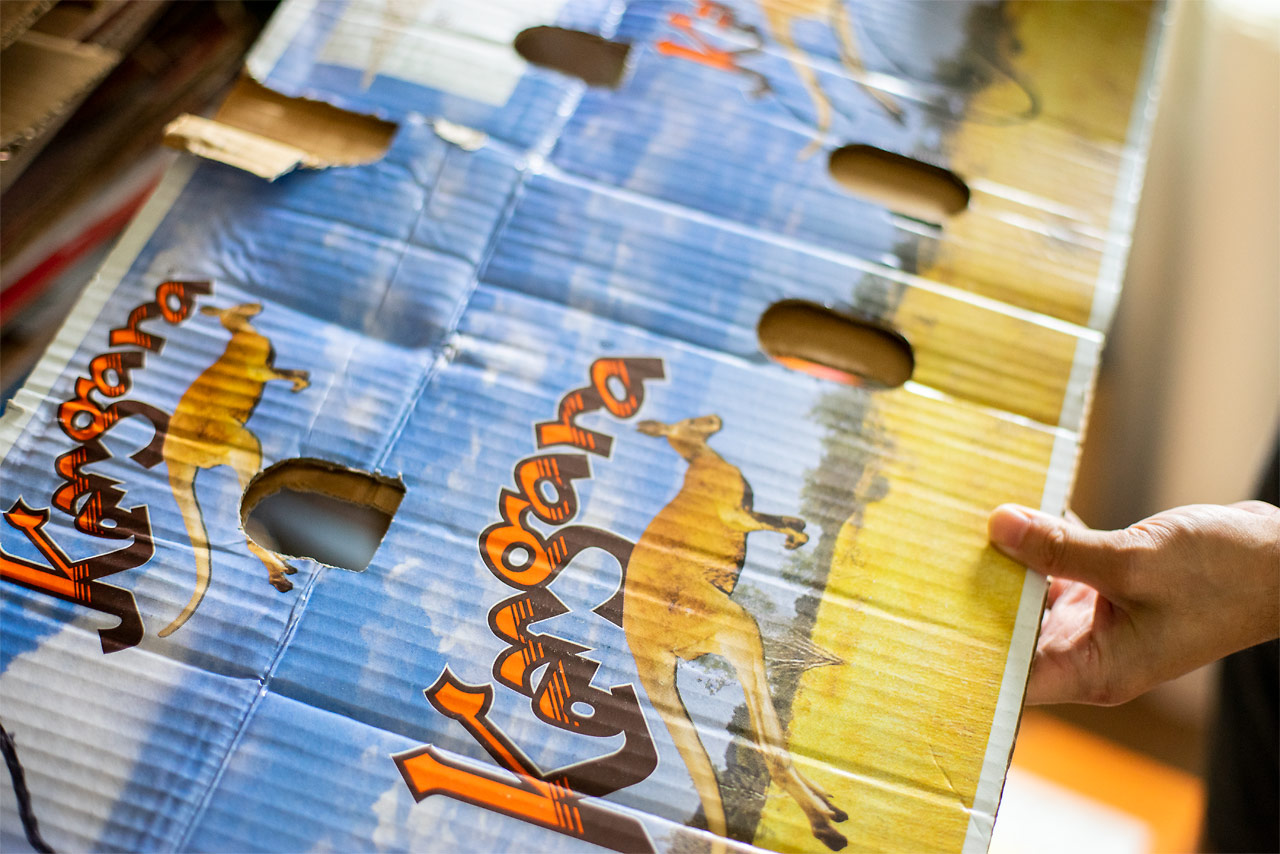
- Yeah, and look at this box. I donʼt know why they chose to go with this design, but it was a box for storing oranges.
- ––
- What? They kept oranges in this kangaroo box?
- Shimazu
- It was a box for Valencia Oranges in Australia. If you look at the box, the only thing you can tell is that itʼs from Australia, because of the kangaroo. Itʼs very clear that several images were composited together to put 6 kangaroos onto a single box. Australia is one of the worldʼs design powerhouses, so I thought they were going to use a lot of really strong designs. But when it comes to boxes, it turns out some of their designs are pretty strange. I was originally an art director, and if I were to design a box for oranges, I would start by thinking how I could portray oranges. But for these cardboard boxes, designs are largely based on the intuition of the farmers using them, so there are many designs out there that donʼt make sense to people like us. Iʼm always so fascinated when I make discoveries like that.
- ––
- It sounds like itʼs more of a spontaneous design. Does the fact that these boxes arenʼt being distributed to the public have anything to do with their lax design decisions?
- Shimazu
- In Japan, boxes for fruits and vegetables are designed to attract the attention of people at auctions. You can base a design on what those people will like or just make it stand out. Thatʼs what makes these box designs so unique. Japanese boxes also have mascots printed on them most of the time. And Iʼm not just talking about commercially made mascots, but characters that look like they were just sketched out by a farmer. It makes the items made with these boxes really interesting, and is a great example of Japanʼs famous mascot culture.
- ––
- In the documentary, when you were still working at the advertising agency, there was a scene where you were picking up cardboard boxes on your way to a clientʼs company to give a presentation. Does that mean when youʼre hanging out with friends or walking around town, if you see a box you like, youʼll grab it?
- Shimazu
- I never know when Iʼll come across a good box. Sometimes Iʼll find a good box on my way home from the bar, and sometimes I wonʼt find one despite going out for the express purpose of hunting for one. Itʼs all dependent on luck, so I have to keep my antennae up at all times to scope out a good one.
- ––
- What makes a good box?
- Shimazu
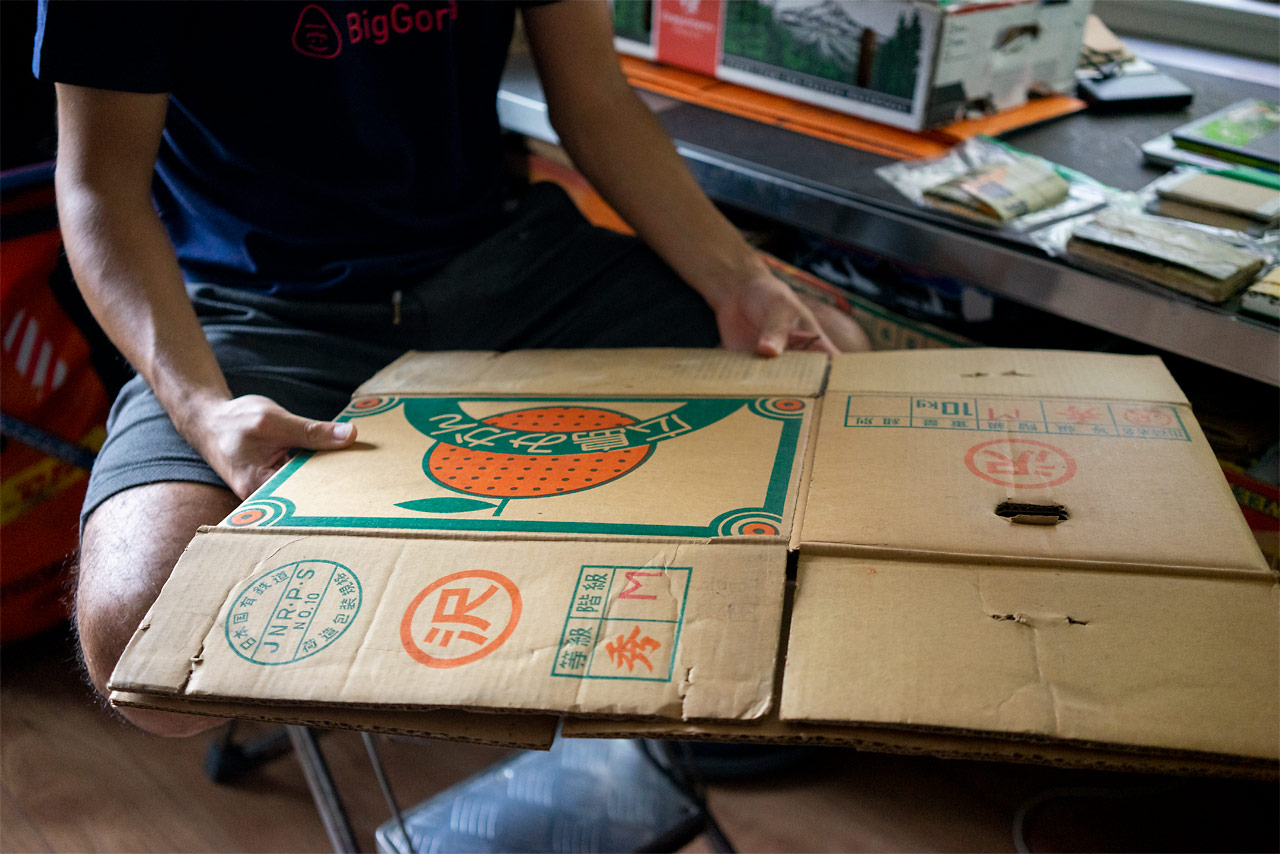
- One of my conditions for a good box is that it has a warmth to it, like if a box has a rough design created by a farmer, or a retro design. For example, if you open up an old box, the inside of the lid will say something like “Thank you for your patronage” on it. But boxes nowadays have really dry designs that only contain whatʼs absolutely necessary. Boxes used to be included in the ways companies expressed their sincerity to clients, so in that regard I see it as a medium that contains a great deal of warmth. Take this box of mandarin oranges, for example. I have no idea how old the design is, but it says “Japanese National Railways” on it.
- ––
- Itʼs been over 30 years since the train lines were privatized and turned into JR. Do you think someone recreated the retired design?
- Shimazu
- This box was probably sitting in a warehouse for years and years — it may actually date back before the privatization. This box of oranges may look simple, but I like it for all the thought that went into its design. It came from one of the participants who came to a workshop of mine. Theyʼd brought it from home, and I traded them a box from my own collection to get it.
- ––
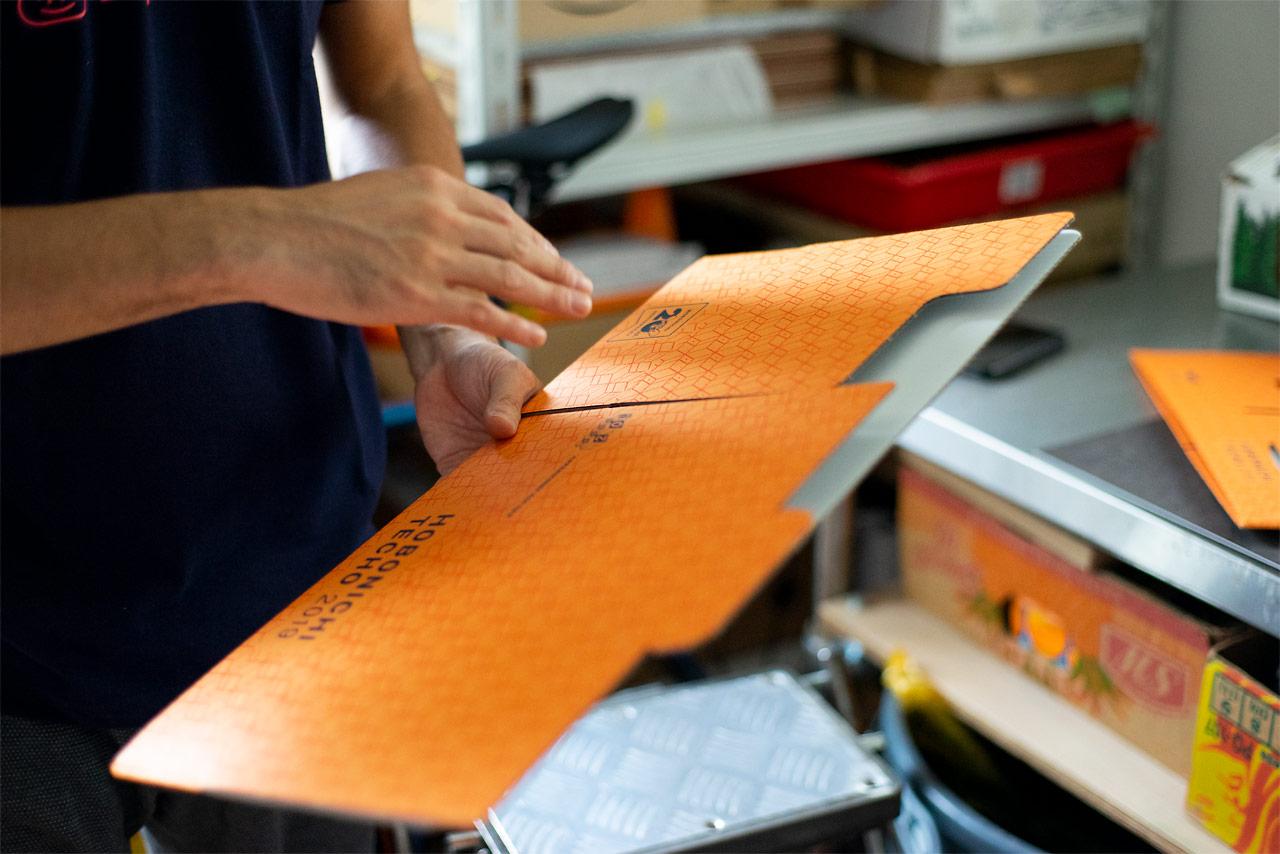
- What do you think of the Hobonichi Techo box? This 2019 edition commemorates the 20th anniversary of Hobo Nikkan Itoi Shinbun.
- Shimazu
- This box is super cute. The all-over print is gorgeous, and the box itself has a really sturdy structure. Itʼs wonderful. I think it would make a fantastic wallet, but Iʼve never seen a Hobonichi box discarded around town. Itʼs so cute that I doubt people can bring themselves to throw it away. The color scheme and thickness of the box make it perfect for keeping around the house, so I can see people using it to store things like old techos.
- ––
- Weʼve had people ask us how we use those boxes. I think most people throw them away, but weʼve had people tell us how they store their techo and materials in it, or how their cat plays in it.
- Shimazu
- Ah, I thought so. I wonder what I should make today. Having an all-over print on the box means I can start cutting from wherever I want. I think Iʼll be able to make a techo cover out of this, so if thereʼs anything else I can make as well, letʼs give it a shot.
(Coming in Part 2: Creating the cardboard art!)
