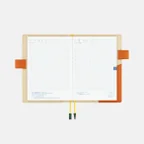
UnsodoBijutsukai (Wild Rabbits)A5 Cousin Size
Published during the Meiji era, Bijutsukai and Shin Bijutsukai are treasured collections featuring exquisite craft designs by various pattern designers, Japanese-style painters, and talented artisans whose names may have been lost to time. These beautifully crafted books showcase the art of multicolor woodblock printing and were published by Unsodo, a distinguished Kyoto-based art publisher and the only house in Japan dedicated to producing hand-printed woodblock books.
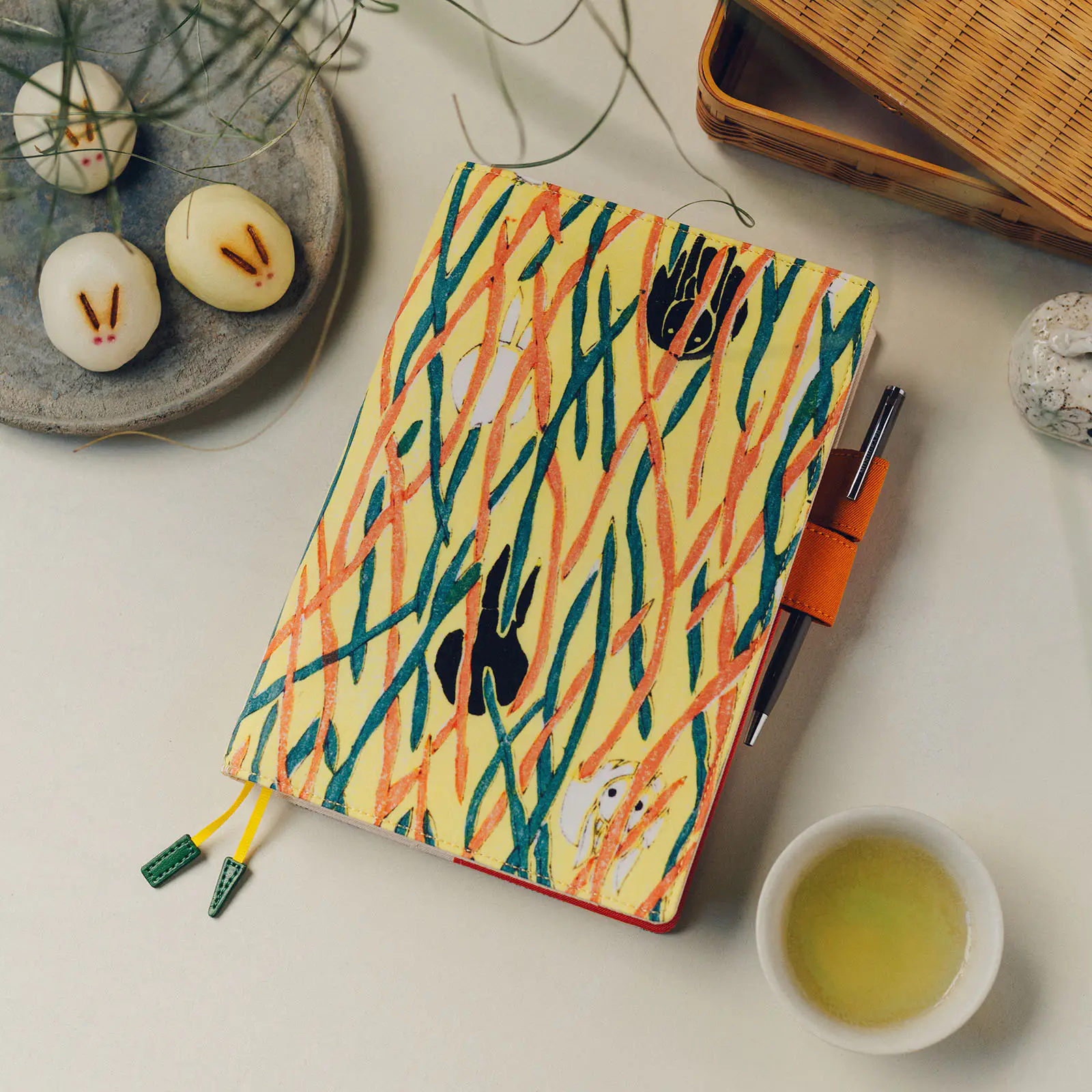
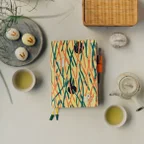
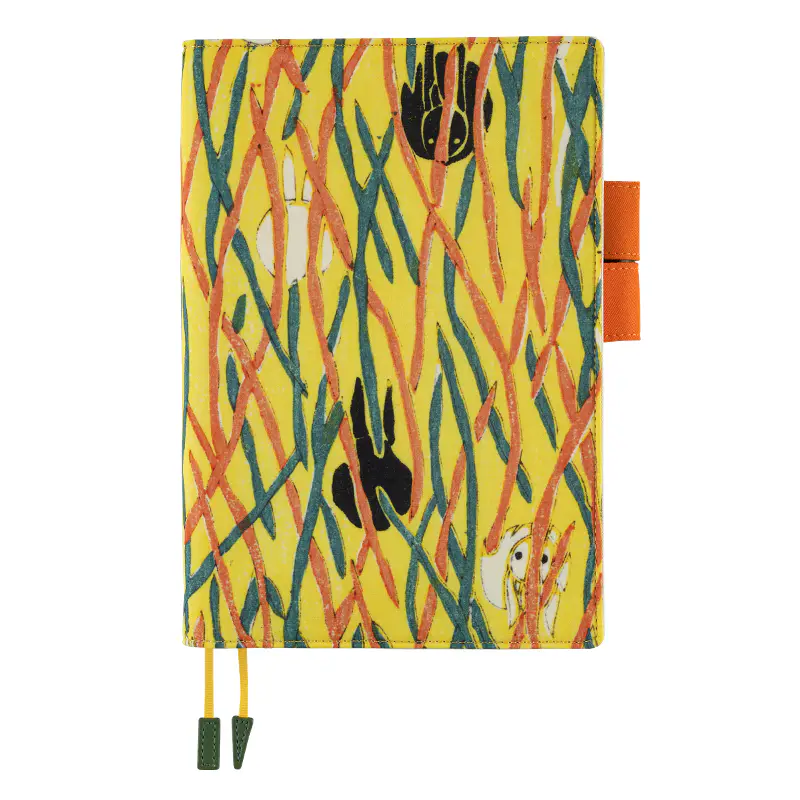
For the cover, we’ve selected a design from Bijutsukai in a beautiful yellow color that catches the eye beautifully.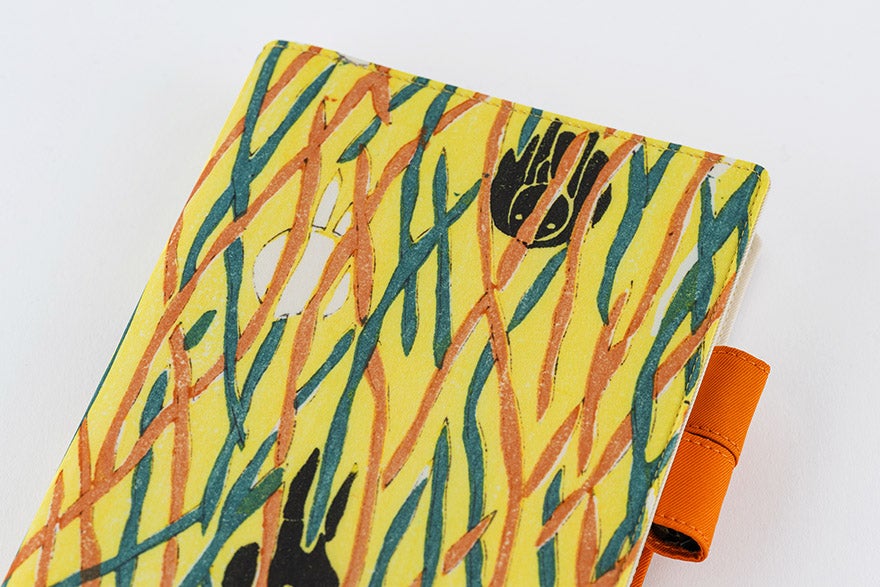
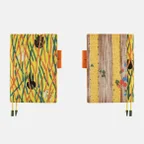
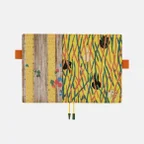
The Cousin size Bijutsukai (Wild Rabbits) features rabbits nestled in a grassy meadow, facing this way and that, as if playing a gentle game of hide-and-seek. Rabbits have been traditionally cherished as symbols of longevity and prosperity, representing the flourishing of future generations. The white and black rabbits stand out beautifully against the rich colors of yellow, orange, and verdant green.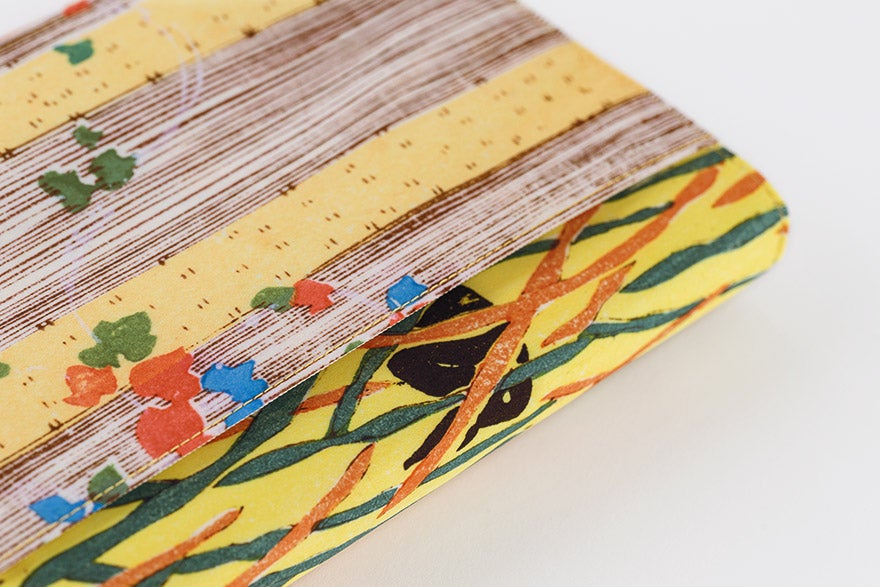
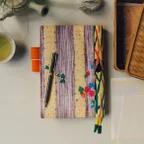
The back pocket features a cut with a design in a subtly different shade of yellow. Vertical stripes reminiscent of wood grain intertwine with Kasuri splashed patterns, while leaves and petals seem to dance and flutter across the surface. This delightful pairing, where classical motifs blend seamlessly with imaginative design, captures the distinctive charm that makes Bijutsukai so wonderfully unique.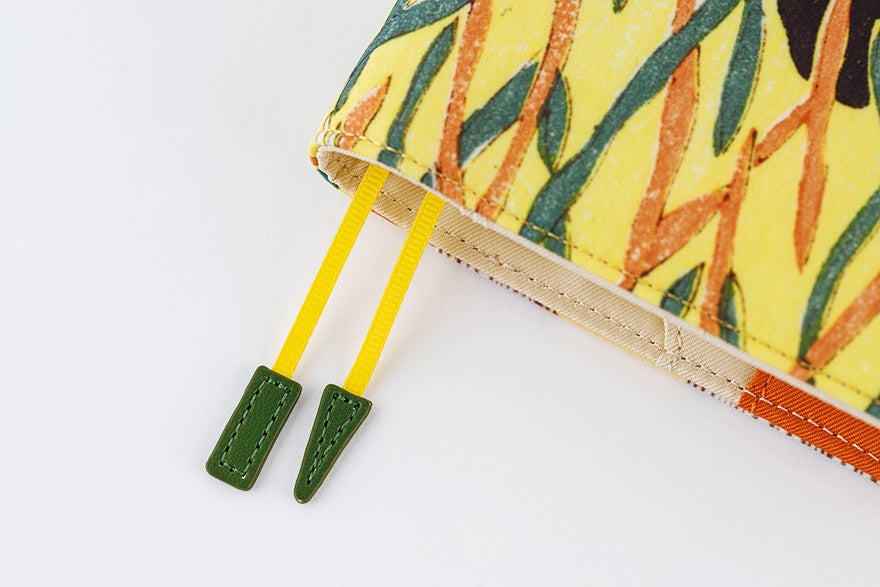
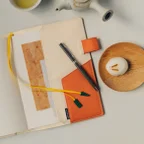
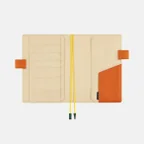
The “butterfly-stopper” pen holders and bookmark charms are colored to echo the plants and flowers featured in each design. The inner cover is a calming, soft beige.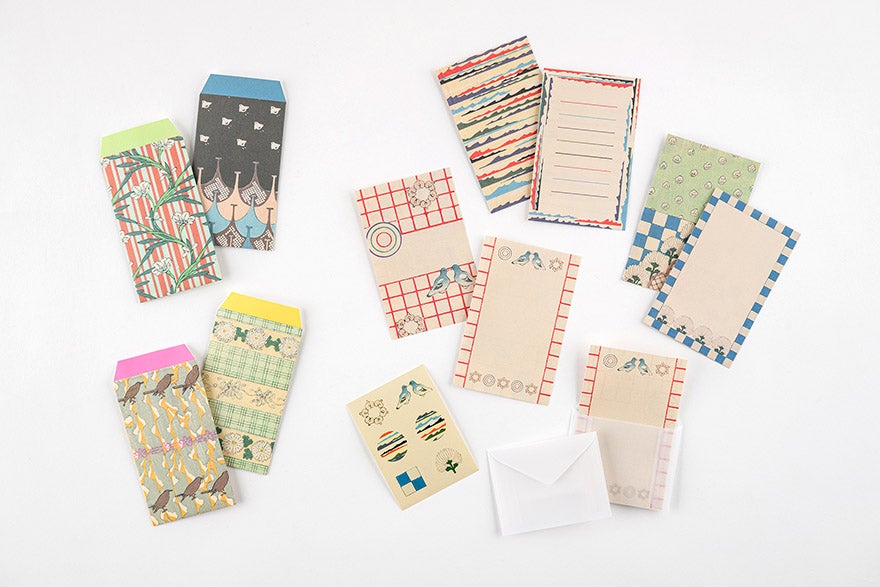
The Unsodo lineup also includes a mini envelope set and a mini letter set, each designed using motifs from these beautiful illustrations.
Though these designs were created over a century ago, they remain remarkably fresh and captivating to this day. We invite you to keep them close at hand and savor the delicate yet bold interplay of colors, along with the boundless imagination they embody.
About Unsodo
Founded in Kyoto in 1891, Unsodo is a publisher specializing in fine art. Carrying forward the traditional techniques of woodblock carving and printing, they continue to create woodblock-printed books and prints to this day.
Staff List
- Photographer
- Styled Images: Nobuki Kawaharazaki / Product Detail: Hiroyuki Oe
- Stylist
- Haruka Kimura
Related Articles


Discover more (Techo)
![]()
- January-start
- JPN/ENG
- ¥6,710 - ¥7,700
- ¥4,290
![]()
- January-start
- JPN/ENG
- ¥10,010 - ¥11,660
- ¥6,490
![]()
- January-start
- JPN/ENG
- ¥8,910 - ¥10,560
- ¥5,390
![]()
- January-start
- JPN/ENG
- ¥11,220 - ¥12,870
- ¥7,700
![]()
- January-start
- JPN/ENG
- ¥20,020 - ¥21,670
- ¥16,500
![]()
- January-start
- JPN/ENG
- ¥7,920 - ¥9,570
- ¥4,400
![]()
- January-start
- JPN/ENG
- ¥8,910 - ¥10,560
- ¥5,390
![]()
- January-start
- JPN/ENG
- ¥10,010 - ¥11,660
- ¥6,490
![]()
- January-start
- JPN/ENG
- ¥8,250 - ¥9,900
- ¥4,730
![]()
- January-start
- JPN/ENG
- ¥20,020 - ¥21,670
- ¥16,500
![]()
- January-start
- JPN/ENG
- ¥6,930 - ¥8,580
- ¥3,410
![]()
- January-start
- JPN/ENG
- ¥8,910 - ¥10,560
- ¥5,390
Discover more (Accessories)
![]()
- ¥550
![]()
- ¥363
![]()
- ¥990
![]()
- ¥110
![]()
- ¥4,400
![]()
- ¥660
![]()
- ¥4,400
![]()
- ¥341 - ¥550
![]()
- ¥1,650
![]()
- ¥2,200
![]()
- ¥880
![]()
- ¥19,800
Specifications*Specifications may vary slightly
- Cover
Size H: 228 x W: 337 x T: 3 mm / H: 9" x W: 13.3" x T: 0.1"
*Excluding pen holdersWeight Approx. 150 g Main material Exterior: Polyester / Interior: Polyester Compatible Techo Books  Cousin (A5)
1 page per day Cousin Avec (A5)
1 page per day 6-month book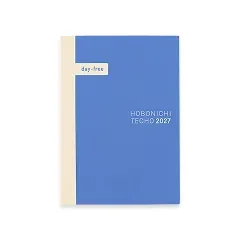 Day-Free
Monthly notebook
Cousin | One-Page-Per-Day TypeJapanese / English
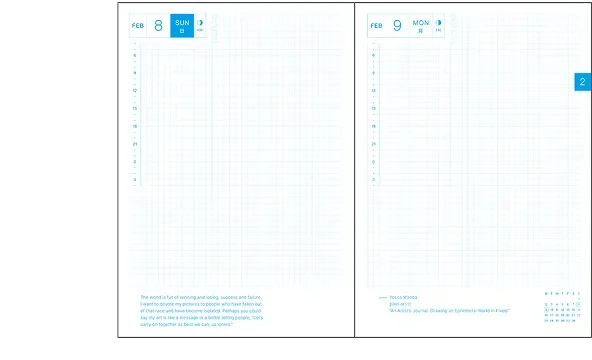
type Monday Start (Japanese)
Monday Start (English)Size A5
H: 210 x W: 148 x T: 18 mm /
H: 8.3" x W: 5.8" x T: 0.7"
*Specifications may vary slightlyWeight Approx. 445 g Dates Jan 2027 - Dec 2027 (Jan start)
Apr 2027 - Mar 2028 (Apr start)- A daily techo with lots of space to write
- This A5-size techo provides ample space on each daily page. It’s great for keeping in one place at home or at work and you can use it to track your child’s growth or exchange with someone.
- Daily pages
- Yearly calendar
- Yearly index
- Monthly calendar
- Weekly pages
- Memo pages
Cousin Avec | One-Page-Per-Day Type (2-Book Set)Japanese
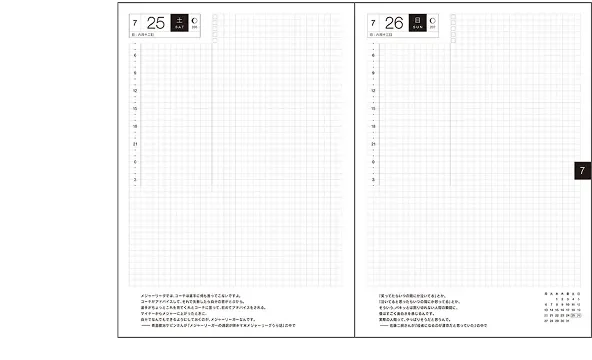
type Monday Start (Japanese) Size A5
Each Book: H: 210 x W: 148 x T: 10 mm /
H: 8.3" x W: 5.8" x T: 0.4"
*Specifications may vary slightlyWeight Each Book: Approx. 260 g Dates Book 1: Jan 2027 - June 2027
Book 2: July 2027 - Dec 2027- Each 6-month daily techo is thin and light for easy carry
- This techo splits the year into two 6-month books, making it easy to carry while keeping the same page design and layout as the standard edition.
- Daily pages
- Yearly calendar
- Yearly index
- Monthly calendar
- Weekly pages
- Memo pages
Day-Free | Monthly Techo + NotebookJapanese
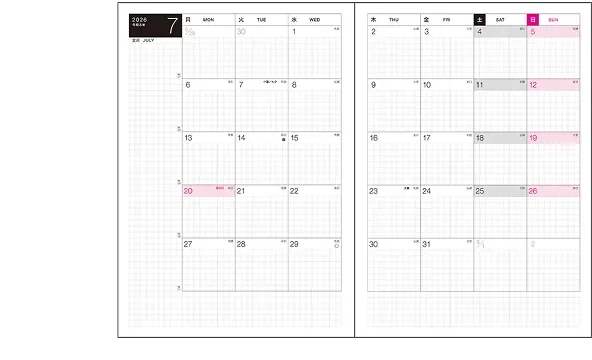
type Monday Start (Japanese) Size A5
H: 210 x W: 148 x T: 8 mm /
H: 8.3" x W: 5.8" x T: 0.3"
*Specifications may vary slightlyWeight Approx. 220 g Dates Dec 2026 - Mar 2028 - A monthly notebook with undated pages to write freely
- This techo starts with monthly calendars and ends with undated graph paper pages so you can write whenever you want, and as much as you want.
- Monthly calendar
- Yearly calendar
- Yearly index
- Graph paper notebook pages
User recommendations
If you’ve used any of these products, we welcome your notes on what you like about them or what led you to buy them so we can share it with customers who are currently considering these products. We’d also love to welcome comments from customers who purchased their techo outside the Hobonichi Store or received their book as a gift.
Please Read Before You Buy
We’ve compiled a list of warnings, potential issues, and tips to keep in mind for this particular product. Additionally, the color of the product may be slightly different in actuality than compared to how it appeared on a computer or smartphone screen.
- Cover may contain variations in stitching or loose lining
Due to the structure of the cover that opens flat 180 degrees, exterior stitching areas may appear puckered and lining material may be loose.
- Pen holder fits pens up to 13.5 mm wide
The pen holder is designed to fit the 12.2 mm (0.48") diameter Jetstream pen offered as a free Hobonichi Store Exclusive Bonus. Pens with certain shapes and materials may be difficult to pull through the holder. The holder can fit pens up to 13.5 mm (0.53") in diameter.
- Color and print may vary slightly
The cover's color and print pattern are created by dyeing or printing onto white fabric. While we take care to ensure consistency during production, slight variations in color or pattern may occur between individual items. This may also happen across a single cover, such as a pocket compared to the rest of the cover. Minor print blurring or uneven coloring may also be present. In addition, on rare occasions, there may be small black or white dots visible on the print. This is an unavoidable aspect of the manufacturing process.