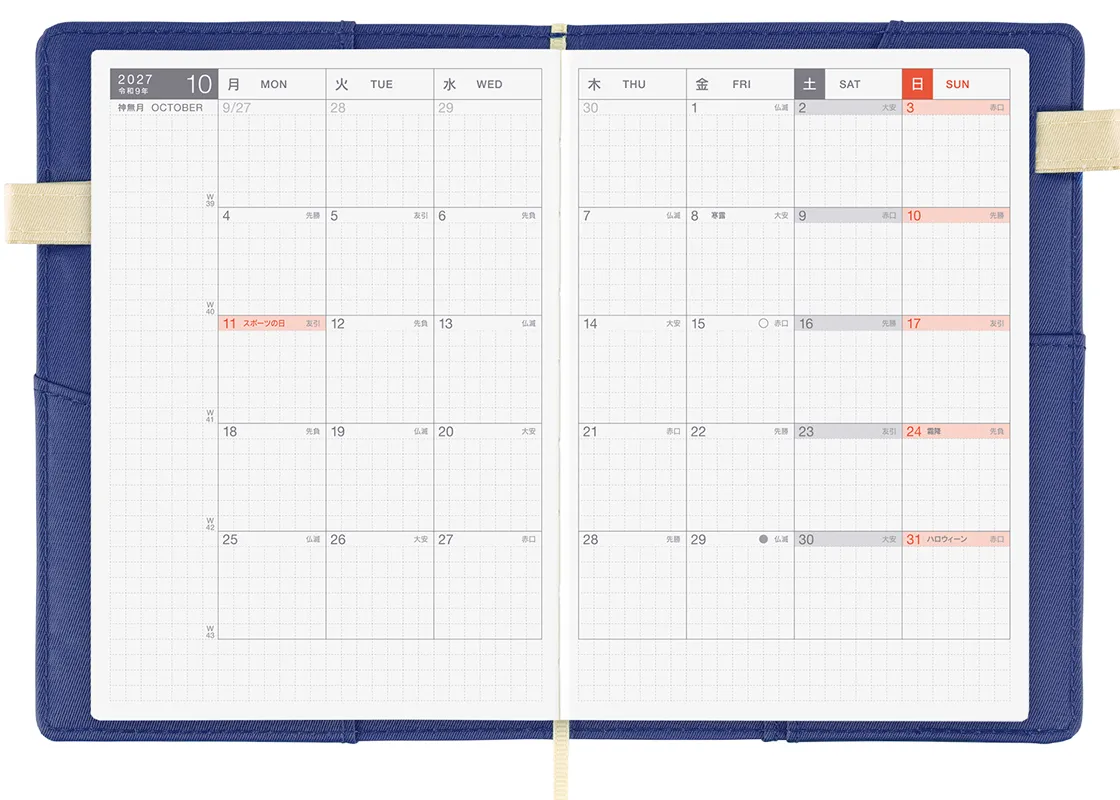
Day-Free Monthly calendar + notebook A6A5
- Japanese
- Monthly + notebook type that can be used regardless of the date
- This Hobonichi Techo features a graph paper notebook and a monthly calendar. Because the notebook pages do not have dates, you can write as much as you want, whenever you want. Available in A6 and A5 sizes, each has a perfectly fitting Day-Free exclusive cover called BS Lite. Original and Cousin covers can also be used.
Features
-
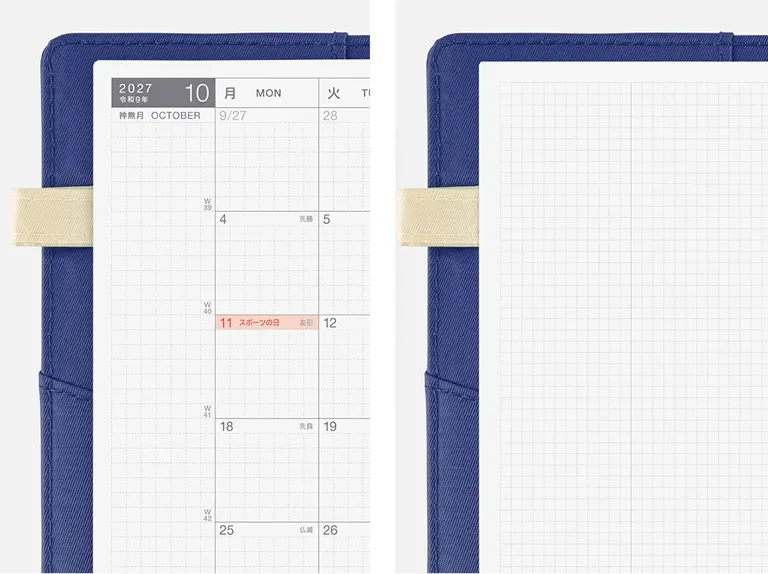
- Monthly calendar + plenty of blank note pages
-
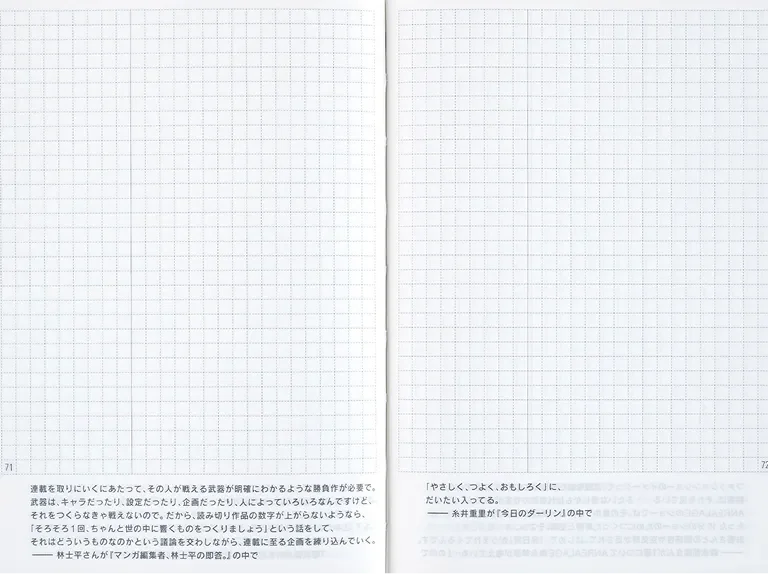
- 171 pages of graph paper pages
-
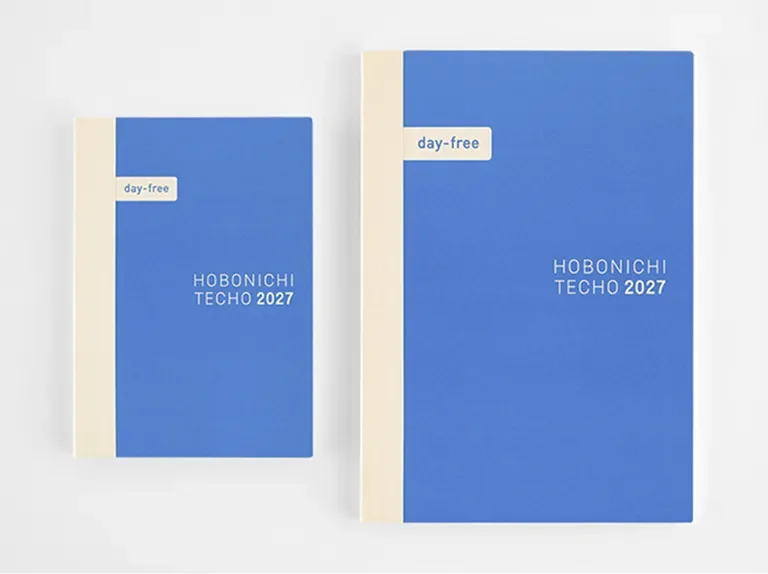
- Available in two sizes: A6 and A5
Main pages
Here’s an overview of the Day-Free’s main pages.
*All photos shown are of the A6 size.
-
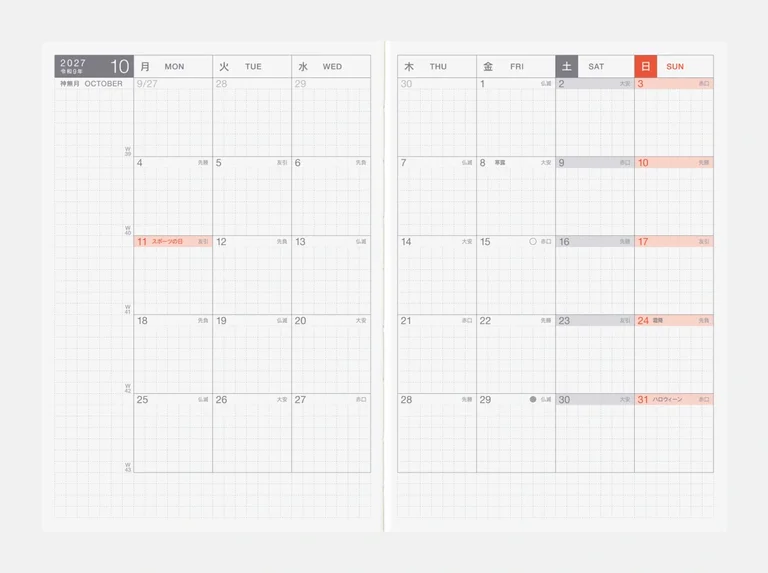
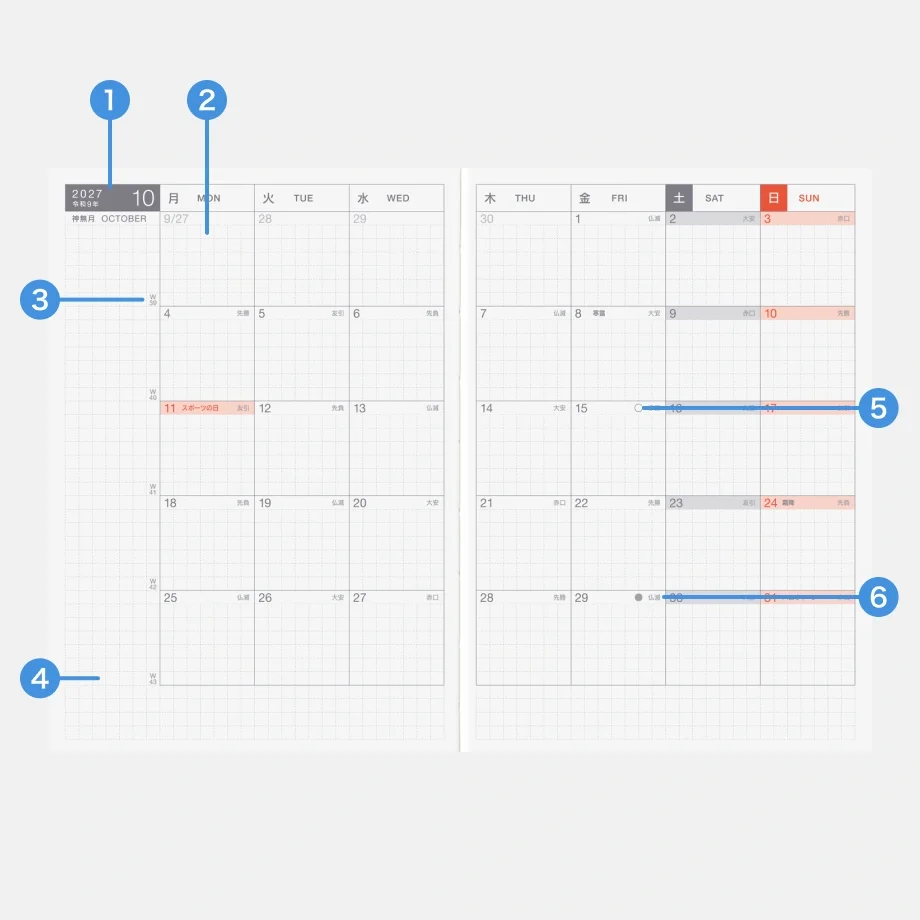
Monthly Calendar
-
- Monthly data
- Each month’s dedicated page features the month indicated by a numeral, along with the year shown in both the Gregorian and Japanese calendars, the traditional Japanese name for the month, and the English month name.
-
- Daily boxes
- Each box is lightly printed with a graph design to make it easy to fill in a full day’s worth of plans. You can also take full advantage of the graph design by drawing out sections to allocate plans or entries visually.
-
- Week number
- The pages include week numbers to show which week of the year it is, counting from the beginning of the year.
*The week numbers follow the ISO 8601 international standard.
-
- Free space
- The calendars include free space below and to the left for taking notes, making plans or decorating the calendars with stickers and washi tape.
-
- Moon phase
- The calendars include icons depicting new moons (●) and full moons (○). (While the moon phase is the same across the world, the exact dates the moon phases land on are listed in Japan time.)
-
- Rokuyo (Traditional Japanese calendar)
- The monthly calendar days are labeled with Rokuyo, a cycle of six days said to predict good or bad fortune that day. The labels are commonly found on Japanese calendars and used to plan weddings and funerals.
-
- Labeling 2028
-
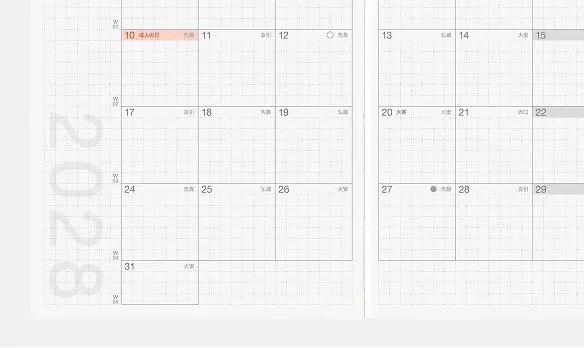
- The pages for 2028 have the year in large numbers in the background to easily differentiate them from the 2027 pages.
-
- Monthly Calendar
- The graph paper design is lightly printed across the entire page, making it easy to write down plans and take notes. The color scheme is gray and red.
-
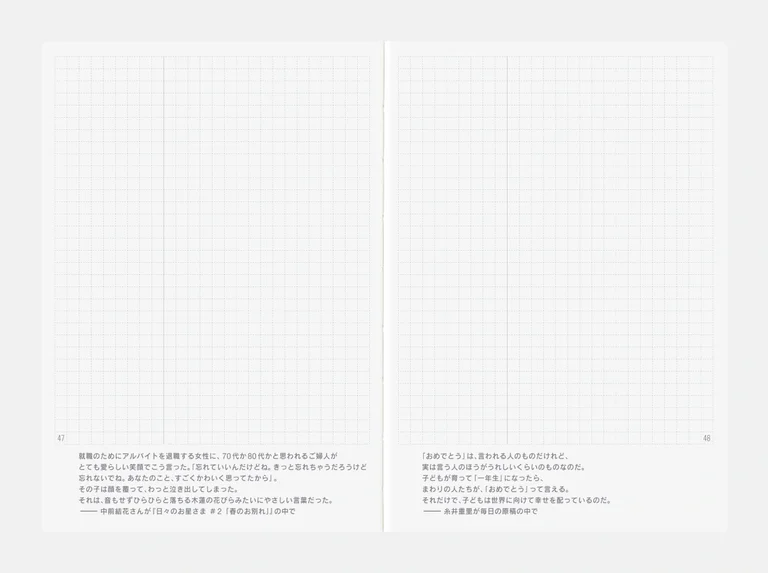
Graph paper notebook
-
- Graph paper notebook
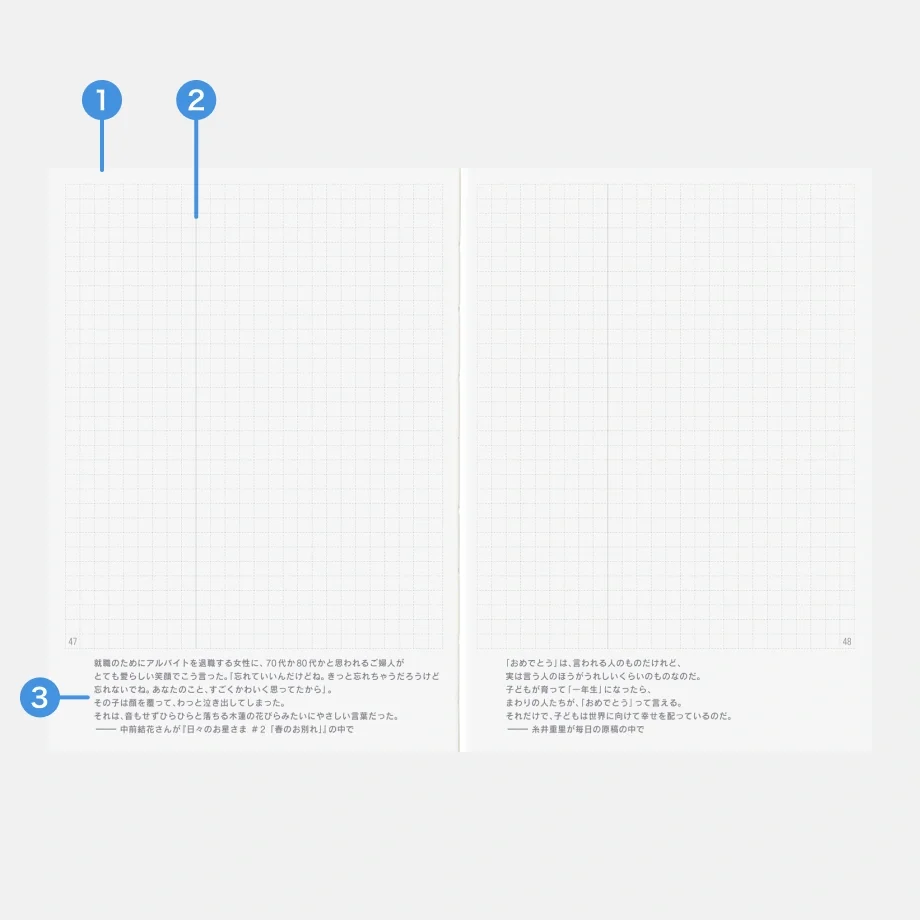
- This white-bordered design features pages with 3.7 mm graph paper. Each page is numbered, with a total of 171 pages included for both the A6 and A5 sizes.
-
- The “Secret Line”
- This subtle line let you organize the page however you like — for example, with your schedule on the left and notes on the right. Printed in a light shade, they remain unobtrusive when not in use.
-
- Daily quotes
- Since its launch in 1998, the Hobonichi website has been updated daily. At the bottom of each page is a carefully selected quote, chosen the site's extensive collection of content, with one featured for each day.
-
- Graph paper notebook
- These pages feature Hobonichi Techo’s standard 3.7 mm graph paper. The pages are numbered, with a total of 171 pages included for both the A6 and A5 sizes.
-
Yearly index
- Yearly index
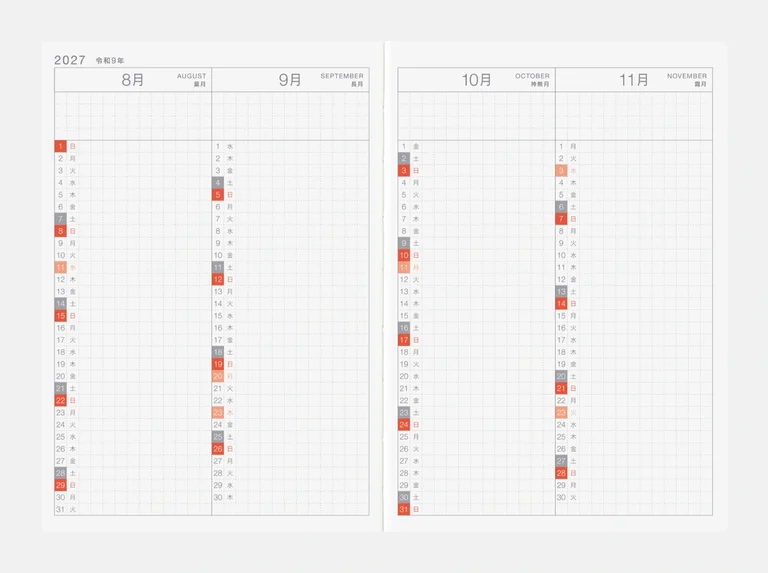
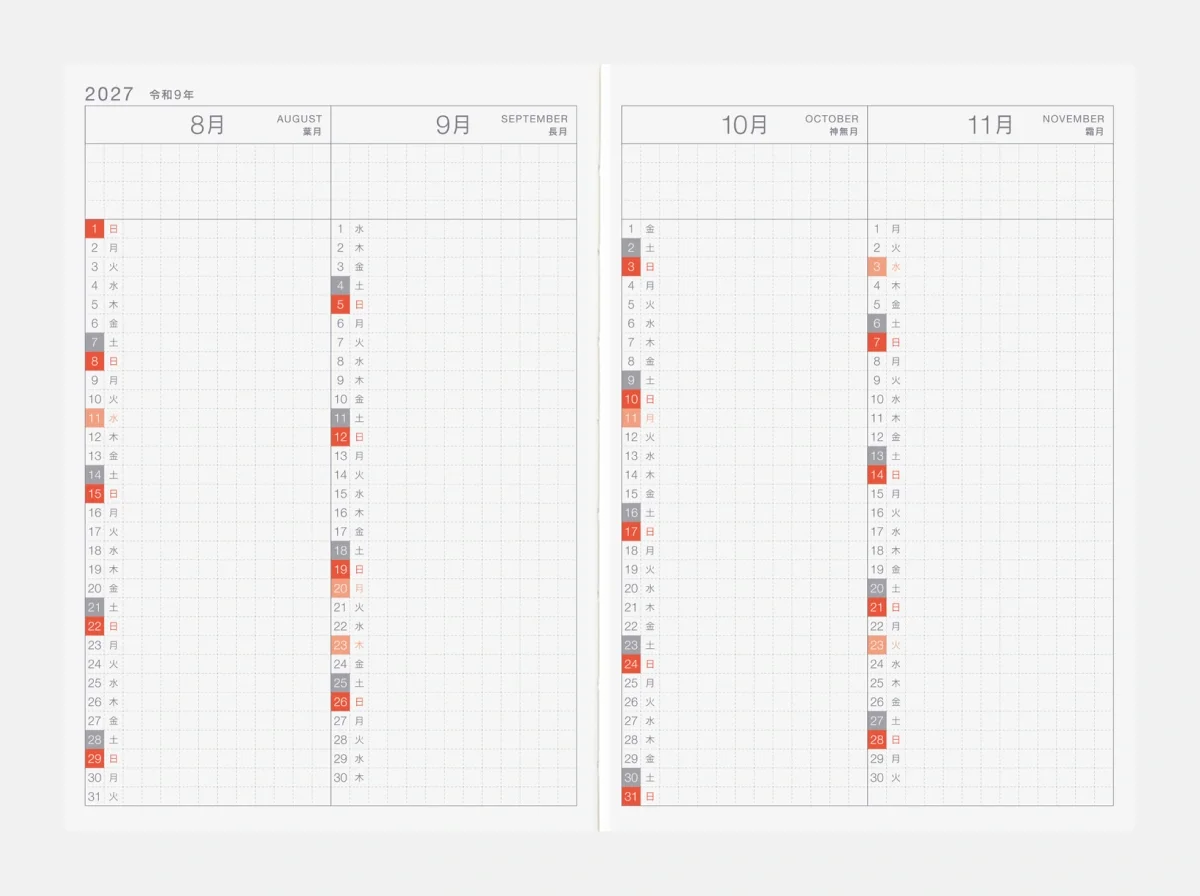
- This page is for managing schedules in the long-term with 4 months per spread on the A6 size and 6 months per spread on the A5 size. At the top of each page is extra space for note-taking.
-
Yearly calendar
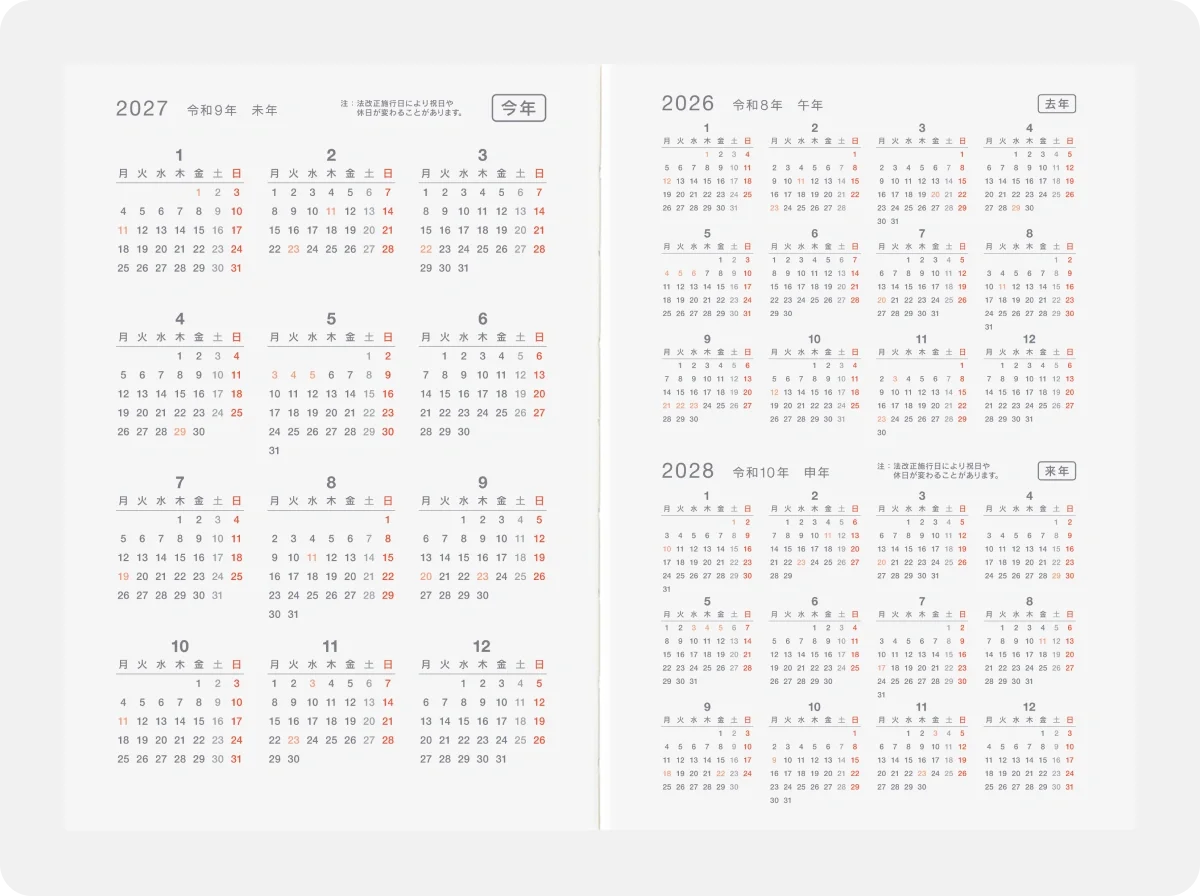
- Yearly calendar
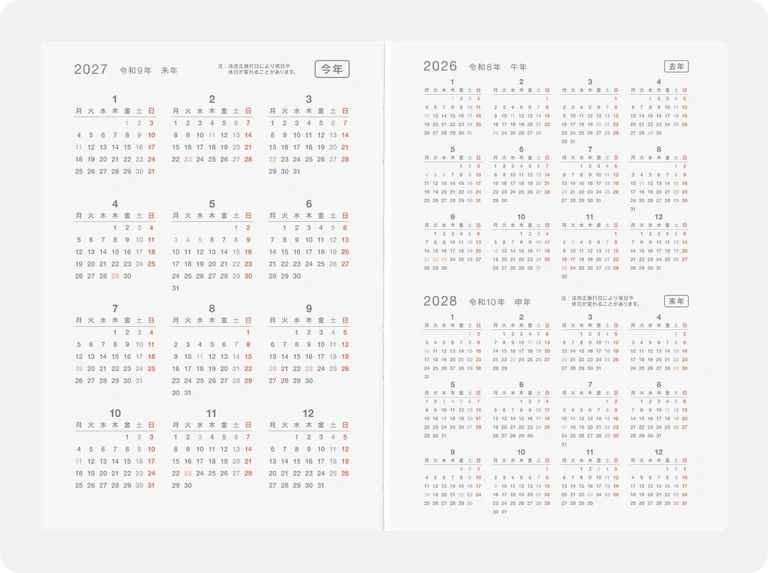
- A convenient double-page spread shows the yearly calendars for 2026, 2027 and 2028 at one glance as a useful reference when planning ahead.
-
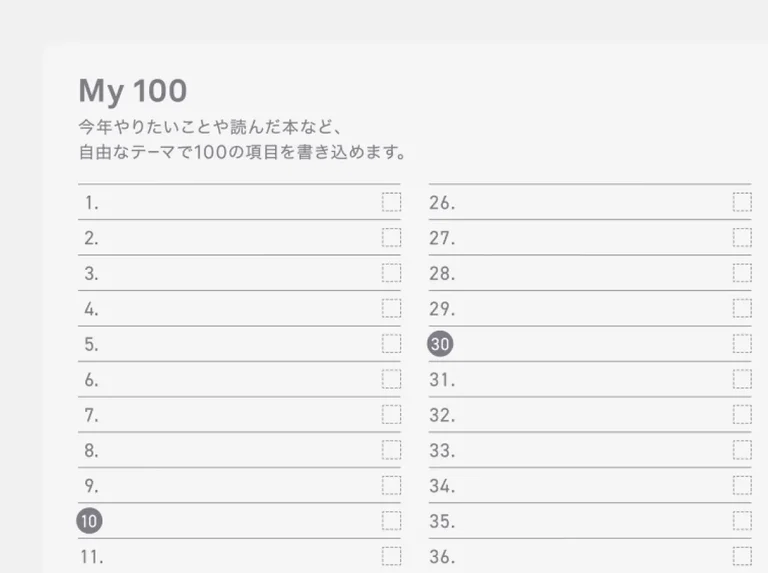
- Bonus Pages
- The back of the book features bonus pages that are fun to read and write in. In addition to classic favorites like “My 100,” new pages are added annually.
- See the Bonus Pages in detail
Features that make it easy to use
Every Hobonichi Techo is thoughtfully designed with features throughout that make it both easy to use and enjoyable to use every day.
-
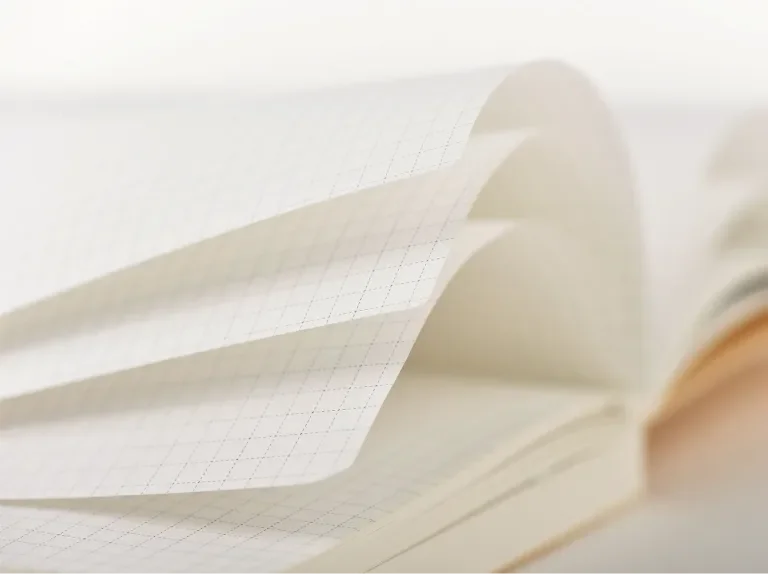
- Tomoe River paper with a smooth writing experience
- The techo book uses Tomoe River paper, a thin, light, and durable paper specially designed for planners. It’s characterized by its ability to hold ink well and provide a smooth writing experience.
-
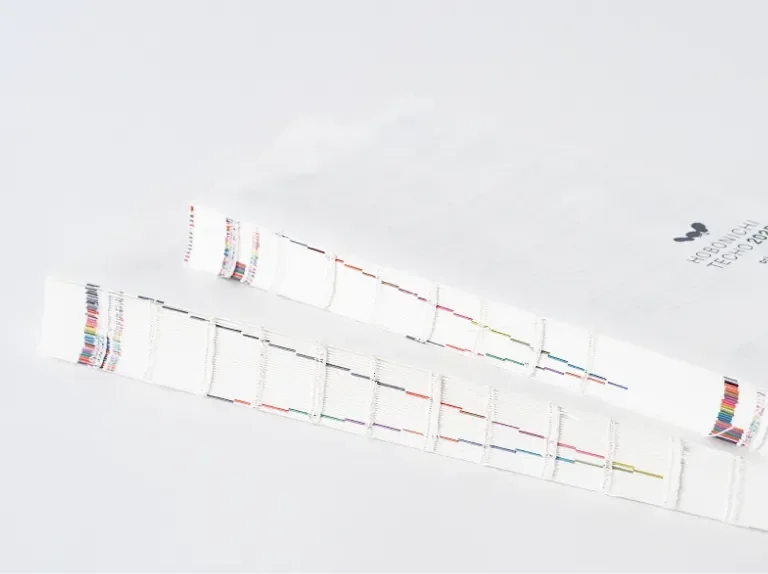
- Sturdy bookbinding that keeps pages secure
- Another key feature is its durability. It's designed to withstand a full year of use, not only with repeated opening and closing but also with the extra bulk from papers, ticket stubs, and other items you paste into it.
-
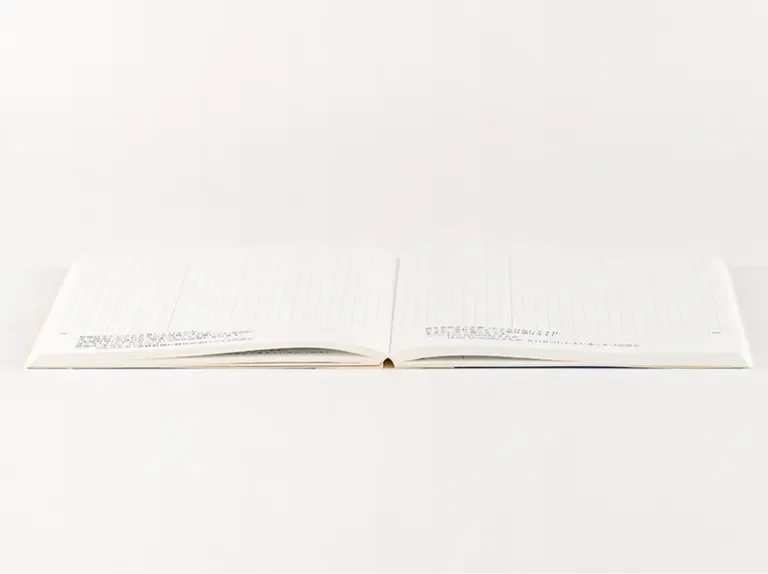
- Stress-free by opening flat 180 degrees
- The book opens flat without the need for you to hold down the pages to keep the book open. This is achieved with thread-stitch binding, a bookbinding method that involves sewing and binding the book with thread.
-
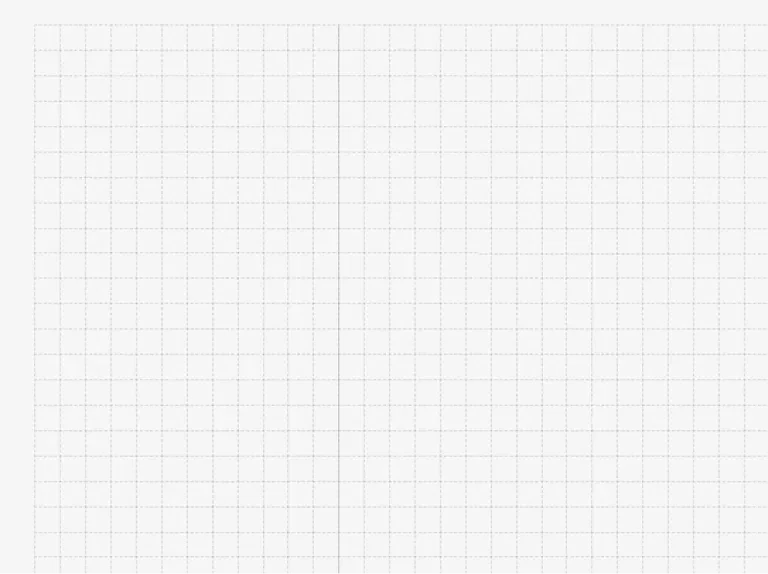
- A very flexible design that’s easy on the eyes
- The color tones and thickness of the lines are specially designed to be easy on the eyes and not get in the way of your writing.
-
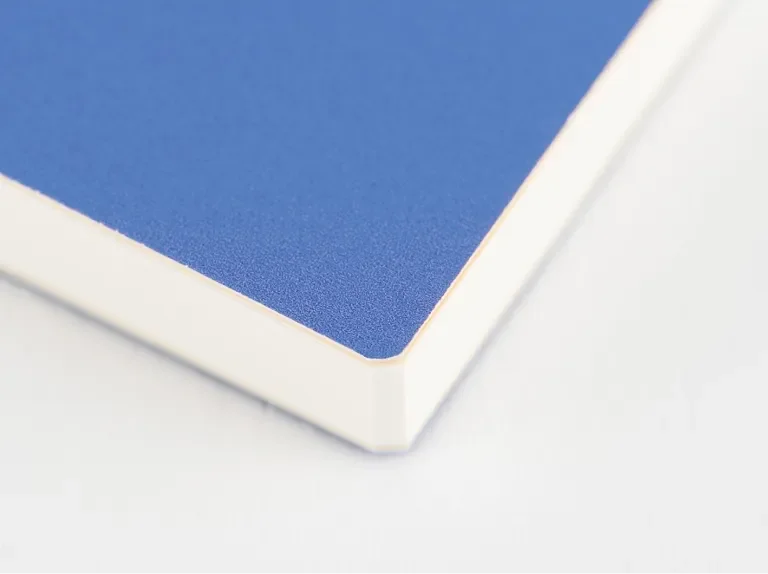
- Rounded corners
- The page corners are rounded to minimize creasing and damage to the edges when carried around or stored in a bag.