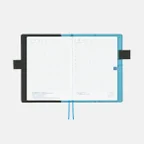
Yuichi InoueJo (Going up)A5 Cousin Size
The works of calligrapher Yuichi Inoue—known for breaking free from the confines of traditional calligraphy and creating bold, powerful pieces full of life—have been made into a techo cover.
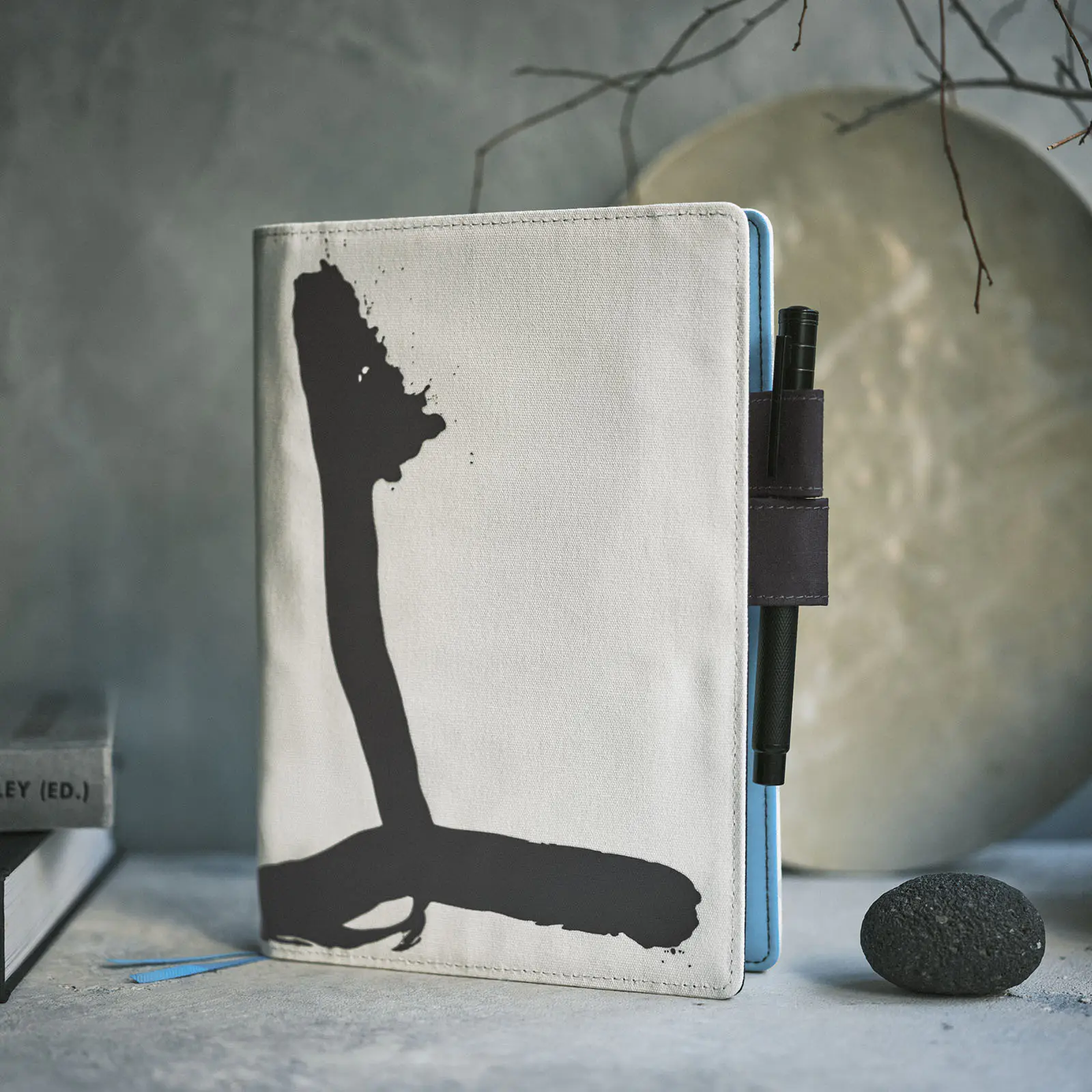
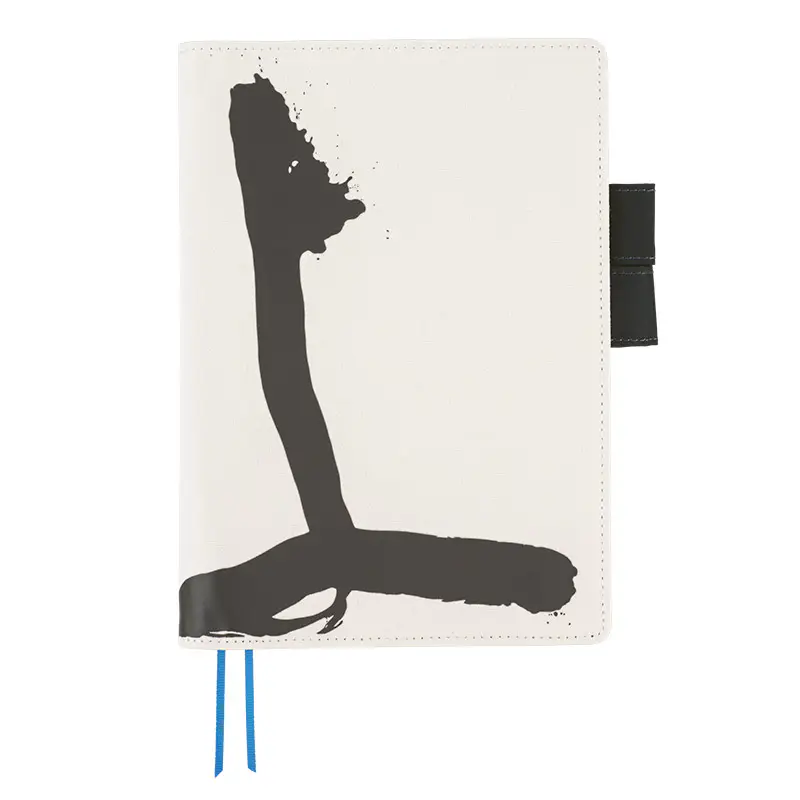
This cover features Inoue’s signature style of ichijisho, or “single-character works.” Each dynamic character, written with a large brush soaked in ink on paper larger than the artist himself, bursts with energy while also conveying a sense of delicacy. From among the many single-character works he created, we selected “Jo”—a culmination of his later years—to serve as the basis for this cover design.
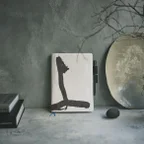
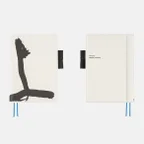
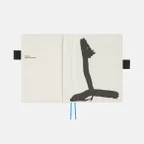
The front of the cover boldly displays the character Jo. The design captures the character’s powerful energy, as if it’s soaring upward into the sky.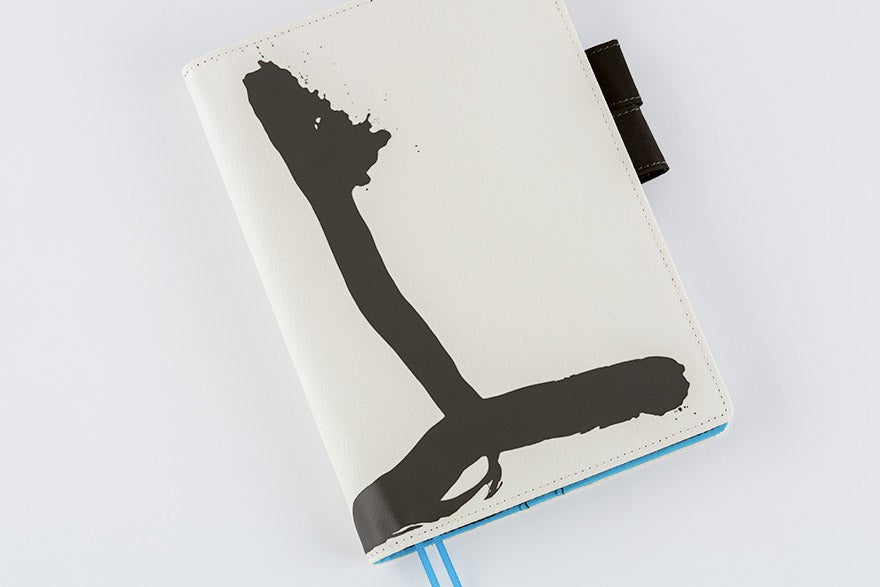
To let the beauty of the calligraphy shine, the base material is a plain, natural cotton fabric. The character is silkscreen printed, allowing the movement of the brush to be vividly expressed.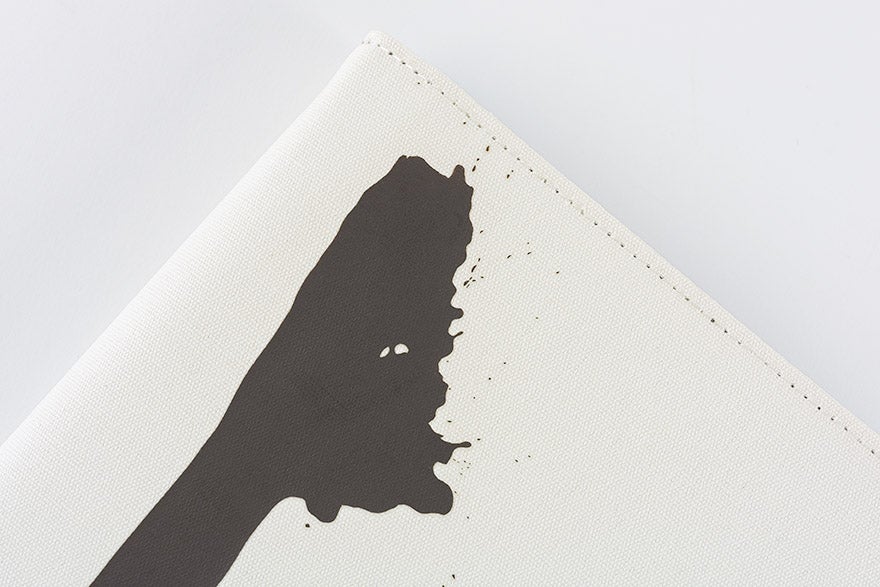
Even the fine splashes of ink are faithfully reproduced, conveying the intensity and momentum of the artist’s full-body strokes.
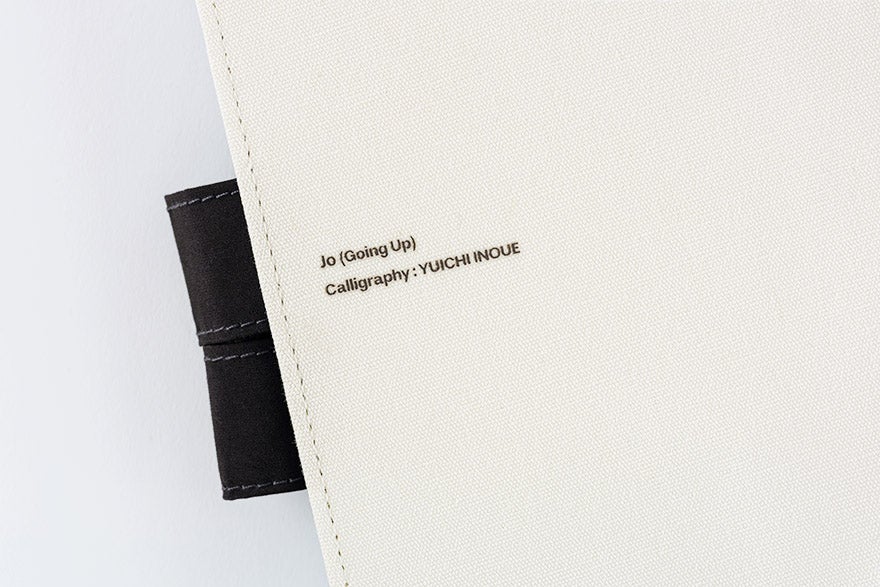
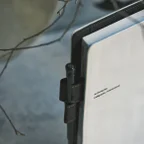
The outer pocket of the cover features a credit for the artwork. The reading and meaning of the character for “Jo,” along with the artist’s name, are printed in a simple, modern typeface to give the design a contemporary feel.
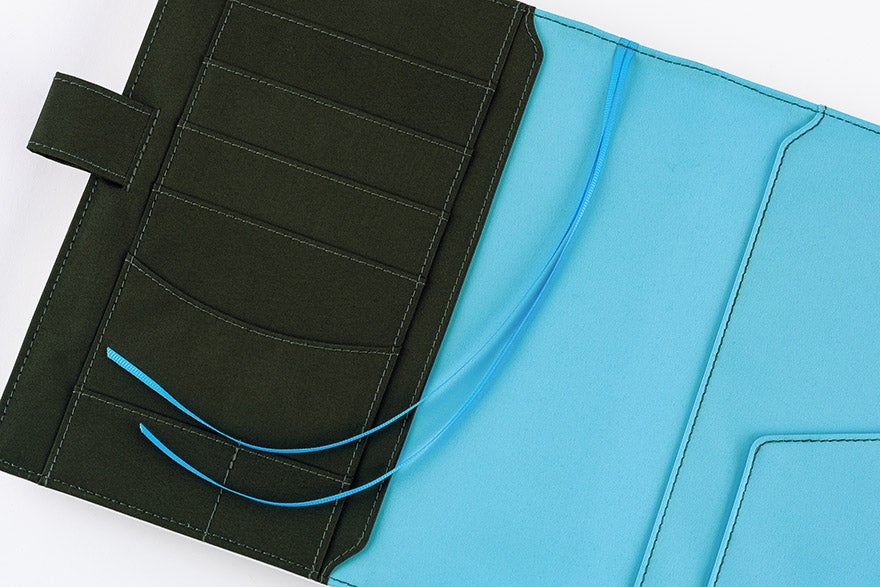
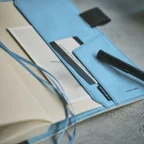
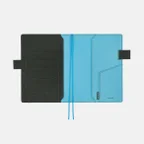
The interior features a dignified ink black paired with a sky blue reminiscent of a clear day. A slender, vivid blue bookmark serves as a bright accent when the cover is closed.
Keep Yuichi Inoue’s energizing calligraphy close at hand and let its powerful presence inspire you each day.
About Yuichi Inoue
Born in Tokyo in 1916. After graduating from Aoyama Normal School, taught at the Honjo Ward Yokokawa Elementary School. Worked as an elementary and junior high school teacher until retirement. Studied calligraphy under Sokyu Ueda before splitting in 1952 to establish the Bokujinkai. Gained international recognition for his vibrant style. Held many exhibitions in Japan and abroad, including the Japanese Calligraphy Exhibition at the Museum of Modern Art in New York in 1954. He left behind over 3,000 works by the time he passed away on June 15, 1985, at the age of 69.
Staff List
- Photographer
- Styled Images: Shinsui Ohara / Product Detail: Hiroyuki Oe
- Stylist
- Haruka Kimura
Related Articles

Discover more (Techo)
![]()
- January-start
- JPN/ENG
- ¥6,710 - ¥7,700
- ¥4,290
![]()
- January-start
- JPN/ENG
- ¥11,770 - ¥13,420
- ¥8,250
![]()
- January-start
- JPN/ENG
- ¥10,010 - ¥11,660
- ¥6,490
![]()
- January-start
- JPN/ENG
- ¥7,370 - ¥9,020
- ¥3,850
![]()
- January-start
- JPN/ENG
- ¥24,420 - ¥26,070
- ¥20,900
![]()
- January-start
- JPN/ENG
- ¥8,580 - ¥10,230
- ¥5,060
![]()
- January-start
- JPN/ENG
- ¥11,220 - ¥12,870
- ¥7,700
![]()
- January-start
- JPN/ENG
- ¥20,020 - ¥21,670
- ¥16,500
![]()
- January-start
- JPN/ENG
- ¥7,370 - ¥9,020
- ¥3,850
![]()
- January-start
- JPN/ENG
- ¥7,260 - ¥8,910
- ¥3,740
![]()
- January-start
- JPN/ENG
- ¥10,010 - ¥11,660
- ¥6,490
![]()
- January-start
- JPN/ENG
- ¥20,020 - ¥21,670
- ¥16,500
Discover more (Accessories)
![]()
- ¥1,320
![]()
- ¥2,750
![]()
- ¥1,375
![]()
- ¥1,045
![]()
- ¥830
![]()
- ¥275 - ¥1,100
![]()
- ¥380
![]()
- ¥341 - ¥550
![]()
- ¥550
![]()
- ¥550 - ¥620
![]()
- ¥660
![]()
- ¥470 - ¥690
Specifications*Specifications may vary slightly
- Cover
Size H: 228 x W: 337 x T: 3 mm / H: 9" x W: 13.3" x T: 0.1"
*Excluding pen holdersWeight Approx. 170 g Main material Exterior: Cotton / Interior: Polyester Compatible Techo Books 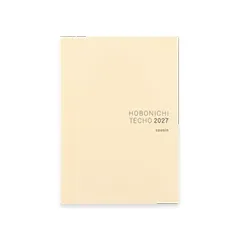 Cousin (A5)
1 page per day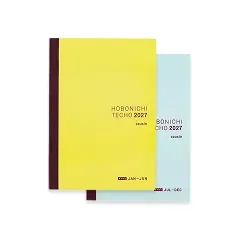 Cousin Avec (A5)
1 page per day 6-month book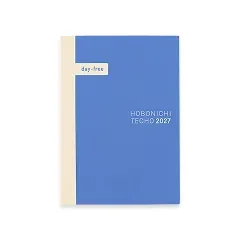 Day-Free
Monthly notebook
Cousin | One-Page-Per-Day TypeJapanese / English
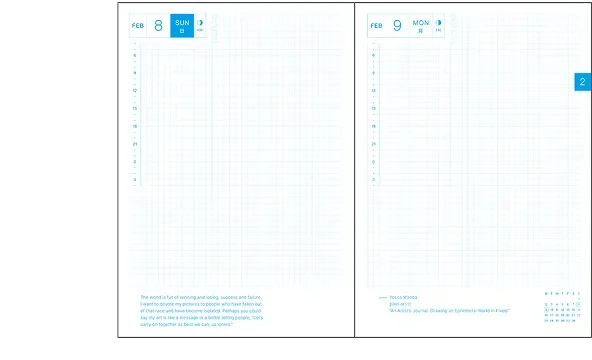
type Monday Start (Japanese)
Monday Start (English)Size A5
H: 210 x W: 148 x T: 18 mm /
H: 8.3" x W: 5.8" x T: 0.7"
*Specifications may vary slightlyWeight Approx. 445 g Dates Jan 2027 - Dec 2027 (Jan start)
Apr 2027 - Mar 2028 (Apr start)- A daily techo with lots of space to write
- This A5-size techo provides ample space on each daily page. It’s great for keeping in one place at home or at work and you can use it to track your child’s growth or exchange with someone.
- Daily pages
- Yearly calendar
- Yearly index
- Monthly calendar
- Weekly pages
- Memo pages
Cousin Avec | One-Page-Per-Day Type (2-Book Set)Japanese
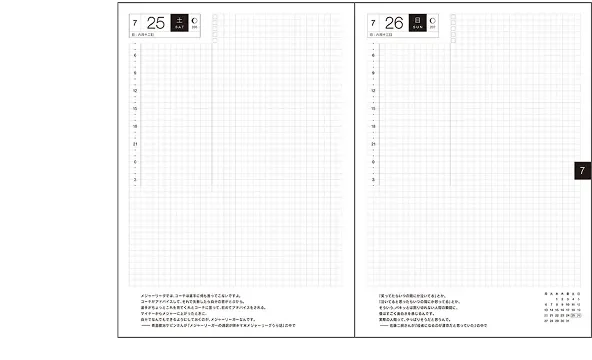
type Monday Start (Japanese) Size A5
Each Book: H: 210 x W: 148 x T: 10 mm /
H: 8.3" x W: 5.8" x T: 0.4"
*Specifications may vary slightlyWeight Each Book: Approx. 260 g Dates Book 1: Jan 2027 - June 2027
Book 2: July 2027 - Dec 2027- Each 6-month daily techo is thin and light for easy carry
- This techo splits the year into two 6-month books, making it easy to carry while keeping the same page design and layout as the standard edition.
- Daily pages
- Yearly calendar
- Yearly index
- Monthly calendar
- Weekly pages
- Memo pages
Day-Free | Monthly Techo + NotebookJapanese
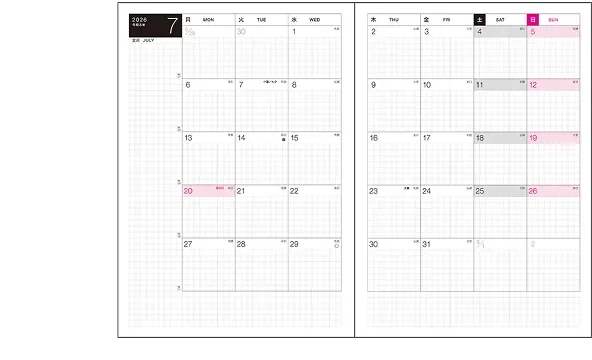
type Monday Start (Japanese) Size A5
H: 210 x W: 148 x T: 8 mm /
H: 8.3" x W: 5.8" x T: 0.3"
*Specifications may vary slightlyWeight Approx. 220 g Dates Dec 2026 - Mar 2028 - A monthly notebook with undated pages to write freely
- This techo starts with monthly calendars and ends with undated graph paper pages so you can write whenever you want, and as much as you want.
- Monthly calendar
- Yearly calendar
- Yearly index
- Graph paper notebook pages
User recommendations
If you’ve used any of these products, we welcome your notes on what you like about them or what led you to buy them so we can share it with customers who are currently considering these products. We’d also love to welcome comments from customers who purchased their techo outside the Hobonichi Store or received their book as a gift.
Please Read Before You Buy
We’ve compiled a list of warnings, potential issues, and tips to keep in mind for this particular product. Additionally, the color of the product may be slightly different in actuality than compared to how it appeared on a computer or smartphone screen.
- Cover may contain variations in stitching or loose lining
Due to the structure of the cover that opens flat 180 degrees, exterior stitching areas may appear puckered and lining material may be loose.
- Pen holder fits pens up to 13.5 mm wide
The pen holder is designed to fit the 12.2 mm (0.48") diameter Jetstream pen offered as a free Hobonichi Store Exclusive Bonus. Pens with certain shapes and materials may be difficult to pull through the holder. The holder can fit pens up to 13.5 mm (0.53") in diameter.
- Color and print may vary slightly
The cover's color and print pattern are created by dyeing or printing onto white fabric. While we take care to ensure consistency during production, slight variations in color or pattern may occur between individual items. This may also happen across a single cover, such as a pocket compared to the rest of the cover. Minor print blurring or uneven coloring may also be present. In addition, on rare occasions, there may be small black or white dots visible on the print. This is an unavoidable aspect of the manufacturing process.